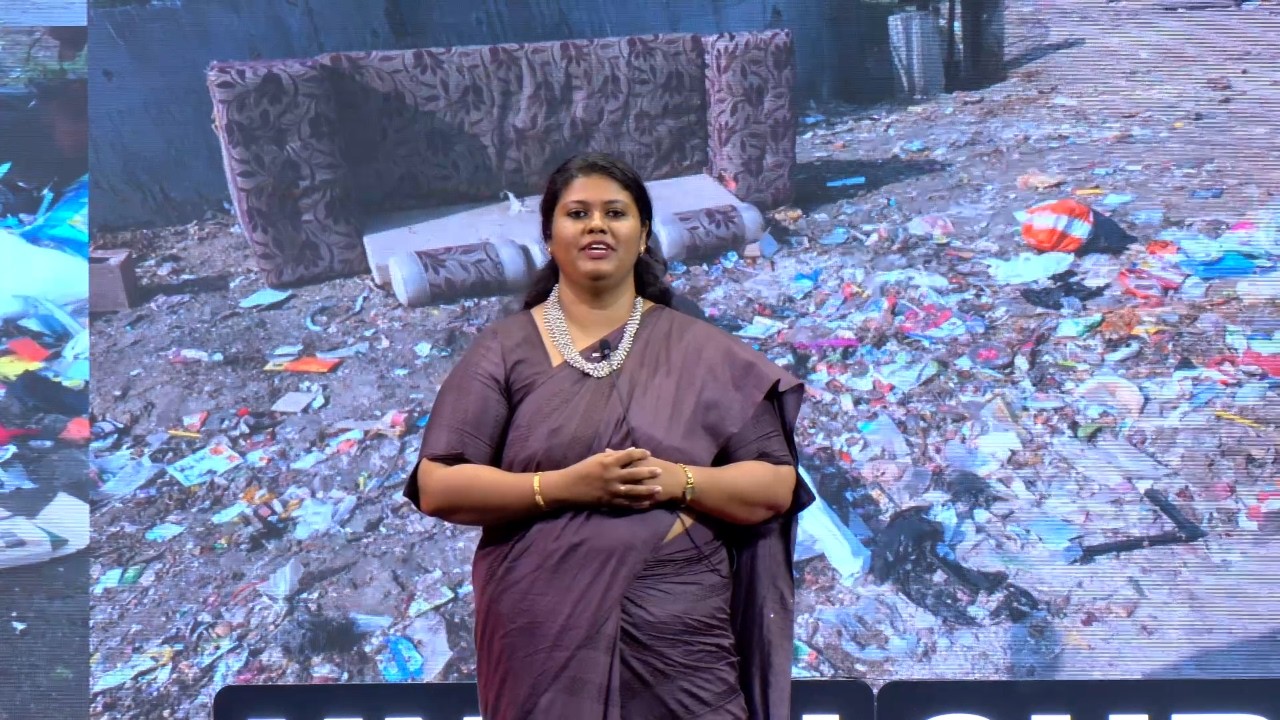
Why we must preserve shared spaces | Rebecca George | TEDxUnion Christian Public School Youth
Keywords
Summary
183 words
Critical Evaluation
Value of the Information & Strength of the Argument
The value of the talk lies in its accessible and relatable approach to a common civic issue. Rebecca George frames the problem as a behavioral and cultural one, not merely a waste management failure. She supports her argument with a mix of personal narrative, official statistics, and a modest survey, which, while not exhaustive, adds a layer of empirical grounding. The argumentation is structured logically: she identifies a problem (littering), questions the underlying attitude (diffusion of responsibility), presents evidence of the attitude (survey results), and offers practical solutions. However, the absence of external references and the limited scope of the survey weaken the argument’s robustness. The talk is persuasive but not deeply evidence-based.
Scientific Rigor, Source Quality, Title Accuracy
The scientific rigor is moderate at best. The speaker cites government data (Central Pollution Control Board, Greater Chennai Corporation) without providing direct references or links, making verification difficult. The survey, while interesting, is based on 206 self-selected responses and may not be representative. The title ‘Why we must preserve shared spaces’ accurately captures the essence of the talk, and the content stays on topic. Overall, the talk is more of an opinion-driven advocacy piece than a rigorous scientific study, but it raises important points about civic responsibility and environmental stewardship.
218 words
Title / Content Match
The title accurately reflects the central theme of the talk—preserving shared spaces—and the content directly addresses this through examples, data, and calls to action.
Quality & Reliability
6/10
The talk relies on personal observations, a small survey (206 responses), and some official statistics (e.g., Central Pollution Control Board, Greater Chennai Corporation), but lacks peer-reviewed sources and specific citations. The data presented is plausible but not rigorously verified.
Key Moments
Markers derived by PSI from the transcript: the creator did not define chapters.
- Introduction by host and start of talk; Rebecca George presents the living room vs. street analogy to illustrate loss of responsibility for shared spaces.
- Statistics on municipal solid waste generation in India, Tamil Nadu, and Chennai, citing government data.
- Recollection of childhood practices like using cloth bags and avoiding plastic, contrasting with today's habits.
- Presentation of survey results: 92% agree on shared responsibility, 43% would intervene, and common reason for littering is 'someone else will clean it'.
- Practical suggestions: reporting overflowing bins, planning event clean-ups, donating or repairing items, reducing plastic use.
- Student activity in April 2026: students photographed dumpyards and wrote letters; by September, only minor changes observed.
- Conclusion: urging audience to treat public spaces as home and take collective responsibility.
Cited Sources
- TEDx official website — Link provided in the video description for more information about TEDx events.
Contribution & Novelties
The talk contributes a grassroots perspective on littering, emphasizing the cultural and behavioral dimensions rather than purely infrastructural solutions. It introduces a simple survey to quantify attitudes and highlights the ‘diffusion of responsibility’ phenomenon. The proposed actions (e.g., reporting issues, planning event clean-ups) are practical and community-oriented.
Pour aller plus loin :
- Tragedy of the commons — This concept explains how shared resources are often overused and degraded without collective responsibility, providing a theoretical framework for the problem.
- Broken windows theory — This theory suggests that visible signs of disorder can encourage further disorder, linking to the importance of maintaining clean spaces.
- Nudge theory — This concept explores how subtle changes in environment can influence behavior, which could be applied to waste management strategies.
124 words
Radar Profile
The radar profile shows a moderate score in quantity of information, lower scores in technical level and reliability, reflecting a persuasive talk with some data but limited scientific rigor. The emphasis is on civic engagement rather than technical depth.