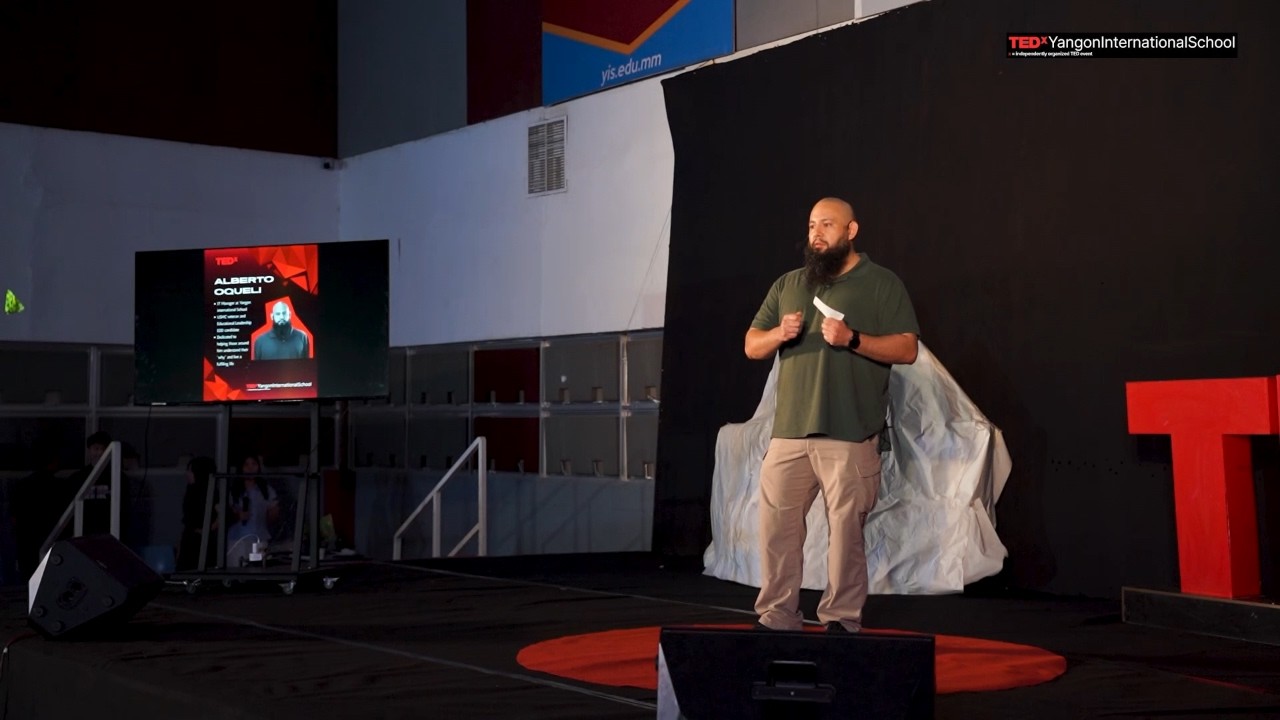
The Power of Asking "Why" | Alberto Oqueli | TEDxYangonInternationalSchool
Keywords
Summary
180 words
Critical Evaluation
Value of the Information & Strength of the Argument
The talk provides a compelling and accessible argument for the importance of asking ‘why’ in personal and professional contexts. The use of anecdotes, particularly the Marine Corps story, makes the concept tangible and emotionally resonant. The historical example of the US and the Mujahideen is a powerful illustration of the consequences of ignoring the ‘why’ of others. However, the argumentation is largely anecdotal and lacks rigorous evidence. The speaker does not engage with potential counterarguments or complexities, such as the ethical implications of understanding ‘why’ in intelligence gathering or the oversimplification of historical events. The progression from chess to relationships to military strategy is logical, but the connections could be more deeply explored.
Scientific Rigor, Source Quality, Title Accuracy
The talk references several sources, including chess grandmasters (Nimzowitsch, Kasparov, Silman), psychologist Dr. Alison Cook, the US Army Field Manual FM 2-22.3, Sun Tzu’s ‘The Art of War’, and Steve Coll’s ‘Ghost Wars’. These are cited in passing without specific citations or verification. The title accurately reflects the content, which is a personal and motivational perspective on the power of asking ‘why’. The talk is more of an opinion piece than a rigorous scientific analysis, and the historical narrative, while compelling, is presented in a simplified manner without acknowledging the complexity of the events.
222 words
Title / Content Match
The title accurately reflects the core message of the talk, which is the importance of asking 'why' in various aspects of life.
Quality & Reliability
6/10
The talk relies on personal anecdotes, historical examples, and references to military manuals and books, but lacks systematic evidence or peer-reviewed sources. The speaker's expertise is in education and IT, not in psychology or history, which limits the depth of analysis.
Key Moments
Markers derived by PSI from the transcript: the creator did not define chapters.
- Introduction: The importance of asking 'why' over 'what'.
- Chess analogy: Understanding opponent's motivations, citing Nimzowitsch and Kasparov.
- Applying 'why' to relationships, citing Dr. Alison Cook.
- Personal anecdote from Marine Corps: Understanding the 'why' of an Afghan informant.
- Reference to US Army Field Manual and Sun Tzu's 'The Art of War'.
- Historical example: US support of Mujahideen and failure to understand their 'why' leading to 9/11.
- Personal evolution of 'why' and call to action for self-reflection.
Cited Sources
- TEDx Program — Mentioned in the description as the organizing body for the talk.
Concurring Sources
- TEDx Program — The talk is part of the TEDx series, which is known for sharing ideas worth spreading.
Contribution & Novelties
The talk offers a personal and motivational perspective on the power of asking ‘why’, drawing on diverse examples from chess, relationships, military intelligence, and history. Its novelty lies in the synthesis of these fields to illustrate a universal principle. However, the concepts are not new and are presented in a simplified manner.
Pour aller plus loin :
- Five Whys — A technique for root cause analysis that aligns with the talk’s emphasis on iterative questioning.
- Theory of Motivation — Provides a psychological framework for understanding the ‘why’ behind human behavior.
- Sun Tzu’s The Art of War — The classic text referenced in the talk, offering strategic insights into understanding opponents.
110 words
Radar Profile
The radar profile shows a moderate level of information quantity and quality, with a low technical level and moderate reliability. This reflects a talk that is accessible and engaging but lacks depth and rigorous sourcing.