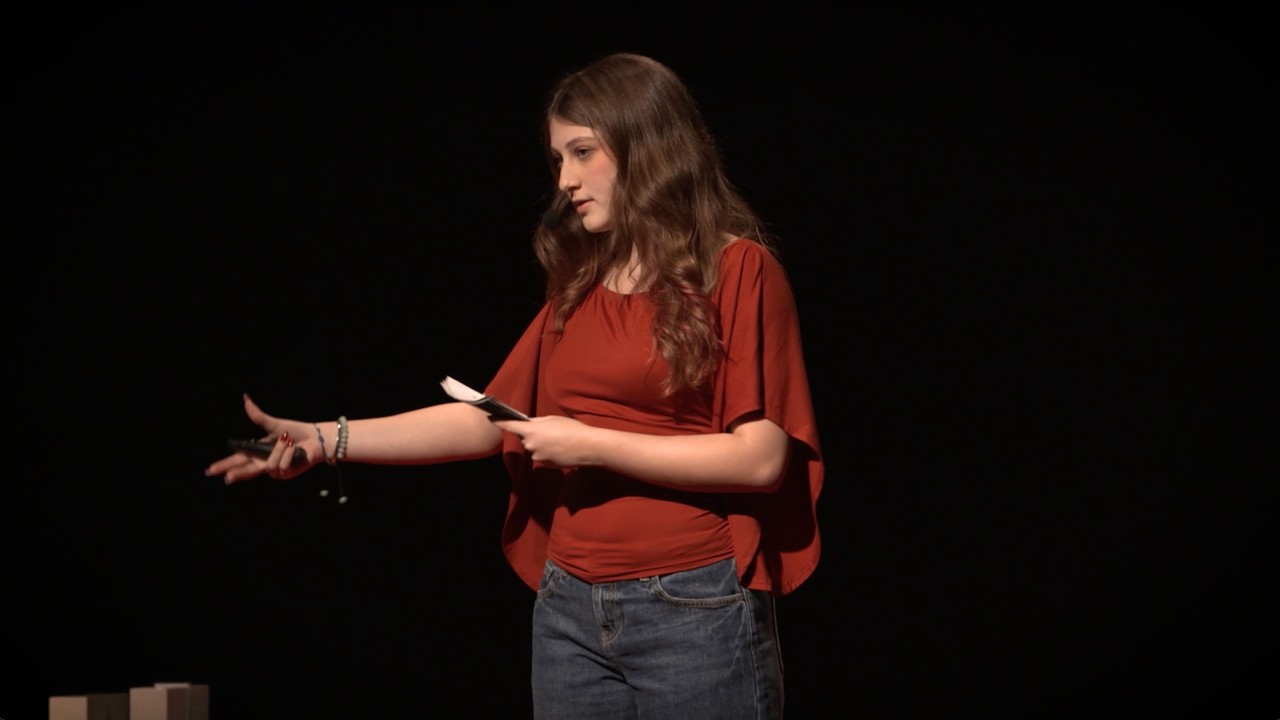
O fantasma da ditadura no Brasil | Marina Caban | TEDxEscola Parque Youth
The ghost of the dictatorship in Brazil | Marina Caban | TEDxEscola Parque Youth
Keywords
Summary
206 words
Critical Evaluation
Value of the Information & Strength of the Argument
The talk’s value lies in the personal, intergenerational perspective it brings to a crucial historical theme, making the impact of dictatorship tangible through family anecdotes. However, the argumentation relies heavily on emotional appeal and selected historical facts rather than a systematic analysis. The speaker does not engage with counter‑narratives or historiographical debates, and while she mentions specific events and figures, the evidence is primarily anecdotal. The logical thread is coherent: from personal history to national history to contemporary implications, culminating in a call to action. Yet, the depth of historical explanation is limited, and some claims lack nuance (e.g., the simplistic comparison between Vargas and European fascists). Overall, the argument is persuasive in its moral urgency but modest in scholarly rigour.
Scientific Rigor, Source Quality, Title Accuracy
The talk is rigorous in its personal testimony, but scientific rigour is moderate. She references concrete sources such as the ‘Memórias da Ditadura’ website and the National Truth Commission, but does not provide direct citations or URLs in the talk. The description includes only the generic TEDx link, limiting verifiability. The title precisely matches the content, which is a personal reflection on the ghost of dictatorship in Brazil. No external comments were provided, so public reception cannot be assessed. The talk is presented in the context of a TEDx event, which prioritizes accessible communication over academic depth, but the factual accuracy of the historical events mentioned is generally consistent with mainstream historiography, despite some oversimplifications.
251 words
Title / Content Match
The title accurately encapsulates the talk's focus on the lingering memory of dictatorship in Brazil.
Quality & Reliability
6/10
Personal testimony interwoven with historical facts, but lacks deep sourcing and relies on subjective memory rather than systematic research.
Key Moments
Markers derived by PSI from the transcript: the creator did not define chapters.
- Introduction: family persecution during Estado Novo and military dictatorship
- Childhood memory of the musical 'Tropicalinha' and the question about authoritarian rule
- Research using the 'Memórias da Ditadura' website; overview of the 1964 coup
- Explanation of AI-5 and suspension of habeas corpus; rise of repression
- Grandfather's story: financing families of political prisoners and the 'cheque' anecdote
- National Truth Commission: 434 victims of political persecution
- Estado Novo under Vargas, parallels with fascist Europe, and its controversial legacy
- Contemporary rise of far-right and denial of dictatorship, references to Ustra and Jan 8 events
- Reflection on individual helplessness and the political act of memory
- Call to action: choosing who to remember, listing names of victims and activists
Cited Sources
- TEDx Program — The talk was delivered under the TEDx format, independently organized by a local community.
Contribution & Novelties
The talk’s originality lies in connecting personal family history—specifically the experiences of a great‑grandfather and grandfather under two distinct dictatorial regimes—with the broader Brazilian narrative, thereby humanizing historical memory. It also implicitly argues against apathetic citizenship by framing memory as an active political responsibility. However, it does not introduce new historical evidence or theoretical frameworks. For a deeper exploration, the following concepts are relevant.
Pour aller plus loin :
- Military dictatorship in Brazil — High relevance: provides a comprehensive overview of the 1964–1985 regime.
- National Truth Commission — Directly tied to the cited commission and its findings.
- AI-5 — The institutional act that suspended habeas corpus, central to the talk.
- Estado Novo (Brazil) — Contextualizes the earlier dictatorship under Vargas.
120 words
Radar Profile
The radar profile shows moderate scores across all dimensions, with a slight peak in quantity of information relative to other criteria. This suggests the talk offers a decent amount of factual content but lacks depth in technical precision and reliability, reflecting its accessible, personal nature rather than rigorous academic analysis.