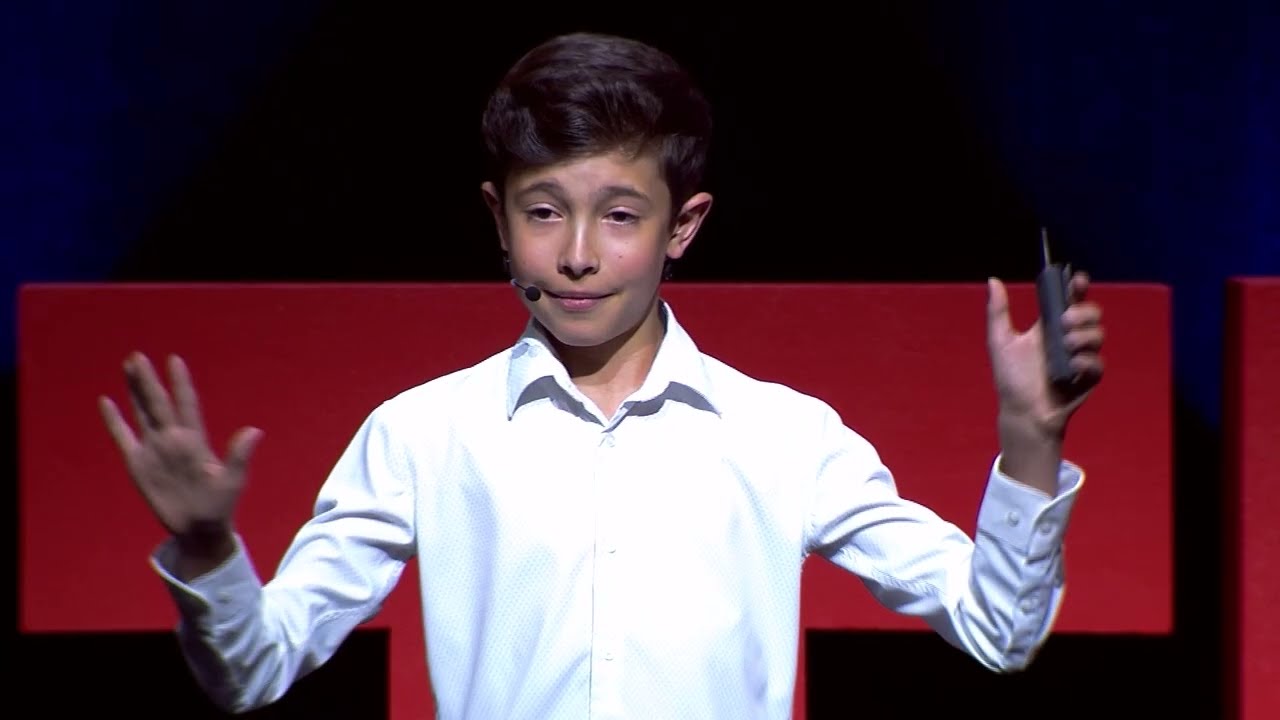
The Kid Who Said No to Easy | Kai Abromovitz | TEDxAlpha School Austin Youth
Keywords
Summary
171 words
Critical Evaluation
Value of the Information & Strength of the Argument
The talk’s value lies in making psychological concepts accessible through personal narrative and relatable examples. The argumentation is coherent: it establishes failure’s inevitability, introduces mindset as a key variable, and provides evidence from the speaker’s life and famous figures. However, the evidence remains anecdotal, and the equation ‘failure + growth mindset = success’ is a simplification that lacks rigorous definition. The strength is motivational rather than scientifically deep, but it effectively communicates the core message of embracing failure.
Scientific Rigor, Source Quality, Title Accuracy
The talk is a TEDx presentation, not peer-reviewed. It references Carol Dweck’s research and a Cornell study, but no direct citations or specific details are given. The speaker does not provide external references in the description beyond the generic TEDx link. The title accurately reflects the content: the speaker chooses to confront failure instead of avoiding it, thus ‘saying no to easy.’ The title and content are well-aligned. No comments were provided for analysis.
167 words
Title / Content Match
The title reflects the speaker's choice to embrace challenges and failure rather than taking the easy path, which aligns well with the content.
Quality & Reliability
6/10
The talk draws on Carol Dweck's growth mindset research and mentions a Cornell study, but relies primarily on personal anecdotes and well-known examples, without providing direct citations or experimental details.
Key Moments
Markers derived by PSI from the transcript: the creator did not define chapters.
- Opening: hopes everyone fails, baby analogy.
- Failure as opposite of success belief.
- Failure is inevitable, Cornell study mentioned.
- Introduction of growth vs fixed mindset.
- Chess story: quitting due to fixed mindset.
- Famous examples: Jordan, Beyonce, Rowling, Dyson, Disney.
- Geography bee failure and retry.
- Three principles for failing better.
- Conclusion: failure as teacher.
Cited Sources
- TEDx Program — The talk is part of TEDx events, independently organized.
Contribution & Novelties
The talk offers a fresh, youthful perspective on failure, framing it as a teachable skill. It synthesizes existing research on mindsets into a simple, actionable message. While not introducing new scientific ideas, it makes the growth mindset concept relatable to a broad audience, particularly young people.
Pour aller plus loin :
- Carol Dweck — The psychologist behind the fixed vs. growth mindset theory, central to the talk.
- Mindset — Concept of mindset and its implications for learning and success.
- Regret aversion — Relevant to the Cornell study mentioned, explaining why people avoid failure.
93 words
Radar Profile
The radar profile shows a talk with moderate information quantity, decent quality, and low technical depth, but reasonable reliability given its non-academic nature. It leans heavily on anecdotal evidence and motivational appeal.