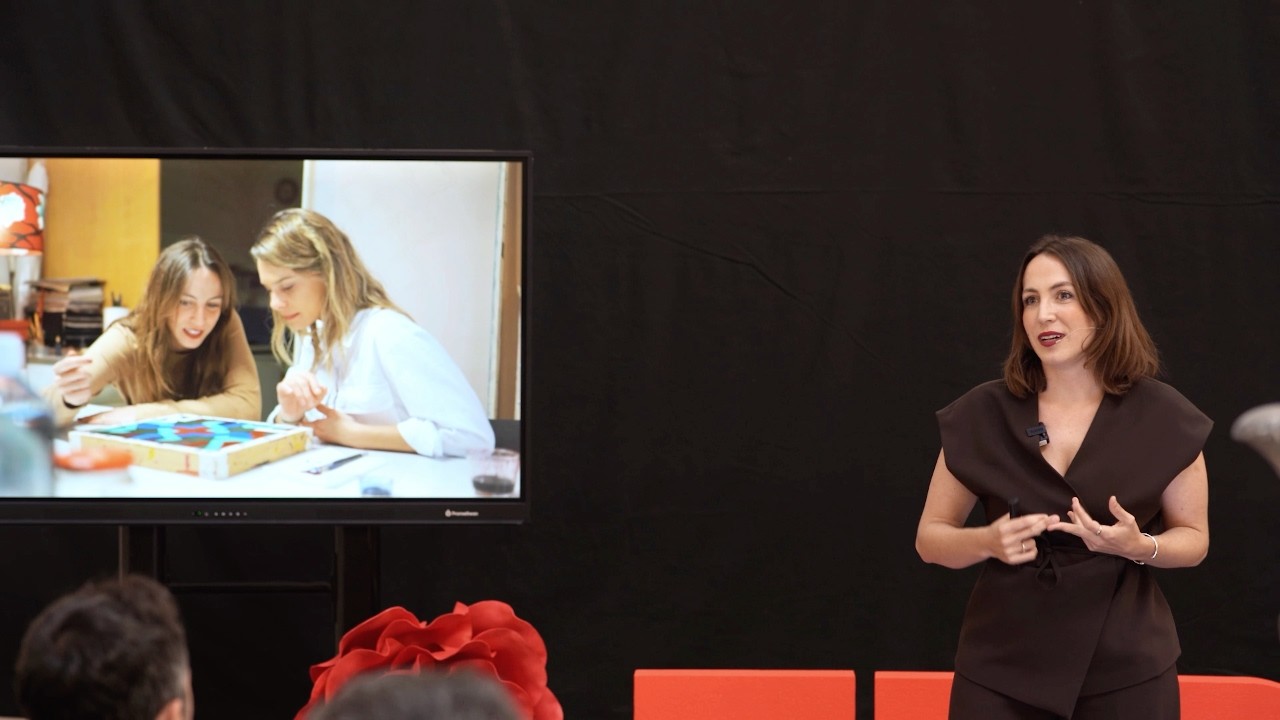
Cómo conservar el alma de una ciudad | Camila Puya de Arcos | TEDxCasco Antiguo
How to preserve the soul of a city | Camila Puya de Arcos | TEDxOld Town
Keywords
Summary
163 words
Critical Evaluation
Value of the Information & Strength of the Argument
The talk delivers a valuable message that connects cultural preservation with economic and social sustainability. The argument is built on a personal narrative that gives it authenticity, but it remains largely essayistic and lacks empirical evidence. The speaker’s dual perspective as both an artisan and a creative director enriches the reasoning, yet the claims about city homogenization and the role of crafts would benefit from concrete examples or references to urban studies. The argumentation is coherent and persuasive in its logic, emphasizing that craftsmanship is not a relic but a contemporary tool for addressing issues like over-tourism, disposable culture, and loss of local distinctiveness. However, the talk does not engage with potential counterarguments or external data, which limits its depth.
Scientific Rigor, Source Quality, Title Accuracy
The talk does not cite scientific sources or studies; it is primarily based on the speaker’s professional history and observations. The only reference provided in the description is the generic TEDx link, which does not substantiate specific claims. The title is accurate and captures the central theme effectively, though it might be seen as slightly broad. The content aligns well with the title, focusing on the intangible heritage of urban craftsmanship. There is no mention of scholarly literature or expert consensus, which weakens the scientific rigor expected in an academic analysis. Nevertheless, within its genre, the talk is well-crafted and sincere.
236 words
Title / Content Match
The title accurately reflects the content: the talk is a plea for preserving the intangible soul of cities through craftsmanship and local identity.
Quality & Reliability
7/10
The talk is based on the speaker's professional experience as a second-generation artisan and creative director. It offers a personal and eloquent perspective on the role of craftsmanship in urban identity, but relies on anecdotal evidence and does not reference scientific studies or data. The argumentation is coherent and well-structured, but the lack of empirical support limits its scientific robustness.
Key Moments
Markers derived by PSI from the transcript: the creator did not define chapters.
- Introduction to the idea that cities are losing their soul, with disappearance of crafts and identity.
- Personal story about growing up in a silk-painting atelier and the discovery of craftsmanship as a language.
- Discussion on the contemporary relevance of crafts, answering questions about sustainability, employment, and local identity.
- The difference between a historic city and a historified one, and the importance of maintaining living culture.
- Call to action: putting artisanship at the center of urban futures, and the hope that future generations will embrace crafts.
Cited Sources
- TEDx Talks official page — General reference to the TEDx platform where the talk was given.
Contribution & Novelties
The talk offers a personal and culturally grounded perspective on the value of craftsmanship in preserving urban identity. It reframes craftsmanship not as nostalgic pastime but as a forward-looking tool for sustainable and authentic city development. Its novelty lies in bridging personal artisan practice with broader urban planning and cultural policy discourses.
Pour aller plus loin :
- Intangible cultural heritage (Wikipedia) — Relevant concept for understanding the protection of living cultural practices.
- Artisan (Wikipedia) — Background on the role of artisans in society and economy.
- Creative economy (Wikipedia) — Framework linking crafts to economic value and innovation.
97 words
Radar Profile
The radar profile shows a balanced but moderate performance across dimensions. Quantity and quality of information are relatively high, while technical depth is lower, reflecting the non-technical nature of the talk. Overall reliability is decent but limited by the lack of external references.