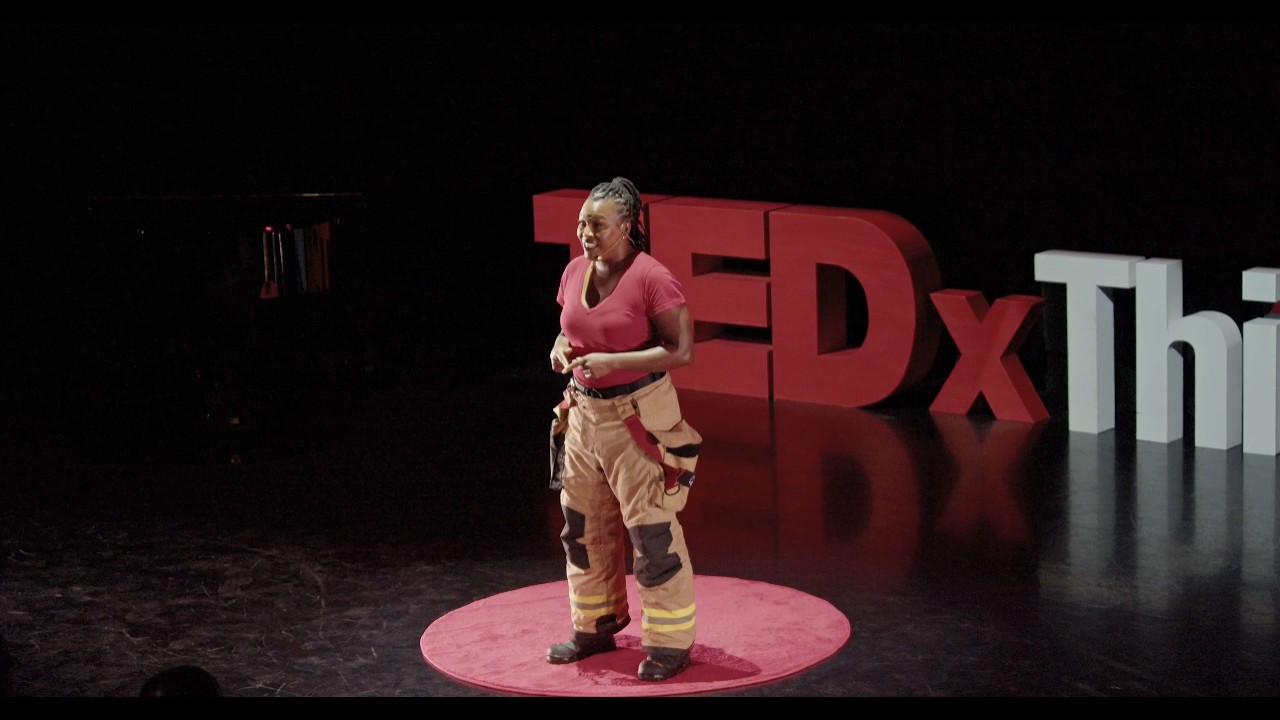
A firefighter’s approach to staying calm | Jacobi Ford | TEDxThird Ward Salon
Keywords
Summary
170 words
Critical Evaluation
Value of the Information & Strength of the Argument
The talk provides a memorable and actionable framework for stress management, potentially useful for a broad audience. The argumentation is based on personal anecdotes and simplified physiology rather than robust evidence. The speaker’s credibility as a firefighter lends authenticity, but the claims about stress physiology are not fully developed or backed by specific studies. The rationale for each tactic is explained clearly, making the advice accessible, yet the lack of rigorous scientific grounding limits its authoritative value.
Scientific Rigor, Source Quality, Title Accuracy
The presentation is more experiential than scientific, with no formal references or data. The sources cited from the description are organizational guidelines rather than research literature. The title accurately reflects the content, but the content itself is not a rigorous scientific study; it is an expert opinion based on personal practice. The TED note indicating deviation from content guidelines further cautions against treating it as medical advice.
159 words
Title / Content Match
The title accurately reflects the content: a firefighter shares her approach to staying calm in crises.
Quality & Reliability
5/10
The talk offers practical stress-management tactics based on personal experience, but it simplifies physiological mechanisms and lacks direct scientific citations. The TEDx note flags it as outside content guidelines, reducing overall reliability.
Key Moments
Markers derived by PSI from the transcript: the creator did not define chapters.
- Introduction to the fire academy culture and the 'struggle Olympics' concept.
- Introduction of the three tactics: breathe out, swap out, clear out.
- Tactic one: breathe out - explanation of the physiological mechanism and guided exercise.
- Tactic two: swap out - analogy to 'time is tissue' and difference between reactive and responsive.
- Tactic three: clear out - processing emotional weight and personal practices like yoga and therapy.
Cited Sources
- TEDx Content Guidelines — Referenced in the description to explain why the talk was flagged; not directly cited in the talk.
- TEDx main page — Mentioned in the description as general information about TEDx events.
- Arising Heir — Speaker's organization mentioned in the description for further resources.
Dissenting Sources
- TEDx Content Guidelines — The talk is flagged as falling outside TEDx content guidelines, indicating potential deviation from accepted medical or scientific consensus.
Contribution & Novelties
The talk offers a simple, memorable three-step framework (breathe out, swap out, clear out) for managing acute stress and preventing burnout, presented from a first responder’s perspective. This framework integrates common stress-management advice into a pragmatic protocol, though it does not present novel scientific findings. Its value lies in its accessibility and actionable nature.
Pour aller plus loin :
- Autonomic nervous system — explains the physiological basis of breathing techniques on the fight-or-flight response.
- Stress management — provides a broad overview of evidence-based techniques, many of which align with the talk’s suggestions.
- Cognitive restructuring — relates to the ‘swap out’ tactic of changing perspective under stress.
106 words
Radar Profile
The radar profile shows moderate scores across all dimensions, with quantity of information slightly higher than technical level. This indicates a talk that is informative but not deeply scientific, balancing accessibility with practical advice.