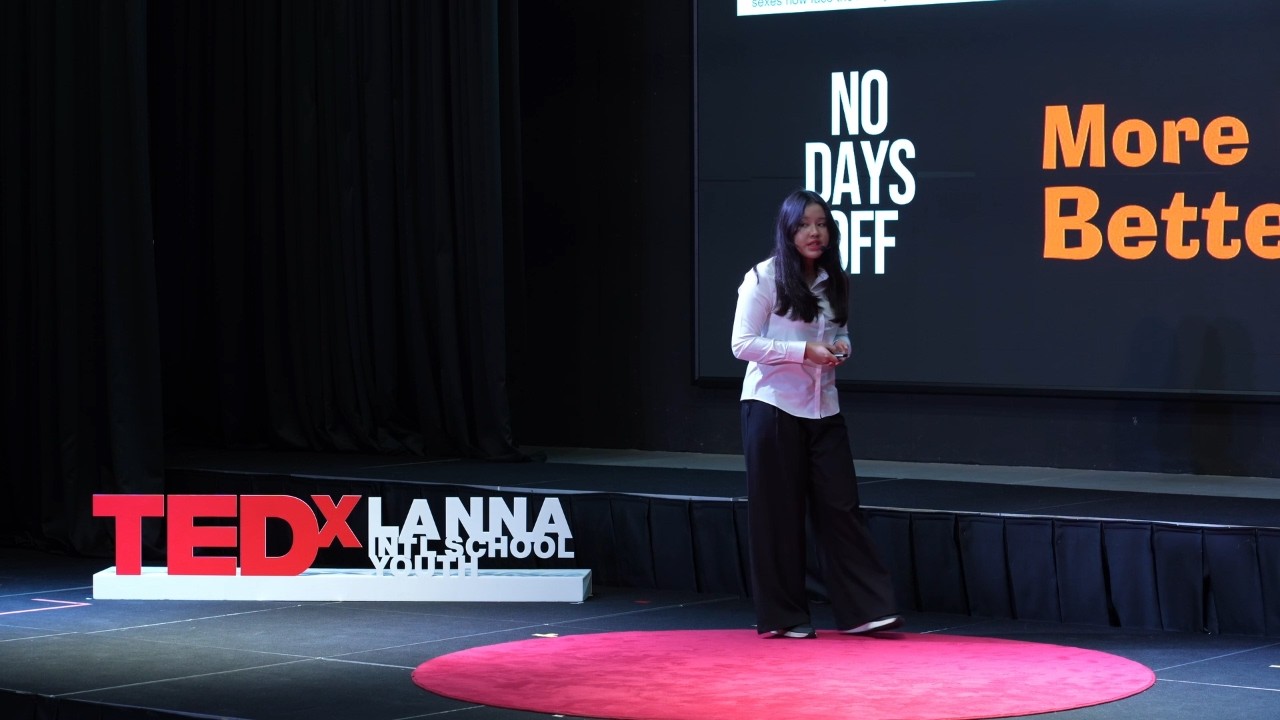
Overachieving Won’t Save Us | Arkira Noonpakdee | TEDxLANNA Intl School Youth
Keywords
Summary
193 words
Critical Evaluation
Value of the Information & Strength of the Argument
The talk provides a compelling personal testimony that resonates with many, highlighting the psychological toll of overachievement. The argument is structured coherently, moving from childhood conditioning to high school pressure, then to personal reflection and global examples. The speaker effectively uses rhetorical questions and vivid imagery to engage the audience. While the talk lacks rigorous empirical evidence, it synthesizes common critiques of hustle culture and burnout, making valuable points about the need to redefine success. The argumentation is persuasive due to its authenticity and emotional appeal, although it would benefit from citing specific studies or statistics to strengthen credibility.
Scientific Rigor, Source Quality, Title Accuracy
The talk offers a reasonable but not highly rigorous scientific basis. The speaker mentions concepts like the performance curve and burnout statistics without providing precise sources, relying on anecdotal and general information. The title ‘Overachieving Won’t Save Us’ is apt, accurately capturing the central message that relentless striving leads to disillusionment. The content aligns well with the title, as the speaker repeatedly emphasizes the futility of overachieving. However, the lack of citations and reliance on personal experience diminishes scientific rigor. The talk is more of a motivational speech than a scientific analysis, yet it raises important issues worth exploring.
213 words
Title / Content Match
The title 'Overachieving Won’t Save Us' accurately reflects the talk's central message that overachievement leads to burnout and not fulfillment. It is concise and matches the content perfectly.
Quality & Reliability
6/10
The talk provides a coherent personal reflection on overachievement but relies mainly on anecdotal evidence and general statistics without citing specific sources. It is accessible and thought-provoking, yet lacks rigorous scientific backing.
Key Moments
Markers derived by PSI from the transcript: the creator did not define chapters.
- Introduction with the quote from Henry David Thoreau on the price of everything.
- Discussion on how overachievement is instilled in childhood through rewards and validation.
- Personal story about feeling hollow despite successes and the realization of burnout.
- Global examples of overwork: karoshi in Japan, gaokao in China, and no days off in the US.
- Analysis of hustle culture in prestigious professions like law and its negative impact.
- Importance of teachers and the need to redefine success beyond achievements.
- Concluding question about whether we would still pursue success in a world without achievement-based value.
Cited Sources
- TEDx Program — Official TEDx program page mentioned in the video description.
Contribution & Novelties
The talk offers a personal yet relatable perspective on the pitfalls of overachievement, synthesizing common critiques of hustle culture with personal experiences. It highlights systemic issues such as burnout, unsustainable work cultures, and the undervaluation of certain professions. Its novelty lies in the speaker’s candid reflection and the accessible framing of psychological concepts.
Pour aller plus loin :
- Occupational burnout — A psychological condition characterized by exhaustion and reduced performance.
- Karoshi — Japanese term for death from overwork, illustrating extreme consequences of burnout.
- Hustle culture — A social phenomenon glorifying constant productivity.
- Yerkes–Dodson law — Psychological principle relating arousal and performance, relevant to the performance curve discussed.
107 words
Radar Profile
The profile shows moderate quantity and quality of information, with low technical level and moderate reliability. This reflects an accessible talk that is thought-provoking but not deeply researched. The speaker balances personal experience with general claims, making it engaging but not highly rigorous.