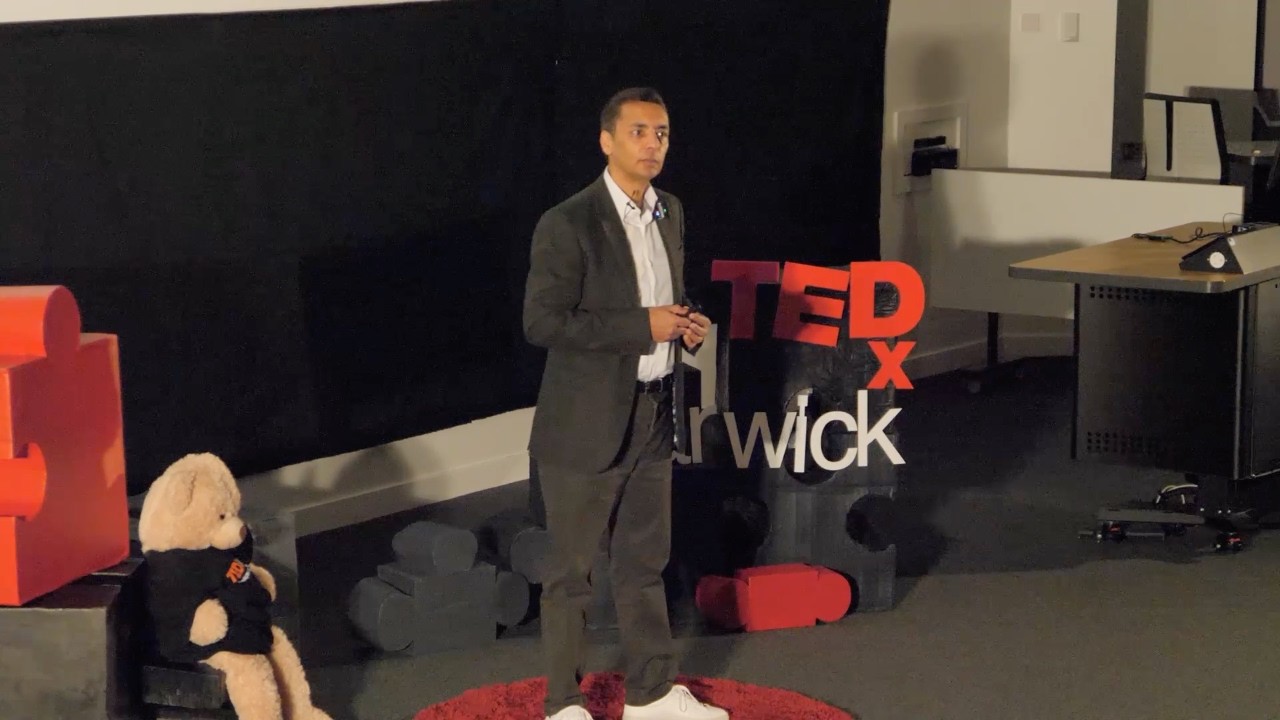
The Choices We Make When We're Not Paying Attention | Jitender Arora | TEDxWarwick Salon
Keywords
Summary
137 words
Critical Evaluation
Value of the Information & Strength of the Argument
The talk’s value lies in its powerful personal illustration of the cost of distraction, making abstract concepts like ‘attention erosion’ tangible. The speaker’s use of a cybersecurity analogy to explain how small ignored signals lead to major failures is compelling and persuasive. However, the argumentation relies heavily on anecdote and personal reflection rather than empirical evidence or theoretical frameworks. The speaker does not cite studies on attention, multitasking, or parenting, limiting the scientific underpinning. Nevertheless, the message is coherent and emotionally resonating, emphasizing the importance of deliberate presence.
Scientific Rigor, Source Quality, Title Accuracy
The talk provides no external sources or scientific references; it is an opinion piece based on personal experience. The only link in the description is to the general TEDx page, which does not substantiate specific claims. The title accurately reflects the content, focusing on choices made when not paying attention. No comments were provided for analysis, so public reception cannot be assessed.
165 words
Title / Content Match
The title accurately reflects the core theme of unnoticed choices during distraction, reinforced by the personal story.
Quality & Reliability
6/10
Personal narrative with plausible insights but no external evidence or empirical data. The speaker's professional background in cybersecurity lends credibility to the analogy of small signals, but claims are anecdotal and lack supporting research.
Key Moments
Markers derived by PSI from the transcript: the creator did not define chapters.
- Speaker recounts son's words: 'two lines, 14 words' that changed his perspective.
- Discussion of how being busy is mistaken for importance and identity.
- Speaker connects cybersecurity failures to missed small signals due to busyness.
- Personal story of the evening with his son, laptop, and phone distraction.
- Realization that small choices daily form a pattern, not one big mistake.
- Introduction of life as journey from B to D, with C as choices in between.
- Analogy of life's costs being like a credit card bill—quiet accumulation.
- Speaker apologizes to son and describes changes: being more present and expressive.
- Closing: life's jigsaw puzzle, one choice at a time, thoughtfully.
Cited Sources
- TEDx Program — Referenced as the event organizer and general platform for the talk.
Contribution & Novelties
The talk’s original contribution is framing attention and distraction as a series of incremental choices, similar to cybersecurity’s ‘swiss cheese model’ of failures. It personalizes the impact of digital-age distraction on parenting and relationships. The speaker’s dual perspective as a CISO and father provides a unique analogy.
Pour aller plus loin :
- Attention economy — Discusses how attention is a scarce resource shaped by digital platforms.
- Mindfulness — Psychological and contemplative practices for maintaining present-moment awareness.
- Swiss cheese model — Accident causation model used in cybersecurity and aviation, analogous to the accumulation of small errors.
- Multitasking and attention — Research on the cognitive costs of switching attention.
107 words
Radar Profile
The radar profile shows low technical level but moderate quality and quantity of information, reflecting a personal narrative rather than a technical exposition. Reliability is moderate due to lack of external validation.