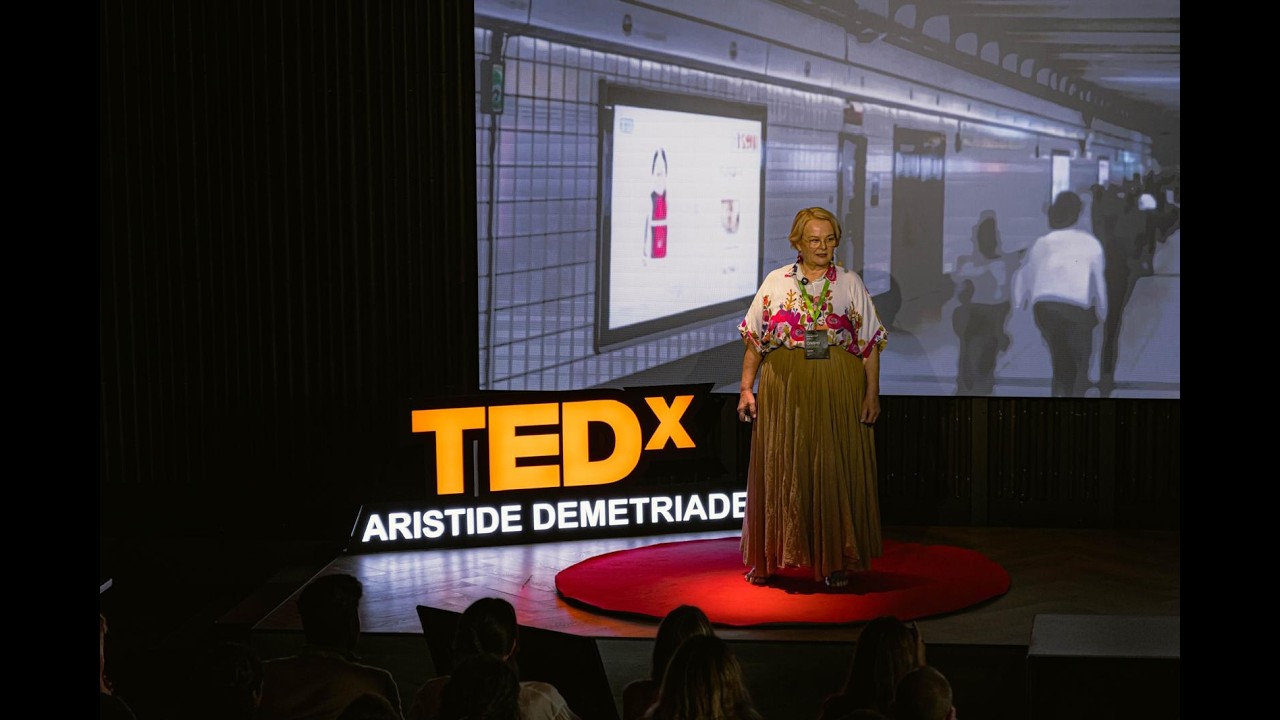
Cum ne găsim liniștea într-o mare de zgomot? | Cristina Onofrei | TEDxAristide Demetriade Street
Keywords
Summary
198 words
Critical Evaluation
Value of the Information & Strength of the Argument
The talk’s value lies in its relatable framing of digital overload and its concrete, low-effort solutions. The argument is built sequentially: establishing the problem with a quantitative reference, contrasting with a simpler past, illustrating a transformative personal experience, and culminating in clear, feasible boundaries (space, time, attention). The reasoning is coherent and accessible, though it relies more on anecdotal evidence than systematic analysis. The speaker’s persuasion comes from authenticity and practical wisdom rather than empirical data, making it effective for a general audience seeking actionable change.
Scientific Rigor, Source Quality, Title Accuracy
The only explicit source is the UCSD study mentioned in passing; the speaker does not provide a citation or URL, and the claim is presented as a paraphrase. The description supplies a generic TEDx link, not specific to the talk’s content. The title accurately mirrors the content, and the talk stays on topic. No external sources are used to support her claims about nature or boundaries, but such claims are experiential rather than factual. The talk’s scientific rigor is moderate; it is more of an inspirational and reflective piece than a research-based lecture.
194 words
Title / Content Match
The title accurately frames the talk's central question, and the speaker directly addresses it through personal stories, scientific reference, and practical advice.
Quality & Reliability
6/10
The speaker cites a well-known study on information overload (UCSD, 2008) but without precise reference; the rest relies on personal experience and general observations, making the talk credible but not deeply rigorous.
Key Moments
Markers derived by PSI from the transcript: the creator did not define chapters.
- Metro anecdote illustrating distraction and missed human connection
- Citing UCSD 2008 study on daily information consumption (34 GB, 100,000 words)
- Contrast with life in 1982, emphasizing the scarcity of pauses
- Personal experience on a terrace without phone, leading to inner calm
- Proposing boundaries of space, time, and attention; closing exercise
Cited Sources
- TEDx Program — The talk was delivered at a TEDx event, independently organized and following the TED conference format.
Contribution & Novelties
The talk does not introduce novel research, but it synthesizes known concepts about digital distraction and attention management into a personal, empathetic narrative. Its contribution is a pragmatic framework—space, time, attention boundaries—and a simple mindful exercise to reorient attention. The speaker’s emphasis on nature as a re-grounding tool echoes existing literature on restorative environments.
Pour aller plus loin :
- Attention economy — Explains how digital platforms compete for human attention, a core issue underlying the talk.
- Digital detox — A practical countermeasure to digital overload, directly relevant to the speaker’s proposal of setting boundaries.
- Mindfulness — The practice of present-moment awareness, which the closing exercise exemplifies.
106 words
Radar Profile
The radar profile shows moderate scores across quantity and quality of information, with a lower technical level reflecting the talk's accessibility. Fiabilité is mid-range, indicating trustworthy but not deeply cited content. The balance suggests a well-communicated, experience-based talk ideal for a broad audience rather than a technical or academic presentation.