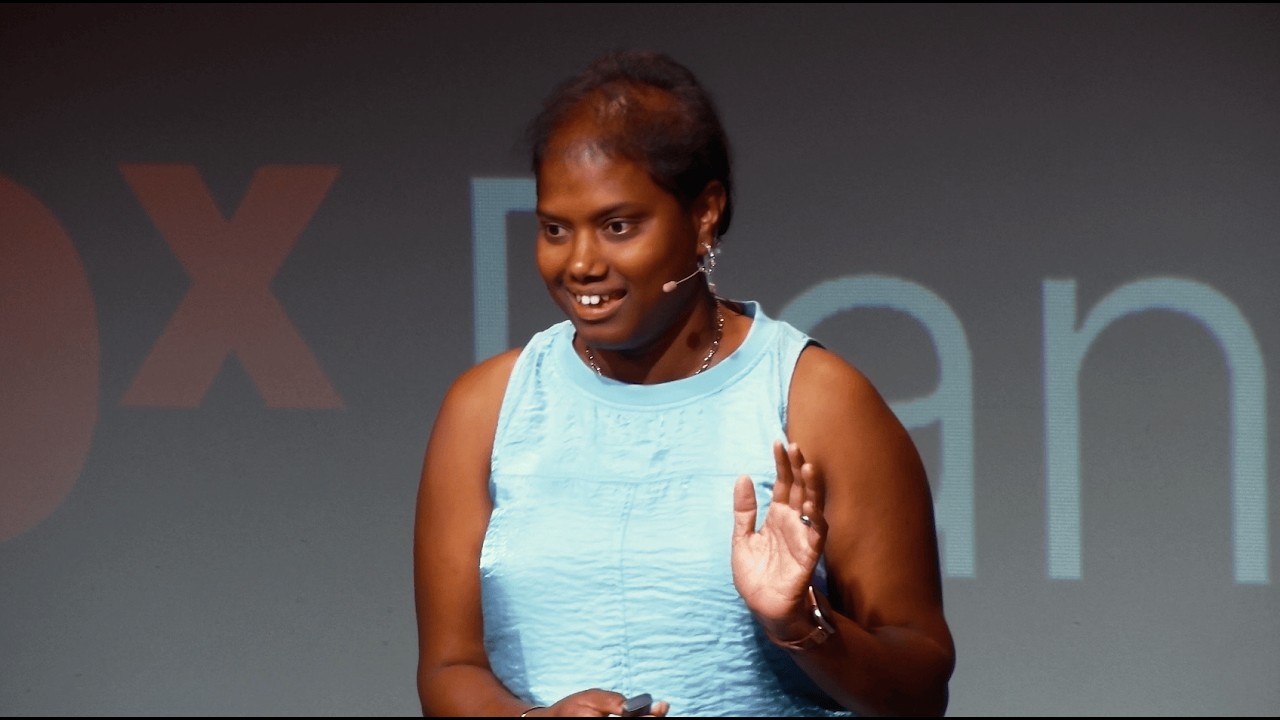
From food waste to food abundance | Prema Walker | TEDxRancho Mirage
Keywords
Summary
128 words
Critical Evaluation
Value of the Information & Strength of the Argument
The talk provides a pragmatic model linking policy (SB 1383) to grassroots action, with specific numbers and a replicable example. Walker’s argument is structured: she establishes the problem (landfill methane, food insecurity), explains the policy response, describes her practical solution, and presents evidence of impact. The reasoning is persuasive, though it relies on personal narrative rather than rigorous data analysis. The inclusion of farmer suicide statistics and local food insecurity adds emotional weight but is presented without deeper contextualization.
Scientific Rigor, Source Quality, Title Accuracy
Walker refers to the legal definition of compost and mentions the UN SDGs but does not provide direct citations to academic studies or regulatory documents. The only external source in the description is the TEDx page. The title is accurate and the content aligns well with it. The talk is a personal testimony drawing on engineering expertise and entrepreneurial experience, but it does not engage with peer-reviewed literature.
162 words
Title / Content Match
The title accurately reflects the content: a journey from addressing food waste through composting to creating food abundance via an urban farm model.
Quality & Reliability
7/10
The talk presents concrete data (700,000 lbs diverted, $270,000 funding), references California's SB 1383 law, and includes personal observations, but relies heavily on anecdotal evidence and lacks peer-reviewed citations.
Key Moments
Markers derived by PSI from the transcript: the creator did not define chapters.
- Childhood memories of farming in India and the arrival of synthetic fertilizers.
- Explanation of California's SB 1383 law mandating organic waste diversion.
- Definition of compost and the temperature threshold (131°F) for pathogen kill.
- Description of her own composting system and urban farm in Palm Springs.
- Impact statistics: 700,000 lbs diverted, $270,000 in funding, 12 community sites.
- Reasons for doing this: farmer suicides in India, food insecurity in Coachella Valley.
- Call to action: community-scale composting and alignment with UN SDGs.
Cited Sources
- TEDx Talks — Official Page — The talk was presented at a TEDx event; this is the general TEDx site with event information and resources.
Contribution & Novelties
Walker presents a practical, policy-driven model for social entrepreneurship in the composting space, combining engineering know-how with community engagement. Her work demonstrates a viable pathway for small-scale urban farms to leverage state laws and competitive grants, while addressing both environmental and social issues. The originality lies in the integration of legislative compliance, permaculture principles, and job creation in a food-insecure region.
Pour aller plus loin :
- California SB 1383 (Lara) Short-Lived Climate Pollutants — Context for the state law that drives the business model.
- Permaculture — Design approach used in her farming and composting systems.
- United Nations Sustainable Development Goals — Framework she uses to measure social impact.
- Composting — General process and benefits.
114 words
Radar Profile
The profile shows moderate to high scores across dimensions, with slightly lower quality of information due to reliance on personal anecdotes rather than systematic data. The technical level is sufficient for a general audience, balancing policy, biology, and engineering.