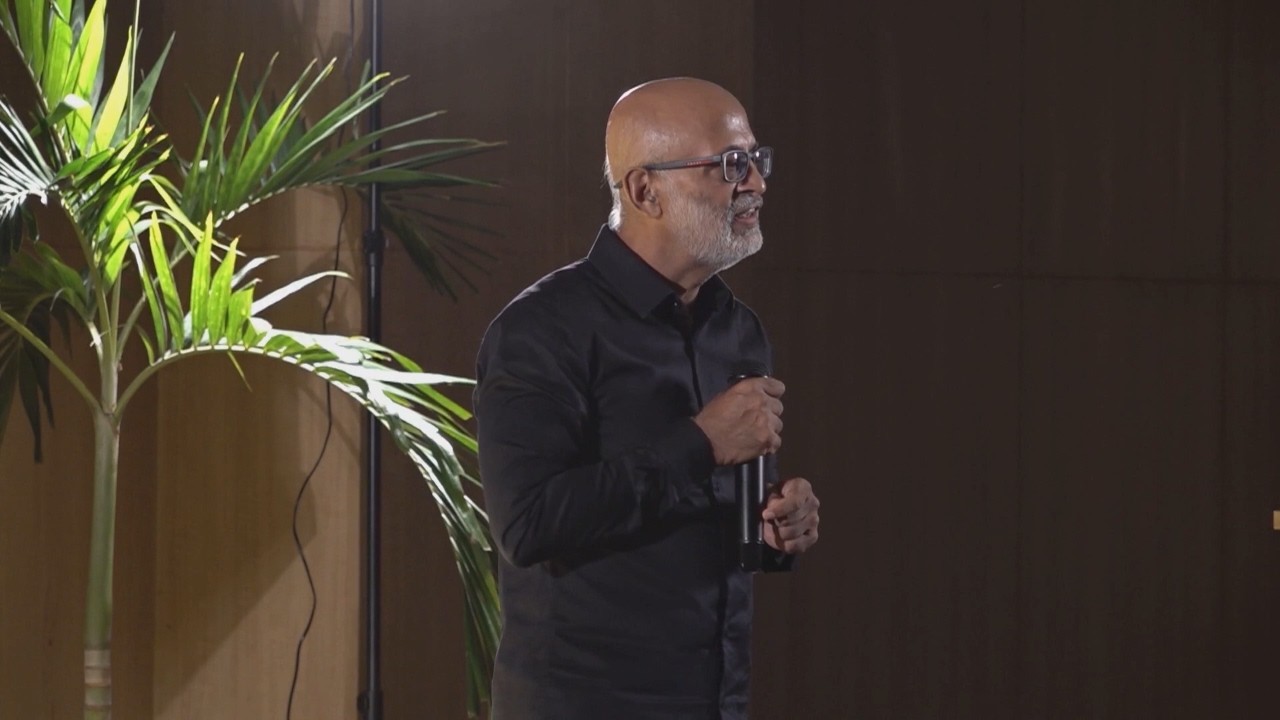
Why Do We Fail Despite Knowing Everything? | Madhusudan Rao | TEDxIIM Nagpur
Keywords
Summary
161 words
Critical Evaluation
Value of the Information & Strength of the Argument
The talk provides a compelling personal narrative that resonates with common human struggles. Its value lies in shifting the focus from information overload to actionable steps, which is particularly relevant in the information age. The argumentation is built on anecdotal evidence and logical reasoning rather than empirical data, but it is coherent and persuasive. The speaker uses relatable examples (exercise, procrastination, anger) and his own transformation to illustrate the knowing-doing divide. The introduction of the ’execution problem’ offers a fresh perspective, though it lacks depth in explaining underlying psychological mechanisms.
Scientific Rigor, Source Quality, Title Accuracy
The scientific rigor is limited: the talk is an opinion piece based on personal experience and industry observations, not a systematic review or original study. No external sources are cited beyond the TEDx platform. The title accurately reflects the content, and the talk stays on topic throughout. While the arguments are logically presented, they would benefit from references to established behavioral psychology theories such as the intention-behavior gap or habit formation research. The absence of data weakens the scientific credibility, but the practical advice is sound and aligns with common self-improvement principles.
197 words
Title / Content Match
Title accurately reflects the core theme of the talk: the discrepancy between knowing what to do and actually doing it.
Quality & Reliability
6/10
The talk is based on personal experience and anecdotal observations from the pharmaceutical industry, with no peer-reviewed sources cited. It offers practical insights but lacks empirical rigor.
Key Moments
Markers derived by PSI from the transcript: the creator did not define chapters.
- Speaker challenges audience to do push-ups, illustrating that knowing exercise is good doesn't translate into doing it.
- Recounts experience in pharmaceutical industry: SOPs and training exist, but errors still occur, highlighting the difference between knowing and doing.
- Personal story of starting exercise at 53, with one push-up and pull-up, and never missing the gym for 5 years 5 months 2 days.
- Identifies barriers: dramatization, wanting perfect conditions, and the cost of doing versus knowing.
- Concludes with the idea that the bridge between knowing and becoming is doing, and poses the final question about the priority of knowledge vs. action.
Cited Sources
- TEDx Talks — Official TEDx page, indicating the talk was independently organized under the TED format.
Contribution & Novelties
The talk offers a personal and accessible perspective on the ubiquitous problem of knowledge not translating into behavior. It reframes the issue as an ’execution problem’ rather than a ‘knowledge problem’, which is a valuable mindset shift. The speaker’s emphasis on routine over motivation and the idea that ’lasting change is usually boring’ provides practical counterpoints to common motivational narratives. The originality lies in the combination of corporate experience, personal transformation, and a simple actionable question.
Pour aller plus loin :
- Implementation intentions — Research by Gollwitzer on how planning specific actions bridges the intention-behavior gap.
- Theory of planned behavior — A psychological framework explaining the factors (attitudes, norms, perceived control) that influence whether intentions lead to behavior.
- Habit — The science of habit formation and how routines become automatic, supporting the speaker’s advice on building routines.
137 words
Radar Profile
The radar profile shows moderate scores in information quantity and quality, with low technical depth and medium reliability. This indicates an opinion-driven, practically oriented talk rather than a rigorous scientific presentation. Strengths lie in the clarity of argumentation and actionable advice, but the lack of demonstrated scientific backing limits its overall robustness.