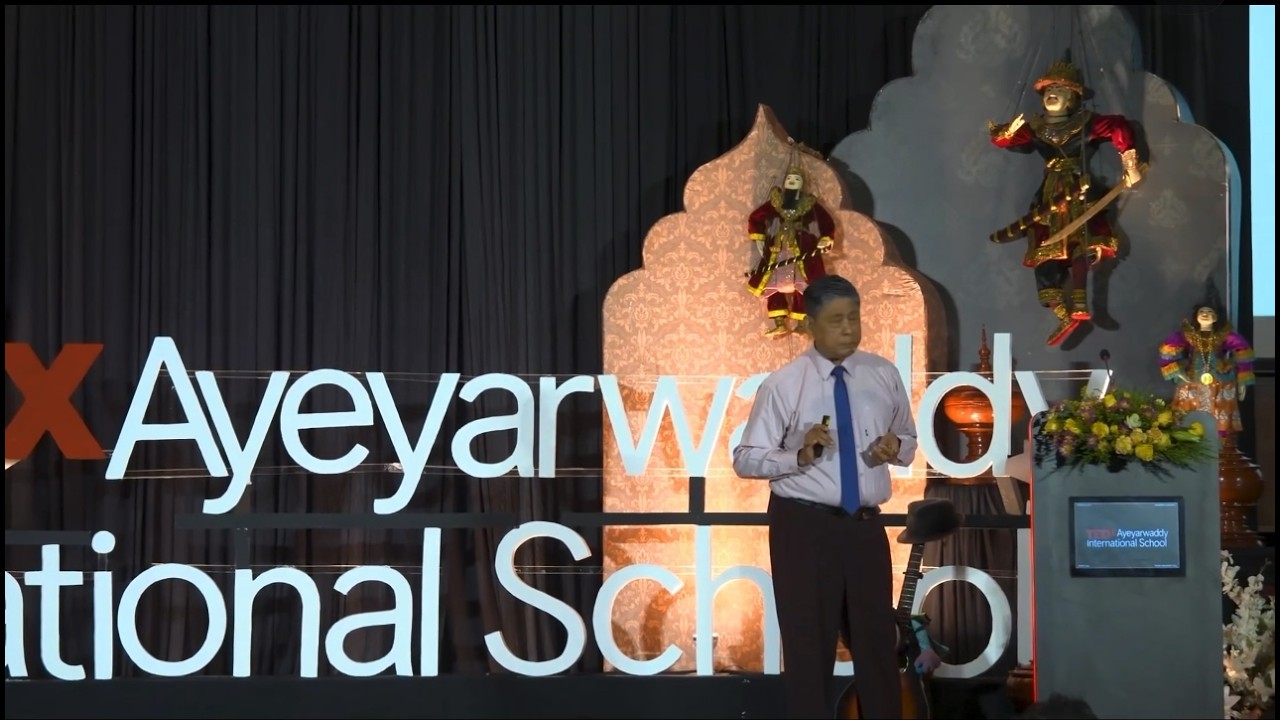
Why Poetry? | Dr. Zaw Tun | TEDxAyeyarwaddy International School
Keywords
Summary
156 words
Critical Evaluation
Value of the Information & Strength of the Argument
The talk provides a coherent and persuasive argument for the relevance of poetry. It draws on well-chosen literary examples and personal teaching experience to demonstrate how poetry can shift perspectives and enrich emotional and linguistic awareness. The speaker’s argument is structured around two main reasons—perspective change and deepened understanding of language—and he supports these with specific textual analyses. The use of comparative examples (e.g., different treatments of the same subject) strengthens the case. However, the argumentation is more suggestive than rigorously evidence-based; it relies on anecdotal and experiential claims rather than formal research. Still, the reasoning is clear and accessible, making a compelling case for the intrinsic value of poetry.
Scientific Rigor, Source Quality, Title Accuracy
The speaker is a professor of English, lending authoritative weight to his remarks. He cites canonical poems and poets, but does not provide explicit external sources or citations. The only external reference is the TEDx platform itself, which does not constitute a scientific source. The title accurately reflects the content, focusing on the question of poetry’s purpose. The talk is well-structured and stays on topic. The absence of formal references is typical for a TEDx presentation and does not undermine the quality of the conceptual content, though it limits verifiability. The public response (view count of 8) is extremely low, but no comments are provided, so audience reception cannot be assessed.
236 words
Title / Content Match
The title accurately reflects the content, as the talk directly addresses the purpose and value of poetry.
Quality & Reliability
8/10
The talk is given by an Emeritus Professor of English, drawing on decades of academic expertise, and the reasoning is clear and well-structured, though not heavily sourced.
Key Moments
Markers derived by PSI from the transcript: the creator did not define chapters.
- Introduction: The speaker introduces the topic and the first poem, Thomas Gray's 'Elegy Written in a Country Churchyard'.
- Reading and analysis of the first stanza, highlighting sound and rhythm to convey meaning.
- Second poem: Wordsworth's 'I Wandered Lonely as a Cloud', contrasting tone and pace with the first poem.
- Discussion of perspective change, using examples of how different poets view the same subject (daffodils).
- Exploration of tone and connotation, with the example of 'spring' vs. 'winter' and their deeper meanings.
- Reading and interpretation of Robert Frost's 'Dust of Snow' as a final example, emphasizing a shift in mood.
- Conclusion: Encourages comparing poems to expand one's perspective and offers a homework assignment.
Cited Sources
- TEDx Program — Official page for TEDx events, where the talk was hosted.
Contribution & Novelties
The talk offers a compelling personal synthesis of why poetry remains relevant, blending literary analysis with pedagogical advice. It emphasizes that poetry is not merely an academic subject but a tool for developing empathy, linguistic sensitivity, and a flexible mindset. The speaker’s bilingual approach (English and Burmese) adds a cross-cultural dimension, but the core insights are universal.
Pour aller plus loin :
- Connotation — Central to the talk’s discussion of deeper word meanings.
- Tone (literature) — Relevant to the speaker’s emphasis on reading tone for emotional understanding.
- Poetry — Provides general background on the art form and its purposes.
99 words
Radar Profile
The profile shows high scores in information quality and reliability, moderate in quantity and technical level, indicating a focused, well-argued talk that is not overly technical but rich in insight.