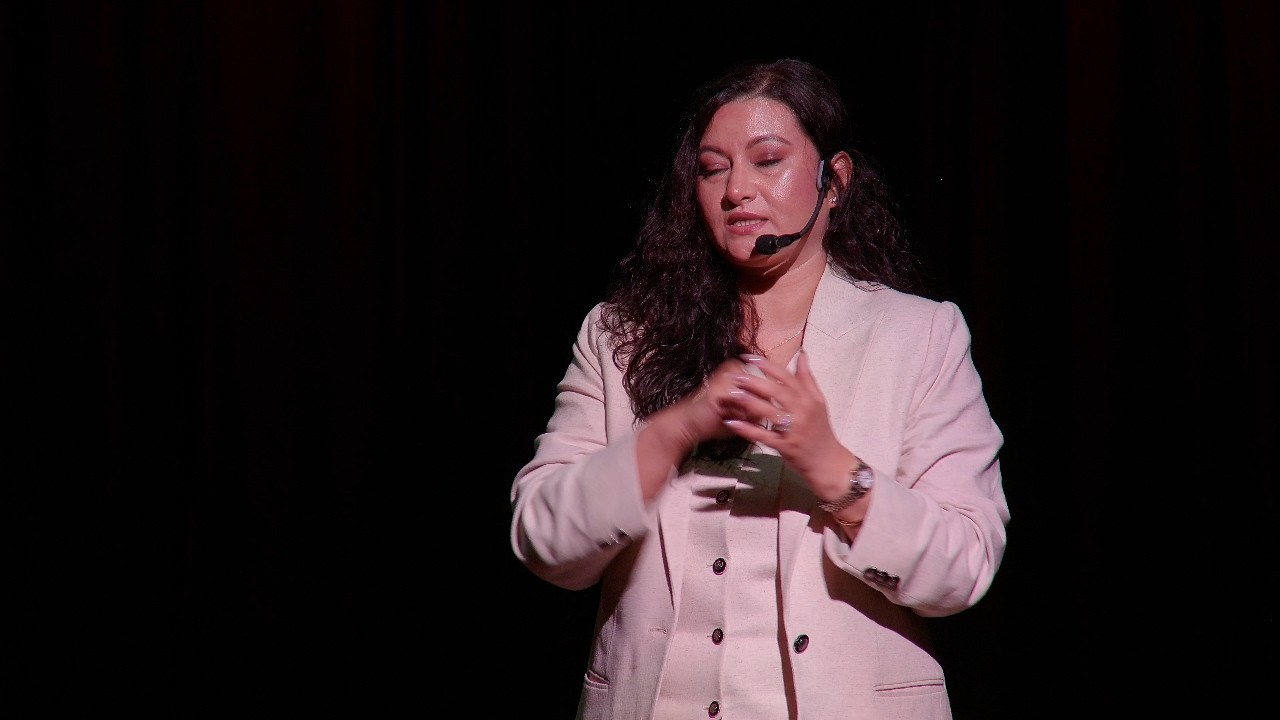
From the Uncertainty of Identity to Self -Empowerment ... | Priti Sitoula | TEDxPremier Intl School
Keywords
Summary
156 words
Critical Evaluation
Value of the Information & Strength of the Argument
The talk offers practical, personal strategies for dealing with criticism and cyberbullying. The speaker’s argument is built on narrative evidence, not scientific data, but it is coherent and emotionally compelling. She advocates for facing criticism directly, using it as fuel, and not letting it define one’s identity. The argumentation is subjective but consistent, with a clear progression from vulnerability to empowerment. Examples from her life illustrate the points effectively.
Scientific Rigor, Source Quality, Title Accuracy
The speaker does not cite any external sources or research; the content is based entirely on personal experience. This limits the scientific rigor, though it is typical for motivational TEDx talks. The title is apt, as the talk explores identity uncertainty and achieving self-empowerment through resilience. No external references are provided beyond the TEDx platform description. The talk would benefit from supporting psychological concepts, but it stands as an inspirational narrative.
155 words
Title / Content Match
The title accurately reflects the content: the speaker navigates identity uncertainty after public criticism and moves toward self-empowerment. It fits well.
Quality & Reliability
5/10
The talk is an autobiographical account offering personal strategies for handling criticism, but lacks empirical evidence or scientific citations. The advice is practical and relatable, though subjective.
Key Moments
Markers derived by PSI from the transcript: the creator did not define chapters.
- Speaker recalls failing math and receiving harsh criticism from a teacher.
- Winning Miss Nepal 2003 and the mixed reactions from relatives and friends.
- Facing backlash after international pageant for wearing a swimsuit.
- Hiding from public criticism for three weeks due to character assassination.
- Deciding to face criticism head-on by hosting a live call-in television show.
- The turning point with a critical caller, leading to a public response.
- Advice on handling criticism: face it, don't defend, and use it to improve.
- Final message about facing criticism while ignoring the noise.
Cited Sources
- TEDx — The talk was delivered at a TEDx event, and this is the official TEDx platform.
Contribution & Novelties
The talk adds a personal narrative on using criticism as a catalyst for self-empowerment, offering a specific technique of facing critics directly. It distinguishes between constructive criticism and destructive noise. While not scientifically novel, it provides anecdotal evidence that may resonate. For further exploration, the following concepts are relevant:
Pour aller plus loin :
- Psychological resilience - Understanding the psychological mechanisms that allow individuals to bounce back from adversity.
- Cognitive reframing - A technique to change the perception of negative events into more positive interpretations, which aligns with the speaker’s advice.
- Growth mindset - The belief that abilities can be developed, which supports the idea of using criticism to improve.
110 words
Radar Profile
The scores suggest a talk rich in anecdotal value but low in technical depth, with moderate reliability. The strong points are the qualitative aspect and the practical advice, while the quantitative and technical aspects are weak. This reflects a typical inspirational talk rather than a scientific presentation.