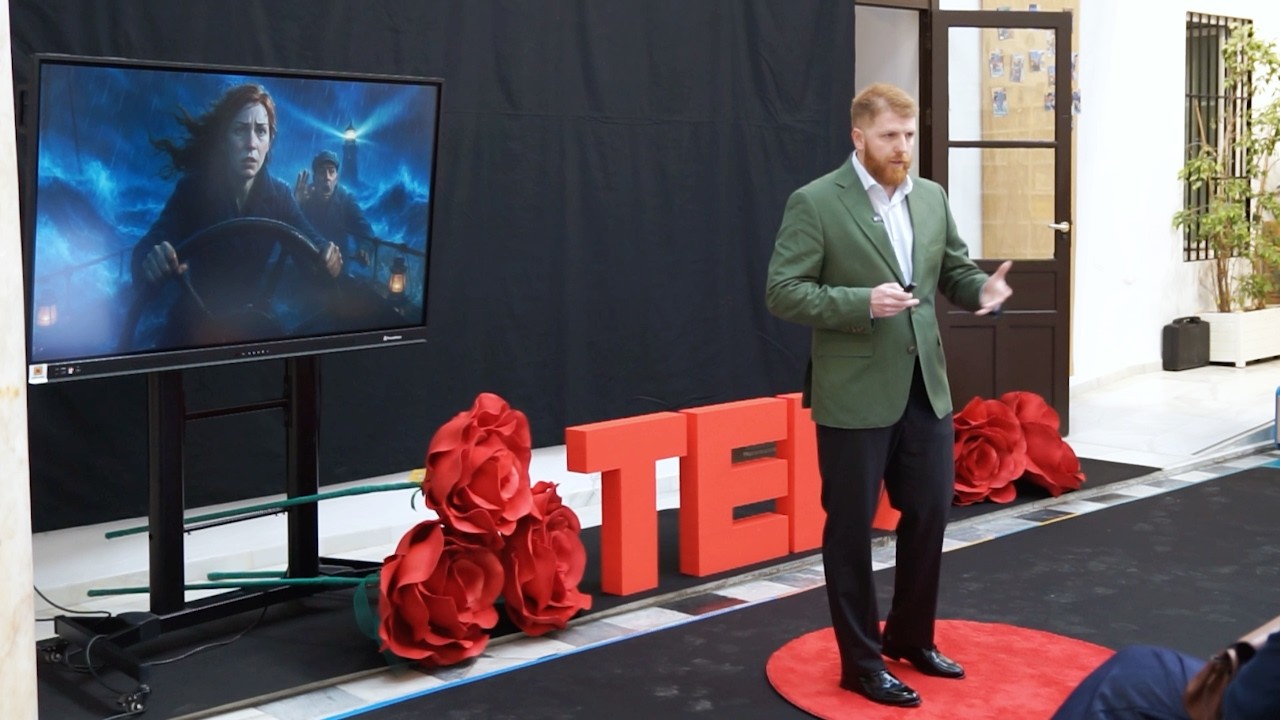
¿Cómo encontramos el sentido de la vida? | Luis Ignacio De Amores Cabello | TEDxCasco Antiguo
How do we find the meaning of life? | Luis Ignacio De Amores Cabello | TEDxCasco Antiguo
Keywords
Summary
187 words
Critical Evaluation
Value of the Information & Strength of the Argument
The talk provides a valuable synthesis of research on meaning and psychological interventions, making a strong case that meaning is a measurable health factor and that therapies like behavioral activation and DBT can help individuals reconnect with it. The argumentation is coherent, moving from empirical evidence to practical examples, and is grounded in the speaker’s professional experience. However, the scientific references are presented without precise citations, and some study details are oversimplified for a general audience.
Scientific Rigor, Source Quality, Title Accuracy
The speaker references credible studies (Frankl, Cohen, Dimidjian, Linehan, Hayes) but provides no direct citations or URLs. The title matches the content accurately. As a TEDx talk, it aims at a broad audience, simplifying complex research while maintaining overall scientific plausibility. No quality issues with the title-content alignment.
139 words
Title / Content Match
The title accurately reflects the core question addressed: how to find meaning in life, a theme explored through science and personal testimony.
Quality & Reliability
7/10
The talk references several real studies (Frankl, Cohen, Dimidjian, Linehan, Hayes) but some details are imprecise and names are slightly mispronounced. It provides a coherent synthesis of evidence-based psychological approaches to meaning, though without precise citations.
Key Moments
Markers derived by PSI from the transcript: the creator did not define chapters.
- Introduction: decision to stay, Viktor Frankl's story
- Randy Cohen's study on purpose and health
- Behavioral activation (Sona Dimidjian) and its efficacy
- Marsha Linehan's DBT study on suicide reduction
- Steven Hayes's cold-water experiment on acceptance
- Acceptance vs. resignation, Ortega y Gasset quote
- Personal anecdotes about grandparents as guiding values
- Ship metaphor and navigating by values
- The self as observer and the exercise
- Conclusion: meaning is something we do
Cited Sources
- TEDx program — The talk was given at a TEDx event; this link explains the TEDx format.
Contribution & Novelties
This talk adds a personal and accessible dimension to existing scientific knowledge on meaning in life, integrating multiple evidence-based therapies (behavioral activation, DBT, ACT) with a clear metaphor to make the concepts actionable for a general audience. Its novelty lies in weaving together Frankl’s existential philosophy, modern cognitive-behavioral research, and practical advice in a coherent narrative.
Pour aller plus loin :
- Logotherapy — Viktor Frankl’s theory of meaning.
- Acceptance and Commitment Therapy — A therapy emphasizing values and acceptance.
- Dialectical Behavior Therapy — Developed by Marsha Linehan, focuses on skills for emotional regulation.
- Behavioral Activation — An evidence-based treatment for depression.
101 words
Radar Profile
The radar profile shows strong scores in information quantity and moderately high in quality and reliability, but a lower technical level reflects its accessible nature. The talk balances evidence with emotional appeal, making it a solid science communication piece.