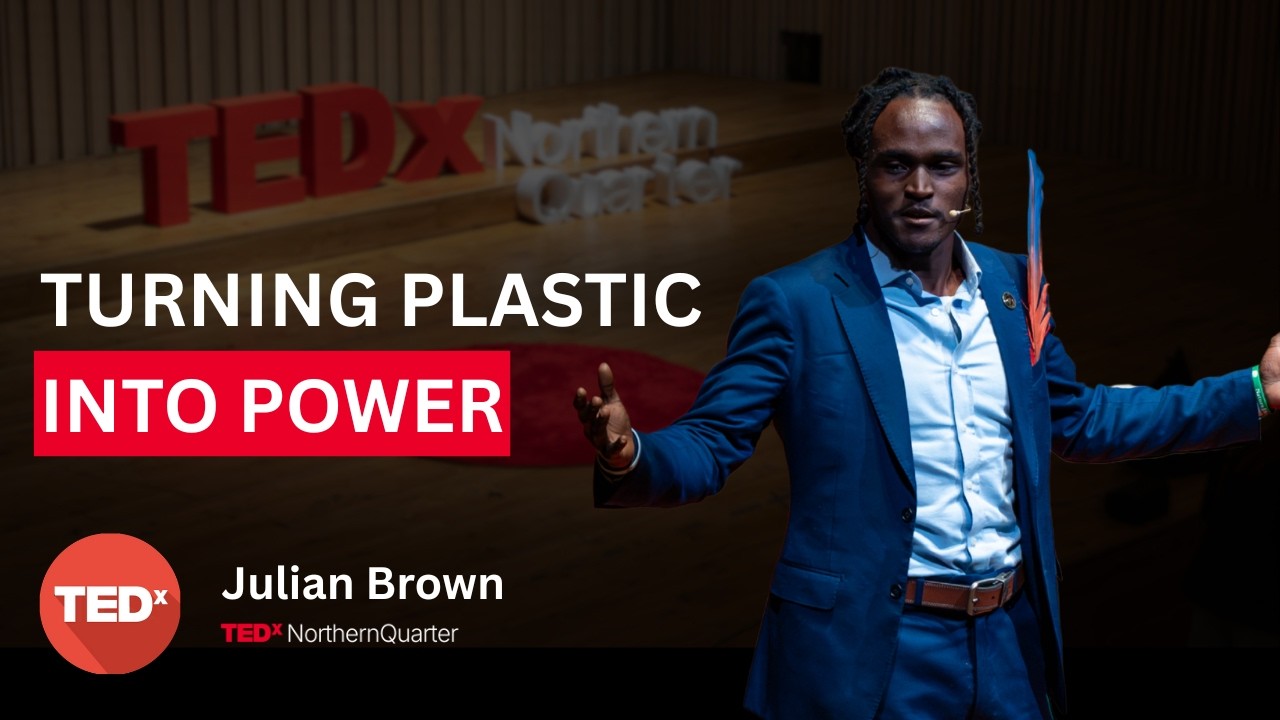
Turning plastic into power | Julian Brown | TEDxNorthern Quarter
Keywords
Summary
195 words
Critical Evaluation
Value of the Information & Strength of the Argument
The value of this talk lies in its personal testimony and accessible explanation of pyrolysis as a viable waste-to-energy approach. Brown’s narrative is compelling, and he effectively conveys the emotional drive behind his engineering projects. The argumentation is built on anecdotal experience and inspirational anecdotes rather than quantitative data or peer-reviewed evidence. The three traits—solution focus, perseverance, and pain tolerance—are presented convincingly, albeit subjectively, with relatable examples from historical figures. The talk’s strength is its motivational appeal, but it lacks rigorous scientific depth or novel technical insights, making it more persuasive than informative at a technical level.
Scientific Rigor, Source Quality, Title Accuracy
The talk does not cite scientific papers or external sources, relying instead on general knowledge and personal experience. The only reference provided in the description is the TEDx homepage, which is generic and not directly tied to specific claims. The title is catchy but partially misleading, as the content extends beyond plastic conversion to include broader life lessons. The scientific accuracy of the pyrolysis description is acceptable, though oversimplified. The speaker openly acknowledges his lack of formal credentials, which adds transparency. No comments were available for analysis, so public reception could not be gauged.
206 words
Title / Content Match
The title 'Turning plastic into power' accurately reflects the core scientific concept discussed (pyrolysis converting plastic to fuel), though the talk equally emphasises personal perseverance and motivational traits, making the title slightly narrower than the full content.
Quality & Reliability
6/10
The talk provides a correct but simplified explanation of pyrolysis and its application to plastic waste. The speaker shares personal experiences and engineering efforts without formal citations or detailed technical evidence. The inspirational content is subjective but clearly presented, and the overall reliability is moderate, appropriate for a TEDx talk.
Key Moments
Markers derived by PSI from the transcript: the creator did not define chapters.
- Introduction: Julian Brown paints a vivid image of a 14-year-old seeing a documentary on plastic pollution, feeling helpless.
- The eureka moment: a Google search reveals plastic is made of petroleum, and can be converted back via pyrolysis.
- Building the first prototype reactor and subsequent versions; describes the Mark 5 solar-powered mobile reactor.
- First trait of world changers: prioritizing the solution over the problem, using Nikola Tesla as an example.
- Second trait: perseverance, illustrated by Nelson Mandela's 27-year imprisonment and continued fight against apartheid.
- Third trait: pain tolerance, using Mahatma Gandhi's hunger strikes and the concept of intentional discomfort.
- Conclusion: urges the audience to transform potential energy into kinetic energy and pursue their own world-changing goals.
Cited Sources
- TEDx Talks — Mentioned in the description as the overarching TEDx platform that organizes independently run events.
Contribution & Novelties
The talk’s original contribution is the personal, open-source documentation of a DIY plastic-to-fuel reactor journey, presented as an accessible case study for grassroots environmental innovation. Brown shares both successes and setbacks, emphasizing the importance of curiosity and persistence over formal credentials. This approach offers inspiration to citizen scientists and tinkerers, though the technical novelty is limited as pyrolysis is a well-known process.
Pour aller plus loin :
- Pyrolysis — Overview of the thermochemical decomposition process central to the talk.
- Plastic-to-fuel — Discusses various technologies and projects converting plastic waste into petroleum-like products.
- Microwave-assisted pyrolysis — A variant of pyrolysis that may offer energy efficiency advantages, relevant to Brown’s prototyping.
- TEDx program — Information about independently organized TED-like events, contextualizing the talk’s format.
122 words
Radar Profile
The radar chart shows moderate scores across all dimensions, with the lowest in technical depth and information density, reflecting the talk's emphasis on inspiration and personal narrative rather than scientific rigor. Reliability is moderate, as the content is not deeply researched but accurately presented at a basic level.