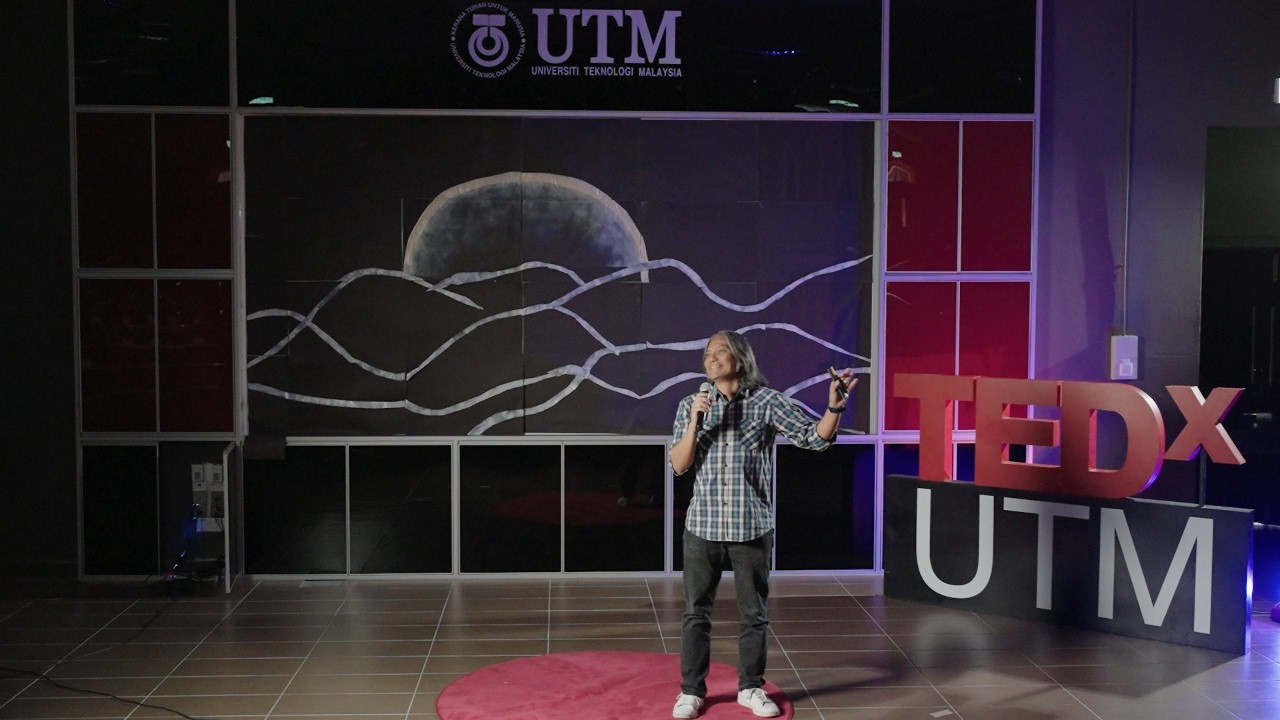
Community Filmmaking Leads to Empowerment | Zan Azlee | TEDxUTM
Keywords
Summary
188 words
Critical Evaluation
Value of the Information & Strength of the Argument
The talk delivers a compelling narrative backed by personal experience and visible project outcomes. The argument is coherent: shifting from parachute journalism to collaborative storytelling yields greater authenticity and empowerment. Azlee provides specific examples—the selection of junior directors, the film’s nationwide release, and the success of participants like Bill Quinn—which give credibility to his claims. However, the evidence is largely anecdotal, with no formal evaluation or metrics beyond the described successes. The argumentation is persuasive for a general audience but lacks rigorous scientific or systematic analysis. The value lies in the transferable model of participatory filmmaking and its potential for social impact.
Scientific Rigor, Source Quality, Title Accuracy
The talk is a personal account rather than a formal study, so scientific rigor is limited. The speaker references his own projects and experiences but does not cite external research or statistical data. The description provides links to TEDx guidelines and the TEDx website, which are organizational references rather than scholarly sources. The title is accurate and reflects the content precisely, which is a positive point. The lack of external citations and systematic methodology reduces the scientific quality, but the transparency of the personal experience and the inclusion of video documentation add credibility.
210 words
Title / Content Match
The title perfectly captures the talk's core message: that enabling communities to tell their own stories leads to empowerment.
Quality & Reliability
7/10
The talk is a personal testimony from an experienced journalist and filmmaker, supported by video clips and concrete outcomes from a specific community project. While anecdotal and not peer-reviewed, it offers valuable insights into participatory media practices.
Key Moments
Markers derived by PSI from the transcript: the creator did not define chapters.
- Introduction to parachute journalism and the moral shift towards more meaningful engagement.
- Description of the Bajau community and the Jita Kalawad project on Pulau Omadal, Sabah.
- Explanation of the workshop: teaching camera skills and storytelling to 15 participants, emphasizing trust and empowerment.
- Trailer of the community-produced film and highlights of outcomes: junior directors, cinema distribution, and social media success of participants.
Cited Sources
- TEDx Content Guidelines — Referenced in the video description as the official guidelines for independently organized TEDx events.
- TEDx Official Website — Mentioned in the description as a resource for learning more about TEDx events.
Contribution & Novelties
The talk contributes a practical example of participatory video as a tool for social empowerment in a marginalized indigenous community. It highlights the shift from external storytelling to self-representation and provides a model that could be replicated. The originality lies in the emphasis on long-term mentorship and the tangible professional outcomes achieved by participants.
Pour aller plus loin :
- Participatory video — Relevant methodology in community development and media studies.
- Community media — Broader context on media creation by and for communities.
- Bajau people — Background on the ethnic group featured in the talk, including their nomadic maritime culture and status issues.
102 words
Radar Profile
The radar profile shows strong scores in quantity and quality of information, reflecting the rich anecdotal evidence and clear narrative. Technical level is low, indicating the talk is accessible to a general audience. Reliability is moderate, as it relies on personal testimony rather than documented research. Overall, the talk excels in inspiring and informing about participatory media's potential.