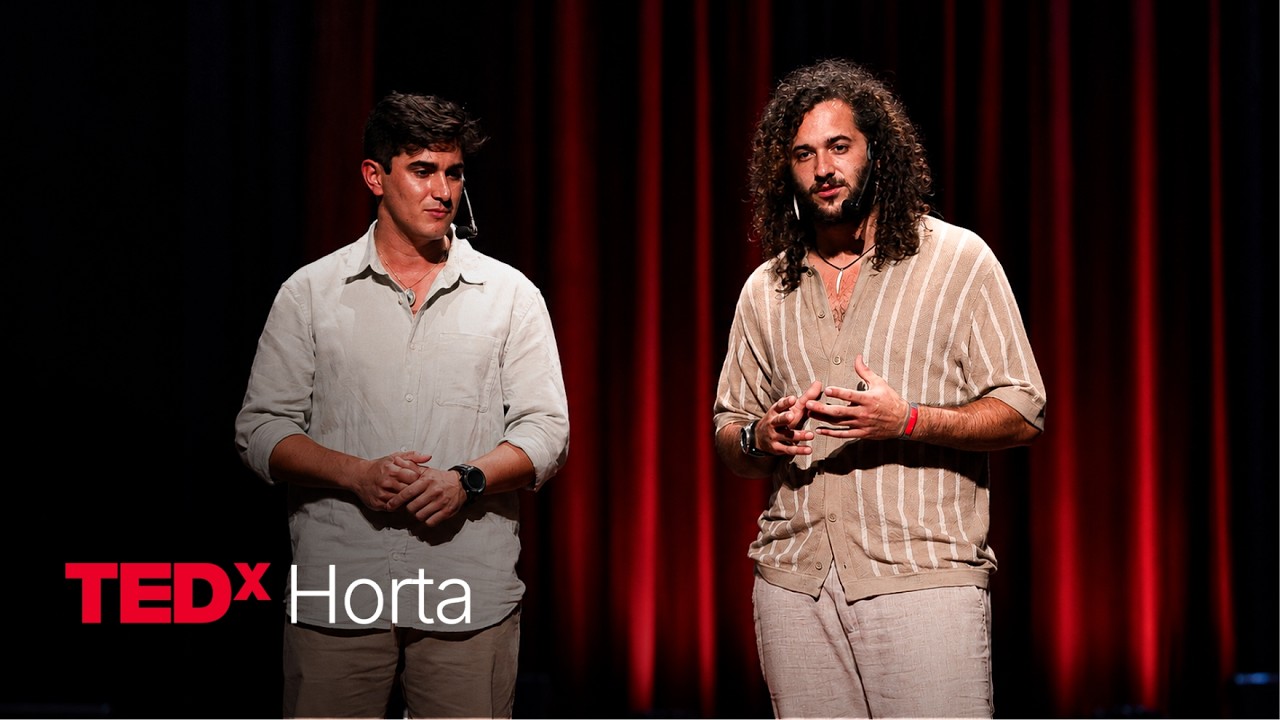
E Se a Gastronomia Não Fosse Apenas Comida? | Franco Pinilla & Rafael Ávila Melo | TEDxHorta
What If Gastronomy Were More Than Just Food? | Franco Pinilla & Rafael Ávila Melo | TEDxHorta
Keywords
Summary
199 words
Critical Evaluation
Value of the Information & Strength of the Argument
The informational value of this talk lies primarily in its reframing of gastronomy as a cultural and social practice rather than a purely culinary one. The speakers offer a concrete case: a restaurant on a small, isolated island where the supply chain, the producers and the community are inseparable from what ends up on the plate. This is a meaningful contribution to discussions about local food systems, island economies and cultural heritage, and it resonates with broader debates on food sovereignty and short supply chains. The argumentation, however, is essentially narrative and rhetorical. It proceeds through personal anecdote, emotional recollection and a series of definitional questions (‘Where does gastronomy begin?’) rather than through evidence, comparison or counter-argument. The central claim — that gastronomy is measured by stories, memories, people and transmitted knowledge rather than by quantity of recipes — is asserted rather than demonstrated. The speakers do not engage with possible objections, such as the economic constraints that make small-scale island gastronomy fragile, or the risk that romanticising tradition can obscure the harshness of subsistence living. The talk is persuasive as a manifesto for a certain ethos of cooking, but it does not attempt to prove its claims; its strength is evocative framing, not analytical rigour.
Scientific Rigor, Source Quality, Title Accuracy
Scientific rigour is minimal: the talk is a personal testimony with no data, no methodology and no engagement with academic literature on food studies, anthropology or island economies. No sources are cited in the transcript, and the only link in the description is the generic TEDx page. The claims made are plausible but unverifiable as stated, and the speakers themselves acknowledge that their initial conversation with the retired woman ‘reached no certain conclusion’. The title’s question is faithfully addressed: the entire talk is an extended answer to ‘what if gastronomy weren’t just food?’, and the content delivers on that promise without overreach. No comments were provided for analysis.
329 words
Title / Content Match
The title's question ('What if gastronomy weren't just food?') is directly and consistently addressed throughout the talk, which argues that gastronomy encompasses identity, memory, culture and sustainability. The fit is strong.
Quality & Reliability
6/10
The talk is a first-person narrative by two restaurant founders about their experience on Pico Island. It is internally coherent and grounded in lived practice, but it offers no empirical data, no citations, and no verifiable claims beyond personal testimony. Reliability is therefore moderate: credible as experiential testimony, weak as evidence for general claims about Azorean gastronomy.
Key Moments
Markers derived by PSI from the transcript: the creator did not define chapters.
- Introduction of the chef's table on Pico Island and the retired woman's remark that the Azores has 'a very small gastronomy'.
- The central question is posed: what if gastronomy weren't just food?
- The chefs recount meeting in Argentina in 2019 while peeling nearly 200 artichokes together.
- Reunion in Bilbao under pressure, and reflection on years spent cooking for major chefs and events.
- Rafael returns to Pico for a sabbatical at his grandmother Helena's house; Franco travels through Spain and Portugal.
- The late-night conversation in Baía de Engrade about opening a restaurant on a small isolated island.
- Discovery years: fishing, diving, meeting producers and listening to islanders' food memories.
- Gastronomy reframed as identity, culture, memory, sustainability and tradition.
- Franco's childhood memory of his mother's dinners and the realisation that a meal begins long before sitting at the table.
- Conclusion: gastronomy should be measured by stories, memories, people and transmitted knowledge, not by quantity of recipes.
Cited Sources
- TEDx official programme page — The only link provided in the video description, referring to the TEDx format and independently organised local events.
Concurring Sources
- UNESCO Intangible Cultural Heritage — Food-related traditions — UNESCO recognises culinary practices and food-related traditions as intangible cultural heritage, supporting the talk's claim that recipes and foodways carry identity and memory.
- Slow Food — Preserving local food traditions — The Slow Food movement's emphasis on local products, traditional knowledge and community aligns with the speakers' argument about gastronomy as territory and identity.
Contribution & Novelties
The talk’s originality lies less in its thesis — that food carries culture and identity — than in its situated illustration: a restaurant built on a small, remote Atlantic island, where the chefs deliberately reposition themselves as listeners and intermediaries rather than as auteurs. The idea that gastronomy ‘begins’ before the kitchen — in a grandmother’s lesson, in a family gathering, in a fisherman’s memory — offers a useful conceptual shift for thinking about food systems as living archives. It also implicitly challenges the star-and-recipe metrics of global haute cuisine by proposing alternative measures: stories told, memories preserved, people gathered, knowledge transmitted.
Pour aller plus loin :
- Gastronomy — Overview of gastronomy as the study of food and culture, useful for situating the talk’s definitional claims.
- Azores — Context on the archipelago’s geography, isolation and culture, which underpins the speakers’ argument about island gastronomy.
- Food sovereignty — Framework for the talk’s implicit argument about local production, subsistence and community control over food.
- UNESCO Intangible Cultural Heritage — Institutional reference for the idea that culinary traditions constitute transmitted cultural heritage.
- Slow Food — Movement promoting local, traditional and sustainable food practices, closely aligned with the ethos described in the talk.
199 words
Radar Profile
The profile is heavily skewed toward qualitative and cultural dimensions: high on narrative and contextual richness, very low on technical depth and empirical verification. This is consistent with a TEDx-style personal talk rather than a research presentation. The overall shape reflects a persuasive, experience-based contribution rather than an evidence-based one.