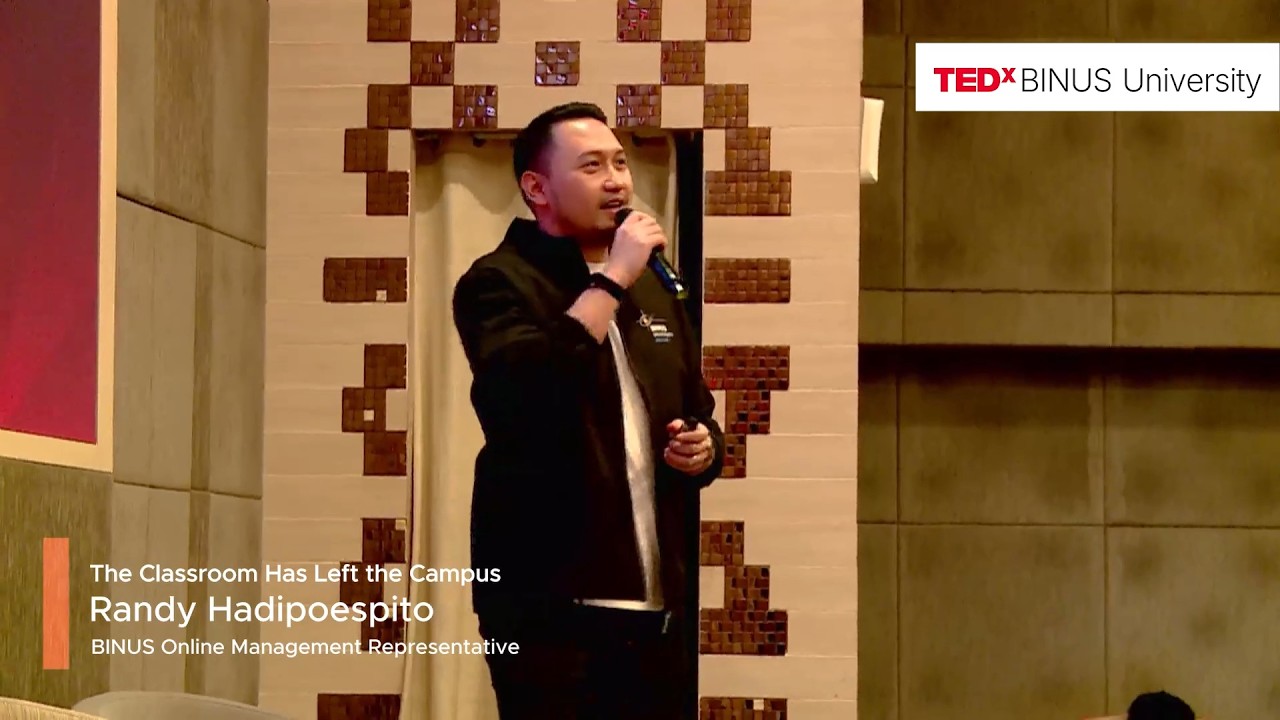
The Classroom Has Left the Campus | Randy Hadipoespito | TEDxBINUS University
Keywords
Summary
147 words
Critical Evaluation
Value of the Information & Strength of the Argument
The talk provides a personal perspective on the value of online education, but it lacks deep empirical support. The speaker argues that university remains relevant, emphasizing the structured system and holistic development beyond mere knowledge. The six-criteria framework for choosing an online university is practical and memorable, though it is presented as a list without detailed examples or evidence. The argumentation is persuasive in style but relies heavily on personal experience and general observations, with occasional unverified statistics. The logical flow is clear, but the depth of analysis is limited. The concluding quote about education as an operating system is inspiring but does not add substantive new ideas.
Scientific Rigor, Source Quality, Title Accuracy
The speech is a TEDx talk, which by format encourages personal storytelling rather than strict scientific rigor. No external sources are cited except the generic TEDx link in the description. The speaker mentions statistics without providing origins, reducing credibility. The title accurately matches the content, which consistently discusses how learning has left the traditional campus. There is no visible audience commentary provided, so no public trend analysis is possible.
192 words
Title / Content Match
The title directly reflects the core message about learning moving beyond physical campuses, which is consistently addressed throughout the talk.
Quality & Reliability
5/10
The talk mixes personal anecdotes and general claims without providing specific references or verifiable data. Some statistics (e.g., 70% of learners, 85% career improvement) are mentioned but not sourced, limiting overall reliability.
Key Moments
Markers derived by PSI from the transcript: the creator did not define chapters.
- Introduction: the speaker greets the audience and introduces the topic of the classroom leaving the campus.
- Discussion of typical classroom imagery and how online learning offers the same subjects differently.
- Question of university relevance; speaker states it remains important for building skills and perspectives.
- Personal life stages: school, university, career, family; emphasizes groundwork in early stages.
- Benefits of online learning: flexibility, non-homogeneous students, fits diverse life stages.
- Introduces six criteria for selecting an online university: credential, curriculum, classroom, community, career, convenience.
- Elaborates on career support and convenience; concludes with the quote about education as an operating system.
Cited Sources
- TEDx Talks official page — Referenced for the TEDx event format and general information.
Contribution & Novelties
The talk presents a personal framework (the six C’s) for evaluating online universities, which is a practical contribution, though not entirely original. It reinforces the idea that education is becoming a lifelong operating system. The speaker’s perspective as an MBA graduate and industry professional adds a real-world angle.
Pour aller plus loin :
- Lifelong learning — Relevant to the core concept of continuously learning beyond formal education.
- Online learning in higher education — Provides context on the growth and methods of online education.
- University accreditation — Discusses the importance of accreditation, which the speaker mentions as a key criterion.
99 words
Radar Profile
The profile shows moderate scores in information quantity and quality but low technical level and reliability. This aligns with a motivational talk that prioritizes engagement over depth, with limited verifiable data.