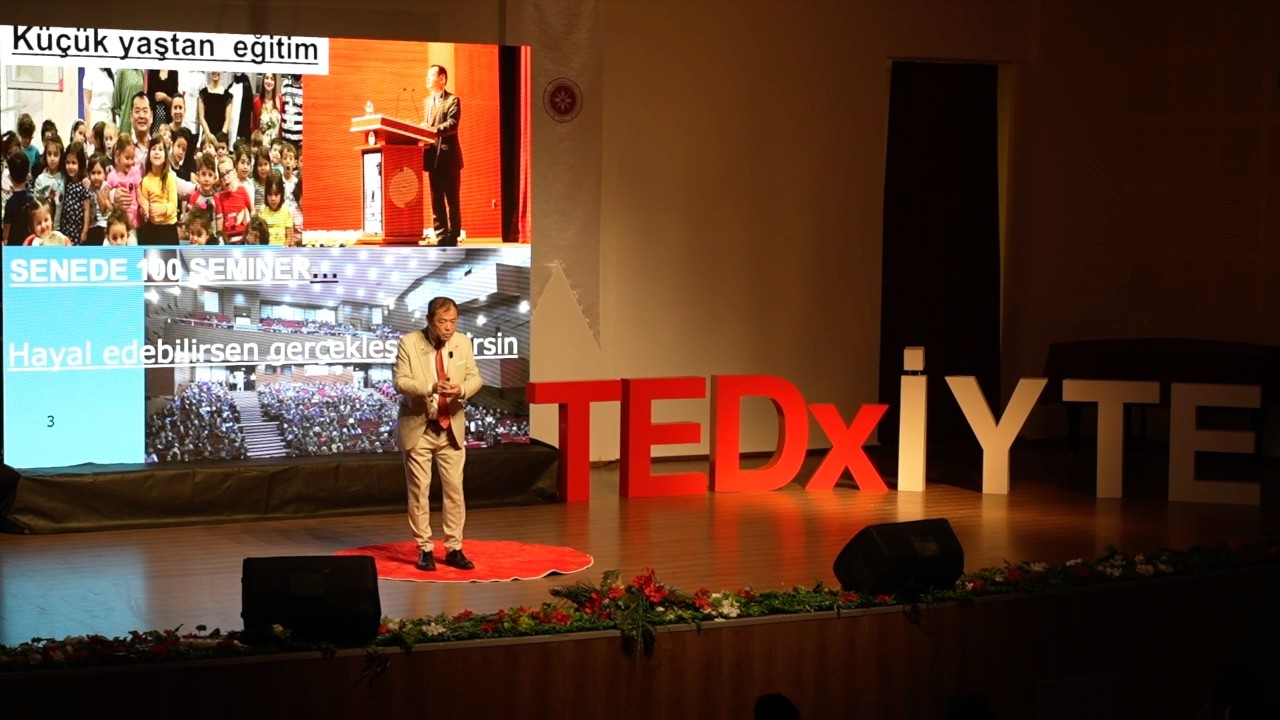
Hayallerimi nasıl gerçeğe dönüştürebilirim? | Yoshinori Moriwaki | TEDxİYTE
How can I turn my dreams into reality? | Yoshinori Moriwaki | TEDxIYTE
Keywords
Summary
178 words
Critical Evaluation
Value of the Information & Strength of the Argument
The primary value of this talk lies in the speaker’s authentic personal narrative and his actionable approach to turning dreams into reality. Moriwaki’s engineering background lends credibility to his observations about earthquake-resistant construction, and he effectively contrasts Japan’s success with Turkey’s vulnerabilities. The argumentation is persuasive through storytelling and direct emotional appeal, though it lacks rigorous data or formal references. His emphasis on incremental steps, starting with clear goals and continuously updating them, provides a practical framework. The talk’s strength is in inspiring and motivating the audience, especially students, rather than presenting new scientific findings.
Scientific Rigor, Source Quality, Title Accuracy
The speaker does not cite specific sources or studies; he relies on his professional experience, which is significant, as he worked on major projects and collaborated with Turkish authorities post-earthquake. He mentions, for instance, the 2011 Tōhoku earthquake and his personal involvement in risk assessment workshops, but these are narrative references, not detailed citations. The title accurately matches the content: the talk is about realizing dreams, using his own life as an example, and connecting that to his mission of earthquake safety. The talk is well-structured, moving from personal history to broader societal calls, though the engineering aspects are presented in a simplified, accessible manner for a general audience.
219 words
Title / Content Match
The title accurately reflects the content: the speaker recounts his journey to fulfill his dream and how he applies it to earthquake preparedness.
Quality & Reliability
7/10
The speaker is an experienced earthquake engineer and architect, sharing personal experiences and professional insights. However, the talk is largely anecdotal and lacks formal citations.
Key Moments
Markers derived by PSI from the transcript: the creator did not define chapters.
- Introduction of professional background, including work on Petronas Towers and involvement in Turkish projects.
- Description of retrofitting bridges after 1999 earthquakes and the role of Turkish-Japanese cooperation.
- Explanation of using animated cartoons and games to teach earthquake safety to children.
- Recounting his childhood dream of becoming an architect and the systematic approach he took to achieve it.
- Philosophy on decision-making: 'If you hesitate, you won't do it; just do it.' Shares examples of learning new skills.
- Personal stories: making sushi, his admiration for Atatürk, and his decision to settle permanently in Turkey.
- Call to action: need to solve earthquake vulnerability in Turkey, involving diverse fields and young people.
Cited Sources
- TEDx program page — General reference to the TEDx organization and event format.
Contribution & Novelties
The talk’s original contribution is the fusion of personal motivational advice with professional insights on earthquake resilience, presented through the lens of a Japanese expert living in Turkey. Moriwaki’s practical methodology—writing down goals, breaking them into steps, and continuously updating—offers a tangible framework for personal development. His emphasis on teaching children through play and animation is a novel approach to disaster education. The talk underscores the urgent need for Turkey to adopt seismic safety measures and invites interdisciplinary collaboration.
Pour aller plus loin :
- Seismic retrofit — Provides background on techniques to strengthen existing structures against earthquakes.
- Earthquake engineering — Discusses the science and practice of designing earthquake-resistant buildings.
- 2011 Tōhoku earthquake and tsunami — Context for the speaker’s reference to the Japanese disaster and its impact.
127 words
Radar Profile
The radar profile shows relatively high scores in technical level and reliability, reflecting the speaker's expertise, but lower scores in information quantity and quality suggest the talk is more motivational than fact-dense. The balance indicates a personal and compelling narrative rather than a systematic scientific review.