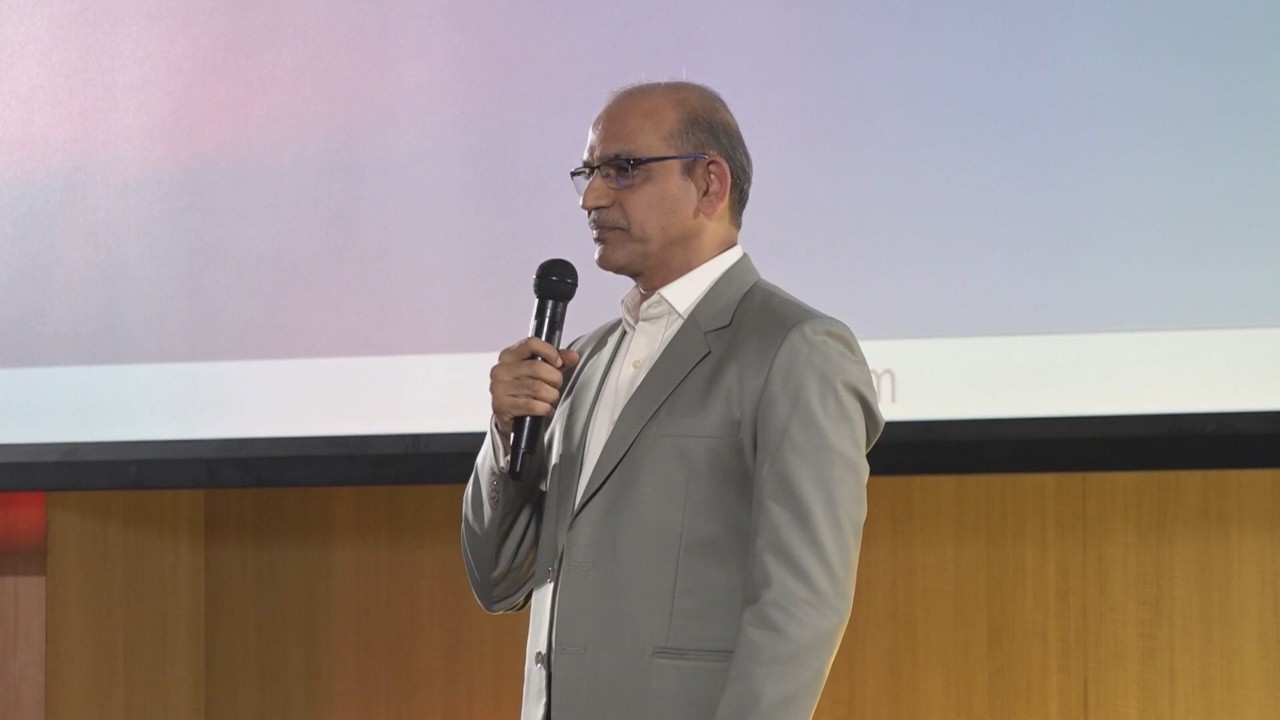
Keep Showing Up Until the Win Finds You | Biren Parekh | TEDxIIM Nagpur
Keywords
Summary
138 words
Critical Evaluation
Value of the Information & Strength of the Argument
The talk’s primary value lies in its practical, relatable anecdotes that illustrate resilience in concrete situations, such as managing a crisis in a foreign country and building financial discipline from a modest salary. Parekh’s argument is coherent: he defines grit as a teachable habit rather than an innate trait, supported by his repeated examples of showing up in adverse conditions. However, the reasoning is largely anecdotal and lacks empirical evidence or references to psychological research, reducing its scientific substance. The argumentation is persuasive on an emotional level but does not offer nuanced strategies beyond persistence and adaptability.
Scientific Rigor, Source Quality, Title Accuracy
The talk does not cite external sources, and its credibility rests on the speaker’s personal journey. The TEDx format implies a certain level of curated content, but no formal verification is possible. The title ‘Keep Showing Up Until the Win Finds You’ perfectly matches the content, which is exclusively about persistence and showing up. There is no misalignment. The absence of sources or references in the description limits the scientific rigor, but the personal testimony provides an authentic, if subjective, account.
193 words
Title / Content Match
The title accurately reflects the core message of the talk, which is about consistently showing up until success arrives.
Quality & Reliability
6/10
The talk is a personal narrative with no scientific citations, but the speaker's extensive professional experience and consistent message about grit and persistence provide a coherent, if subjective, perspective.
Key Moments
Markers derived by PSI from the transcript: the creator did not define chapters.
- Biren recounts the flight diversion to Qingdao due to snowfall, his first challenge.
- He describes the 38 critical issues and the pressure to fix the project in Changchun.
- Flashback to 1992, failing engineering admission, and his father's supportive stance.
- He shares the chaotic Manila project, where showing up daily helped him succeed.
- Discussion of his 'greed' as a constant, shown in fitness, financial discipline, and public speaking.
- He emphasizes that grit is a habit built one ordinary day at a time.
- Final message: keep showing up until the win finds you.
Cited Sources
- TEDx Talks — Official TEDx platform where the talk is hosted, providing context on the TEDx event format.
Contribution & Novelties
The talk offers a personal, narrative-driven approach to the widely discussed concept of grit, framing it as an actionable daily habit rather than a fixed trait. Its novelty lies in the concrete case studies from a business turnaround in China and a chaotic tech project, illustrating how showing up and adapting can lead to success without grand plans. The speaker’s emphasis on ‘greed’ as a sustained internal drive is an original metaphor for persistence.
Pour aller plus loin :
- Grit (psychology) — A relevant psychological concept that aligns with the talk’s core theme, though the talk lacks scientific backing.
- Habit formation — Paredes’s argument that grit is a habit ties directly to this concept; the article explains how habits are built over time.
- Angela Duckworth’s research — A prominent researcher on grit, offering a scientific perspective that could complement the talk’s anecdotes.
142 words
Radar Profile
The profile shows moderate scores across all dimensions, with low technicality reflecting its non-scientific nature. The balance between quantity and quality of information is even, but the overall reliability is limited by the absence of external sources.