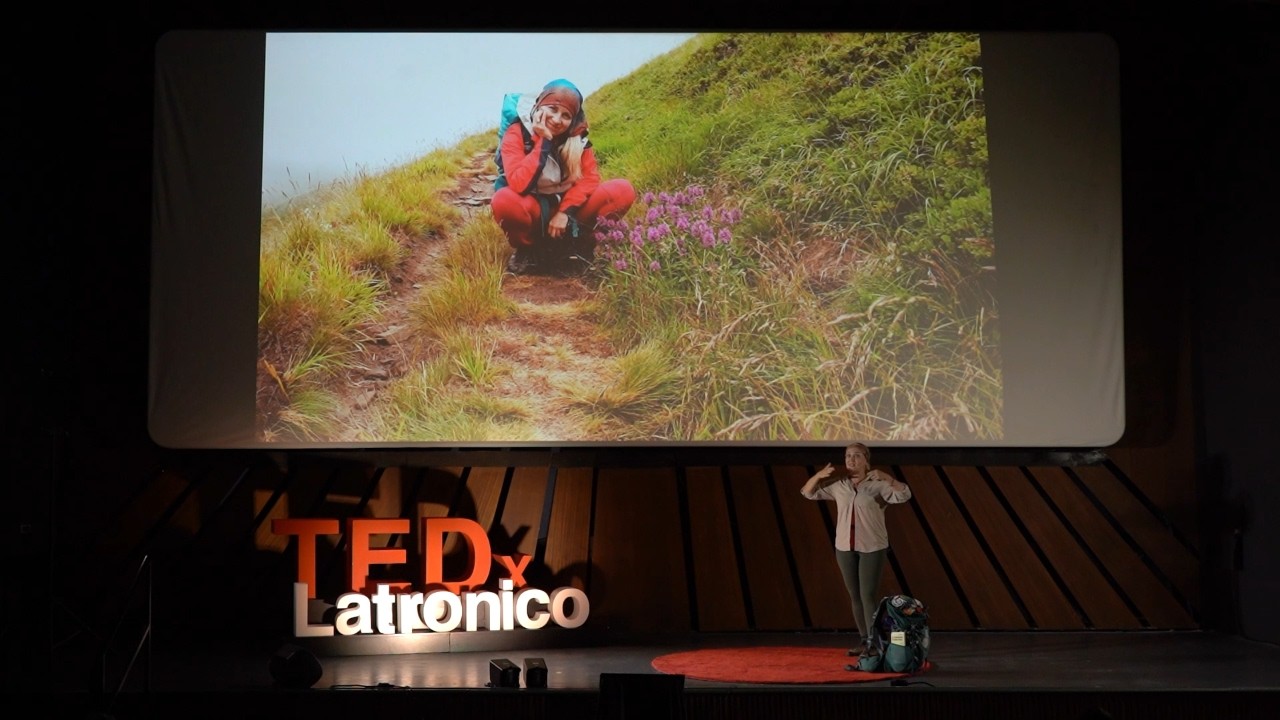
LO ZEN E L’ARTE DELLO ZAINO | Abha Valentina Lo Surdo | TEDxLatronico
THE ZEN AND ART OF THE BACKPACK | Abha Valentina Lo Surdo | TEDxLatronico
Keywords
Summary
154 words
Critical Evaluation
Value of the Information & Strength of the Argument
The talk’s value lies in its authenticity and inspiring anecdotes. Lo Surdo draws on extensive personal experience, offering concrete, practical advice about walking gear and mindset. Her argumentation is structured around the metaphor of the backpack, which she uses effectively to discuss fear, control, and trust. She supports her claims with vivid stories, such as the woman who offered her a bed and the theft of her walking sticks, making her points relatable. However, the evidence is entirely anecdotal, and she does not reference any studies or external sources to back her assertions about the psychological benefits of walking. The reasoning is coherent and philosophically grounded, but it remains a personal perspective rather than a rigorous scientific analysis.
Scientific Rigor, Source Quality, Title Accuracy
Regarding scientific rigor, the talk is more inspirational than evidence-based. Lo Surdo mentions no specific studies, data, or research to support her claims about the benefits of walking or minimalism. The only source provided is the generic TEDx link, which does not contribute to the content’s factual basis. The title accurately captures the essence of the talk, which is a thoughtful reflection on packing as a practice of discernment. The adéquation between title and content is strong, but the lack of verifiable sources limits the talk’s credibility as a scientific resource. The audience’s comments are not provided, so no speculation about public reception is made.
238 words
Title / Content Match
The title accurately reflects the content, which explores the philosophy of minimalism and self-awareness through the metaphor of preparing a backpack for long-distance walking.
Quality & Reliability
6/10
The talk is a personal narrative based on extensive walking experience, plausible but not scientifically rigorous. It provides anecdotal evidence and philosophical reflections rather than verifiable data. The speaker's credentials in communication and journalism add credibility, but the content is subjective.
Key Moments
Markers derived by PSI from the transcript: the creator did not define chapters.
- Differentiation between traveler and tourist, introduction of the backpack metaphor.
- Practical details: shoes, backpack, walking sticks, socks, and the importance of going light.
- Acknowledgment of the Italian walking community and the transformative stories of fellow walkers.
- Personal evolution from carrying unnecessary items to embracing minimalism, including the story of the useless mat.
- Learning to listen to nature and the importance of disconnecting from technology.
- Reflections on gratitude, self-acceptance, and the true goal of the journey being oneself.
- Conclusion: invitation to walk, appreciation for landscapes, and the Camino di San Nilo.
Cited Sources
- TEDx official website — Mentioned in the description as the event format source; no other specific sources are cited.
Contribution & Novelties
The talk offers a personal and poetic perspective on the philosophy of backpacking, framing each item as a symbol of one’s fears and attachments. It contributes to the discourse on simple living and mindfulness by using the concrete example of long-distance walking. While not novel in concept, the speaker’s authentic voice and practical tips add value.
Pour aller plus loin :
- Camino de Santiago — The most famous long-distance pilgrimage, illustrating the tradition of walking as a spiritual practice.
- Simple living — A lifestyle movement that aligns with the talk’s emphasis on minimalism and intentionality.
- Slow movement — A cultural shift toward slowing down, which resonates with the idea of slow travel and mindfulness.
114 words
Radar Profile
The radar profile shows moderate scores in quantity and quality of information, low technical level, and moderate reliability. This reflects a talk that is rich in personal insights but lacks empirical grounding and technical depth.