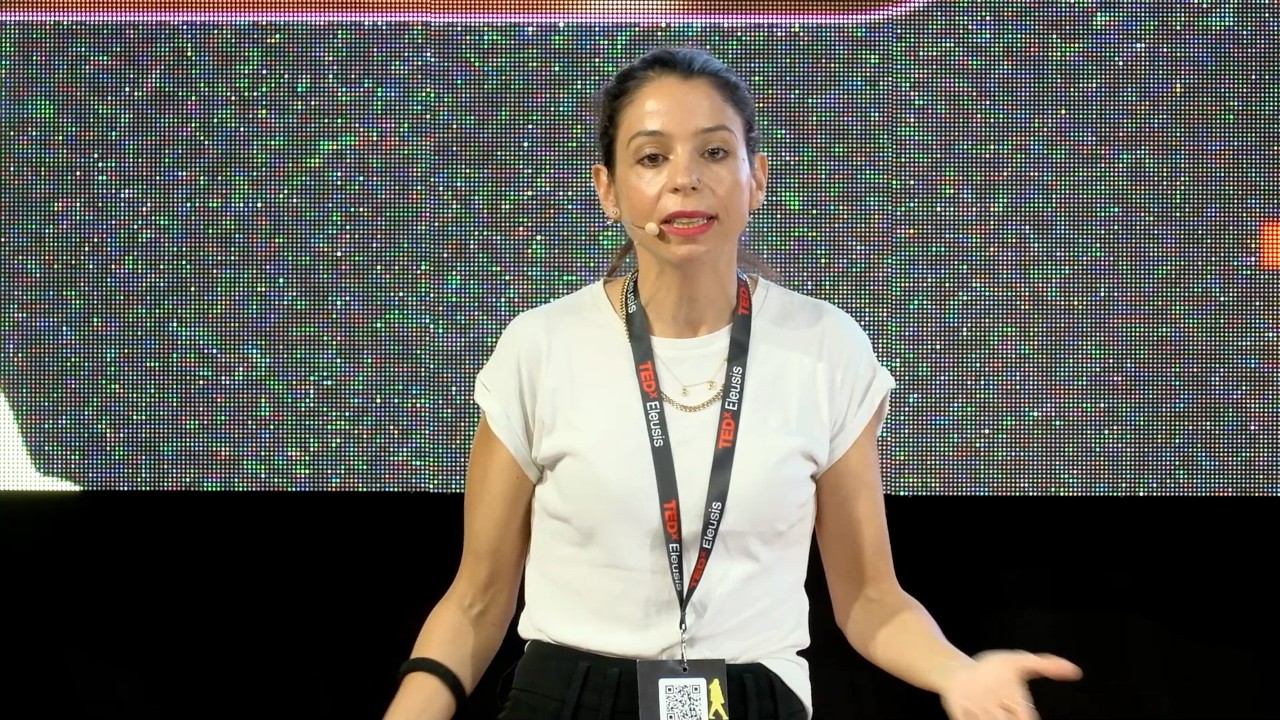
Τι σημαίνει πραγματικά «ξεκινάω κάτι δικό μου»; | Εύα Επιτροπάκη | TEDxEleusis
What does "starting something of my own" really mean? | Eva Epitropaki | TEDxEleusis
Keywords
Summary
202 words
Critical Evaluation
Value of the Information & Strength of the Argument
The talk offers valuable insights into the psychological and practical dimensions of entrepreneurship, often neglected in mainstream success stories. The speaker effectively argues that starting a business is not a glamorous path but one filled with self-doubt, hard work, and the need for resilience. The three-category framework and the wall metaphor provide memorable mental models. However, the argumentation relies heavily on anecdotal evidence and personal opinion, lacking statistical support or reference to established theories. While the emphasis on mindset over knowledge is compelling, it could benefit from referencing psychological research on resilience and growth mindset. The motivational sections are persuasive but occasionally verge on sloganeering, such as the final call to ‘go and get them.’ Overall, the value lies in its authenticity and practical wisdom, but the lack of external validation weakens its scientific rigor.
Scientific Rigor, Source Quality, Title Accuracy
The speaker does not cite any external sources or studies; the only link provided is the generic TEDx page. The content is based on her 15 years of entrepreneurial experience and observations, which gives it a practical grounding but no empirical or academic foundation. The title is well-matched to the content, accurately promising a revelation of unspoken truths about entrepreneurship. The talk is well-structured, with clear sections and a coherent narrative arc. However, the absence of references and the reliance on personal stories means the information cannot be independently verified. The speaker’s credibility is bolstered by her track record and public presence, but the lack of cited evidence limits the scientific quality.
262 words
Title / Content Match
The title accurately reflects the content: the speaker addresses the unspoken realities of entrepreneurship, debunking myths and highlighting the psychological and practical challenges.
Quality & Reliability
6/10
The talk is based on the speaker's 15 years of entrepreneurial experience and personal anecdotes, not on empirical data or peer-reviewed research. It offers practical wisdom but lacks systematic evidence, making it moderately credible.
Key Moments
Markers derived by PSI from the transcript: the creator did not define chapters.
- Introduction: the hype around starting a business and the need to address unspoken realities.
- Three categories of would-be entrepreneurs: big idea, passion, and extra income seekers.
- The chicken-and-egg problem in marketplaces and the speaker's early experience with her marketplace.
- The wall metaphor: obstacles as signals to change direction, not barriers to break through.
- Entrepreneurship is a matter of mindset, not knowledge; the need for continuous personal growth.
- Empowering message for women and mothers, connecting motherhood to entrepreneurial strength.
Cited Sources
- TEDx Program — Official TEDx page mentioned in the description as the talk's organizational framework.
Concurring Sources
- TEDx Program — The platform itself supports the talk's format and dissemination.
Contribution & Novelties
The talk contributes a raw, unfiltered perspective on entrepreneurship, countering the polished narratives on social media. It offers a practical framework for self-assessment before starting a venture and emphasizes the critical role of personal development. The wall metaphor as a redirection signal is a distinctive contribution. However, the ideas align with existing entrepreneurship literature.
Pour aller plus loin :
- Growth mindset — Carol Dweck’s concept, relevant to the talk’s emphasis on mindset over innate talent.
- Lean startup — Eric Ries’s methodology, which echoes the speaker’s advice to test and iterate ideas.
- Chicken-and-egg problem in business — Directly referenced in the talk regarding marketplace dynamics.
- Resilience in psychology — The ability to bounce back from failure, a core theme of the talk.
121 words
Radar Profile
The radar profile shows moderate scores across the board, with a slight emphasis on information quantity over reliability. The talk is rich in content but lacks technical depth and external validation, resulting in a balanced but not exceptional profile.