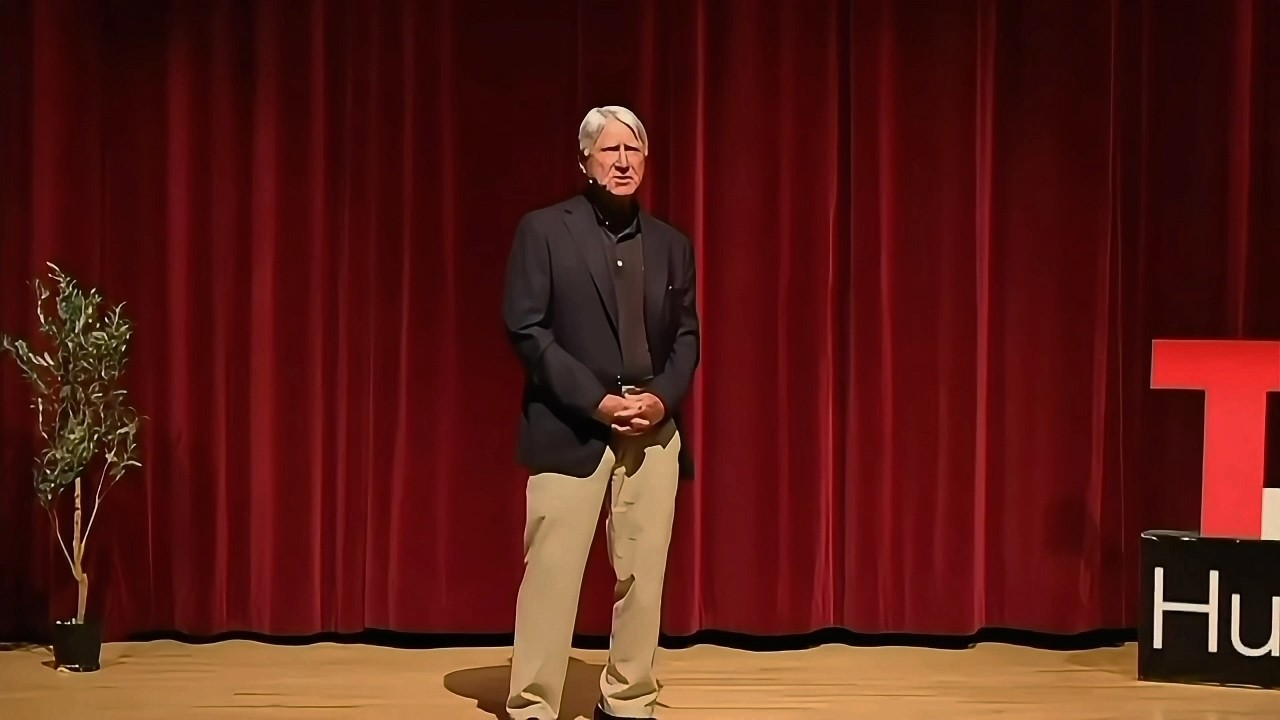
Are you a battery charger? | Marc Byrnes | TEDxHunting Valley
Keywords
Summary
194 words
Critical Evaluation
Value of the Information & Strength of the Argument
The value of the information lies in the speaker’s authentic personal stories and the memorable metaphor of battery chargers versus drainers. The argumentation is primarily anecdotal and introspective, rather than evidence-based. Byrnes effectively uses narratives to illustrate his points, making the talk relatable and engaging. He builds a strong case for prioritizing emotional intelligence (EQ) over pure IQ, and for fostering a culture of caring and collaboration in both personal and professional life. However, the talk lacks empirical evidence or references to external research, so the claims remain subjective opinions. The consistency of his examples strengthens the argument, but the generalizability is unclear. Overall, the value comes from the compelling narrative and practical heuristics, though the scientific rigor is limited.
Scientific Rigor, Source Quality, Title Accuracy
The speaker’s methodology is based on reflexive personal experience rather than systematic research. No external citations or scientific sources are provided in the talk. The sole reference is the TEDx organization, which serves as a platform, not a source of information. The title accurately encapsulates the central metaphor and the talk’s message. There is a clear alignment between the title and the content, with the speaker explicitly repeating the question to drive home the point. The talk does not claim to be scientific; it is an opinion piece grounded in personal history. The lack of citations and reliance on anecdotal evidence reduces the scientific credibility, but the title and content are well-matched.
247 words
Title / Content Match
The title is perfectly aligned with the core metaphor of the talk: battery chargers vs. battery drainers. The speaker asks the question three times throughout the talk to reinforce the central theme.
Quality & Reliability
6/10
The talk is a personal narrative with anecdotal evidence. Marc Byrnes shares key life lessons but does not refer to scientific studies or data. The claims are based on personal experience and observations, not empirical research. However, the framework of emotional intelligence (EQ) is well-known and broadly supported in psychology. The talk emphasizes caring and empathy, which align with widely accepted positive leadership principles.
Key Moments
Markers derived by PSI from the transcript: the creator did not define chapters.
- The speaker asks the opening question three times, introducing the battery charger vs. drainer concept.
- Story about the neighborhood bully incident and his defense of a black friend, illustrating battery draining behavior.
- Recounts his role as a Big Brother and confronting an abusive father, a battery-draining experience.
- Describes rebuilding Oswald Companies around the mission of 'caring' and core values, promoting battery chargers.
- Discovers he has four full siblings at age 53, revealing a hidden birth secret.
- Shares his battle with stage-four cancer and how a positive mindset helped him overcome it, aligning with charger traits.
- Offers the keys to a battery charger life: spend time with loved ones, work on listening, rely on gut, give back, and live by the golden rule.
Cited Sources
- TEDx Program — The talk was given at a TEDx event, and this link provides information on independently organized TED events.
Concurring Sources
- Emotional intelligence - Wikipedia — The concept of EQ is central to the talk; this source provides academic background supporting the claim that emotional intelligence is key to personal and professional effectiveness.
Contribution & Novelties
The talk’s original contribution lies in its vivid, personal metaphor of ‘battery chargers’ versus ‘battery drainers’ as a lens for self-assessment in leadership and human relationships. Byrnes integrates a simple formula (IQ minus EQ equals Miss Q) to stress the overlooked importance of emotional intelligence in success. His six decades of experiences bring authenticity, though the idea of caring and empathy in leadership is not novel. The heuristic advice offers practical steps for individuals to cultivate a positive impact on others.
Pour aller plus loin :
- Emotional intelligence — A widely researched concept supporting the talk’s emphasis on EQ.
- Golden Rule — Ethical principle referenced by Byrnes as a guiding value.
- Servant leadership — Leadership philosophy aligning with the ‘king maker’ and ’empowering others’ aspects discussed.
126 words
Radar Profile
The radar profile shows moderate scores across all dimensions, reflecting an engaging and heartfelt talk that lacks empirical depth. The highest score is in quality of information, attributed to the clarity and coherence of the message, while technical level is low due to the absence of scientific or data-driven content.