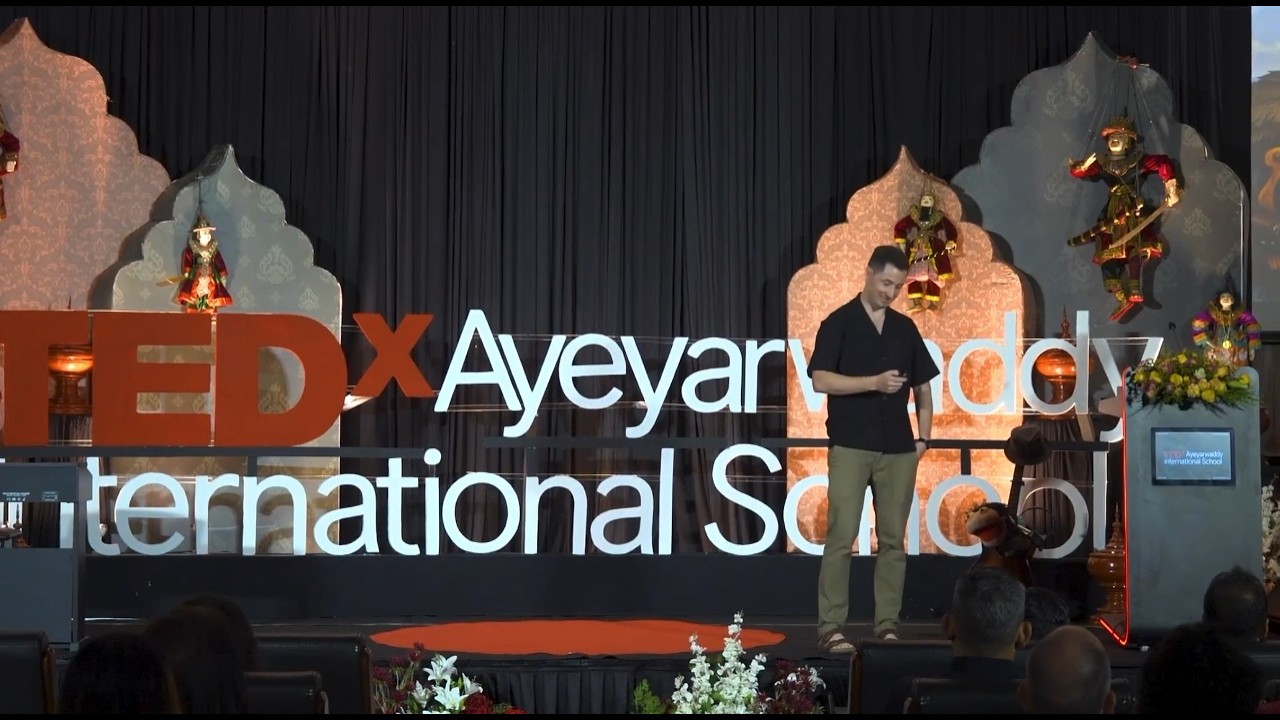
A Different Way to Hear | Jothan Jon Butterworth | TEDxAyeyarwaddy International School
Keywords
Summary
185 words
Critical Evaluation
Value of the Information & Strength of the Argument
The value of the talk lies in its accessible personal narrative and the clear illustration of music as a mnemonic and communicative device. The argumentation is built on a combination of anecdotal evidence, historical examples, and a couple of scientific mentions, but it lacks depth and rigorous verification. The speaker’s enthusiasm and live performances add emotional weight, but the logical structure is more inspirational than analytical. The key claim—that music enhances memory and serves as a timeless message carrier—is supported by a single referenced study (without full citation) and common experience (alphabet song). While the talk is persuasive on an experiential level, it does not critically engage with counterarguments or alternative explanations, making it a promising starting point rather than a comprehensive scientific treatment.
Scientific Rigor, Source Quality, Title Accuracy
The scientific rigor is modest: the speaker mentions Steven Pinker’s ‘music is cheesecake’ concept and a Hungarian learning study, but provides no specific references, dates, or methodological details. The historical examples are presented accurately in general, though the claims about prehistory rely on scholarly consensus without direct sources. The only provided external link is the general TEDx page, offering no direct support for the claims. The title ‘A Different Way to Hear’ is well matched to the content, as the talk encourages listeners to consider music as a means of understanding and reshaping experiences. No audience comments were available for analysis; therefore, public reception cannot be assessed.
246 words
Title / Content Match
The title suggests a novel perspective on listening, which the talk delivers through personal narrative, historical examples, and a live performance.
Quality & Reliability
6/10
The talk combines personal anecdotes with a few references to research (e.g., a Hungarian learning study) but provides no detailed sources or citations. Claims about music and memory are plausible yet not rigorously substantiated.
Key Moments
Markers derived by PSI from the transcript: the creator did not define chapters.
- Introduction to the Voyager Golden Record and the idea of music as a universal message.
- Personal journey from childhood to music teacher, showing the lifelong importance of music.
- Historical examples: Odyssey, songlines, bards, minstrels, and griots as carriers of messages through time.
- Scientific explanation: Hungarian study and elaborative encoding explain why songs are memorable.
- Interactive audience recall of song lyrics and puppet segment about sending a message through space.
- Original song performance about sending messages through music.
Cited Sources
- TEDx Program — The talk was given at a TEDx event, independently organized, and the link provides information about the TEDx program.
Contribution & Novelties
The talk’s original contribution is the combination of personal storytelling, historical anecdotes, and live musical performance to illustrate music’s role as a universal communication medium and memory aid. It offers a refreshing perspective that music is not merely entertainment but a core human tool for encoding and transmitting knowledge. The speaker’s interactive approach and the space-themed puppet interlude add a creative dimension that is rare in traditional talks.
Pour aller plus loin :
- Songline — Understanding the Australian Aboriginal oral tradition of embedding geographic and cultural knowledge in songs.
- Griot — West African storytellers who preserve family histories and community memories through song and narrative.
- Music and memory — Overview of scientific research on how music enhances memory retention and cognitive processing.
122 words
Radar Profile
The radar profile shows a moderately balanced talk, with strengths in quality of information and reliability, but lower scores in quantity of information and technicality. This reflects a personal and narrative-driven presentation rather than a detailed scientific dissertation, suitable for a general audience.