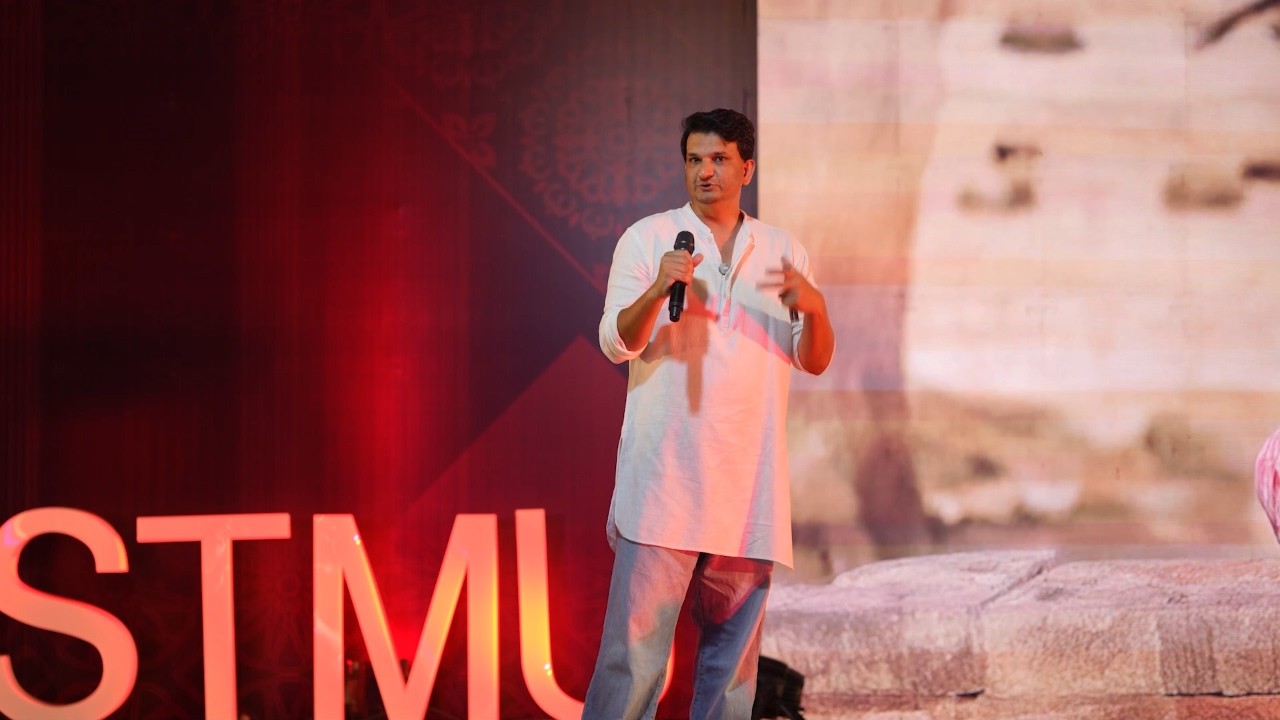
How Years Behind the Camera Taught Me About People | Athar Abbas | TEDxSTMU
Keywords
Summary
171 words
Critical Evaluation
Value of the Information & Strength of the Argument
The value of the information lies in its authentic, personal reflections on storytelling as a tool for human connection. Abbas effectively argues that traditional media often manufactures narratives, whereas true understanding comes from listening to others without filters. He supports his argument with concrete examples: the Sheedi community project and the story of Kamran On Bike. The logic is coherent, transitioning from his initial misconceptions to a more nuanced worldview. However, the argumentation is anecdotal and lacks empirical evidence, making it more persuasive than scientifically rigorous.
Scientific Rigor, Source Quality, Title Accuracy
The talk does not employ scientific methodology or cite academic sources. The only external link given is the generic TEDx page, providing no direct references. The speaker relies on personal experience and narrative, which is appropriate for a TEDx human-interest talk but limits its scientific rigor. The title accurately captures the essence of the talk, and the content aligns well with it. There are no comments provided, so no audience trends can be analyzed.
175 words
Title / Content Match
The title accurately reflects the content: the speaker discusses how his years as a filmmaker shaped his understanding of people, using specific examples from his work.
Quality & Reliability
5/10
The talk is based on personal experience and anecdotes rather than academic evidence. It offers subjective insights into storytelling and human observation, but does not provide verifiable data or rigorous methodology. The reliability is moderate, suitable for inspirational and reflective content.
Key Moments
Markers derived by PSI from the transcript: the creator did not define chapters.
- Athar Abbas introduces his background in a media family and shows a showreel of his past work in music videos and documentaries.
- He describes the turning point: receiving a brief from the UN to document the Sheedi community in Pakistan and being told to let them tell their own story.
- Abbas plays a short documentary about the Sheedi community, showcasing their culture and heritage.
- He introduces Kamran On Bike, a cyclist who quit his job in Germany and cycled from Germany to Pakistan, and shares Kamran's story and film.
- Abbas reflects on his learning: the importance of listening without preconceived notions and letting people be the narrators of their own stories.
- He concludes with a quote from Rumi and encourages the audience to put aside their 'lens' and truly listen to those around them.
Cited Sources
- TEDx Talks — The talk was given at a TEDx event, and this is the umbrella page for TEDx programs.
- Rumi (Jalal ad-Din Muhammad Rumi) - Wikipedia — Abbas quotes Rumi on meeting people without preconceptions.
Concurring Sources
- TEDx Talks — The platform that hosts this talk, aligning with the general theme of ideas worth spreading.
Contribution & Novelties
The talk offers a practical perspective from a filmmaker who shifted from creating manufactured narratives to co-creating stories with the subjects themselves. Abbas’s insight that ’everybody is a storyteller’ and the need for a ’listener’ is a valuable reminder for any creative professional. It introduces the concept of participatory storytelling in a non-academic context.
Pour aller plus loin :
- Siddi people - Wikipedia — The Sheedi community mentioned is part of the Siddi diaspora, an East African descendant group in South Asia.
- Documentary film - Wikipedia — Explores the genre and its evolution, contextualizing Abbas’s approach to real-time stories.
- Empathy - Wikipedia — Central to the talk’s message about understanding others by listening without judgment.
115 words
Radar Profile
The radar chart shows a moderate profile with balanced scores across information quantity, quality, technical level, and reliability. The reliability is low due to the subjective nature, while information quality is relatively higher, indicating a rich personal narrative. Overall, the talk is a typical TEDx inspirational piece, more emotional than analytical.