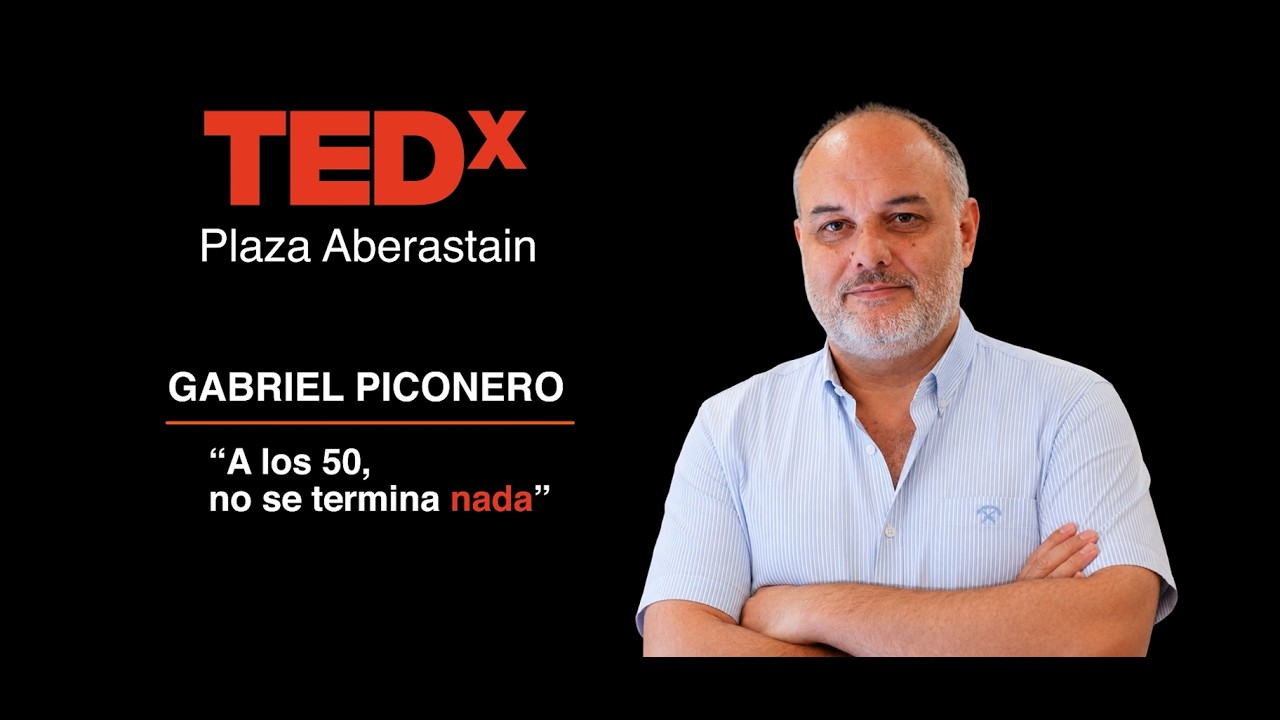
A los 50, no se termina nada | Gabriel Piconero | TEDxPlaza Aberastain
Nothing ends at 50 | Gabriel Piconero | TEDxPlaza Aberastain
Keywords
Summary
151 words
Critical Evaluation
Value of the Information & Strength of the Argument
The talk provides valuable insights into the challenges and opportunities faced by people over 50, particularly in the workforce. The argumentation relies heavily on personal anecdotes and general observations rather than empirical evidence. While the speaker effectively raises awareness about ageism and the silver economy, the lack of data weakens the overall persuasiveness. The call for intergenerational collaboration is compelling and resonates with broader societal trends, but it remains at a conceptual level without concrete examples or evidence.
Scientific Rigor, Source Quality, Title Accuracy
The talk does not cite specific sources, and the only reference is the generic TEDx link. The discussion is more opinion-based than scientifically rigorous. The title accurately reflects the content, but the content lacks depth in terms of data and references. The speaker’s personal stories, while relatable, do not substitute for research findings. There is no mention of academic studies or expert opinions beyond a passing reference to Dr. Diego Bernardini, who is not formally cited. Overall, the scientific rigor is low.
175 words
Title / Content Match
The title accurately reflects the content, which emphasizes that turning 50 is not an end but an opportunity for new beginnings.
Quality & Reliability
5/10
The talk presents personal experiences and general statements about aging and employment, but lacks concrete data, citations, or verifiable statistics. The arguments are anecdotal and motivational without scientific backing.
Key Moments
Markers derived by PSI from the transcript: the creator did not define chapters.
- Introduction to the question of turning 50 and personal reflection.
- Story of becoming a father of twins at 45 and personal reinvention.
- Algorithm signals and societal expectations about aging.
- Challenge to the traditional life map (study, work, retire).
- Father's experience and introduction to the silver economy.
- Ageism in the workplace, including the 'overqualified' phenomenon.
- Advocacy for an intergenerational future in organizations.
- Longevity and the need for systemic adaptation to longer lifespans.
Cited Sources
- TEDx program — The talk was given at a TEDx event, and this is the general TEDx page.
Contribution & Novelties
The talk contributes by framing aging positively and introducing the concept of the silver economy to a broad audience. It emphasizes the importance of intergenerational collaboration, which is a growing area of focus in economic and social discourse. While the ideas are not novel, the personal narrative makes them accessible and relatable, potentially inspiring change in workplace practices.
Pour aller plus loin :
- Silver economy — A relevant concept central to the talk, providing a framework for economic activities related to aging populations.
- Ageism — The talk discusses age discrimination; this entry offers definitions and research on the topic.
- Longevity — The talk highlights increased life expectancy; this page provides scientific and demographic context.
114 words
Radar Profile
The profile shows moderate scores across information quantity and quality, with a low technical level and reliability. The talk is strong on motivation and raises important issues but lacks evidence-based depth, resulting in a balanced yet unexceptional profile.