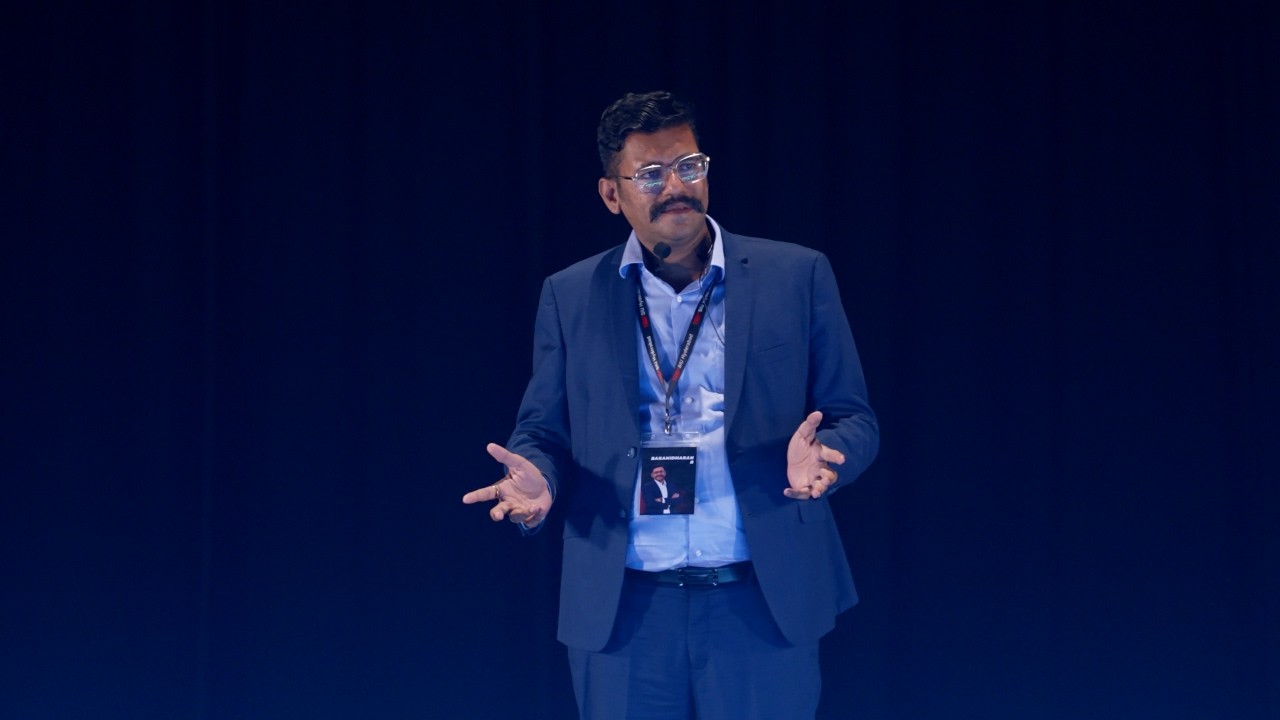
CAPABLE: Building the Mindset to Grow, Adapt, and Lead | Baranidharan R | TEDxSIU Hyderabad
Keywords
Summary
136 words
Critical Evaluation
Value of the Information & Strength of the Argument
The value of the talk lies in its structured presentation of seven key personal qualities, making them easy to remember and apply. The speaker’s anecdotal evidence is compelling, but the argumentation is built on personal experience rather than systematic research or external references. The logical chain from curiosity to empathy is coherent, yet the lack of empirical support weakens its generalizability. The emphasis on ‘fail fast’ and learning from mistakes is practical, but without evidence, it remains subjective advice. Overall, the framework is useful as a self-reflection tool but does not offer rigorous scientific backing.
Scientific Rigor, Source Quality, Title Accuracy
The talk does not cite any specific studies, books, or scientific sources. The only reference is a general link to TEDx, which is not a source for the content itself. The title matches the content well, accurately describing the CAPABLE framework. The presentation is clear and well-structured, but the absence of citations and reliance on personal anecdotes limits its scientific rigor. The adequacy of the title is high, though this does not compensate for the lack of verifiable references.
189 words
Title / Content Match
The title accurately reflects the content, which presents a personal growth framework comprising curiosity, attitude, patience, adaptability, consistency, learning, and empathy.
Quality & Reliability
5/10
The talk relies on personal anecdotes and a conceptual framework (CAPABLE) without empirical evidence or citations. The speaker's professional background adds credibility, but the lack of verifiable sources limits its reliability.
Key Moments
Markers derived by PSI from the transcript: the creator did not define chapters.
- Introduction: speaker background, career, and the misconception of being 'capable'.
- Realization of complacency and the need for change.
- Lesson from mentor AK: shifting from complacency to curiosity.
- Lesson from mentor Venut: embracing patience and consistency.
- Lesson from mentor Kumat: cultivating attitude and empathy.
- Integration of the CAPABLE framework and call to action: start with curiosity.
Cited Sources
- TEDx Talks — General TEDx event information; the talk was given at a TEDx event, and the link is provided in the description.
Concurring Sources
- Growth mindset — Carol Dweck's research on fixed vs. growth mindset supports the value of curiosity and continuous learning.
- Emotional intelligence — Goleman's framework includes empathy and self-regulation, which relate to the CAPABLE qualities.
- Transformational leadership — This leadership style emphasizes motivation, adaptability, and empathy, echoing the talk's message.
Contribution & Novelties
The talk offers a memorable mnemonic (CAPABLE) to synthesize well-known personal development principles. Its originality lies in the narrative connecting these traits in a sequence, suggesting that curiosity initiates a chain reaction. However, the concepts themselves are not new. The speaker’s personal anecdotes provide a relatable illustration.
Pour aller plus loin :
- Growth mindset — Carol Dweck’s concept aligns with the idea of cultivating curiosity and learning.
- Emotional intelligence — Daniel Goleman’s work supports the importance of attitude and empathy.
- Leadership — General leadership theories often include adaptability and consistency.
- Fail fast — The ‘fail fast’ philosophy is common in innovation and aligns with the speaker’s advice.
107 words
Radar Profile
The radar profile is moderate across quantity and quality but low on technicality and reliability. This indicates a talk that is informative and coherent but lacks scientific depth and verifiable sources, typical of motivational TEDx presentations.