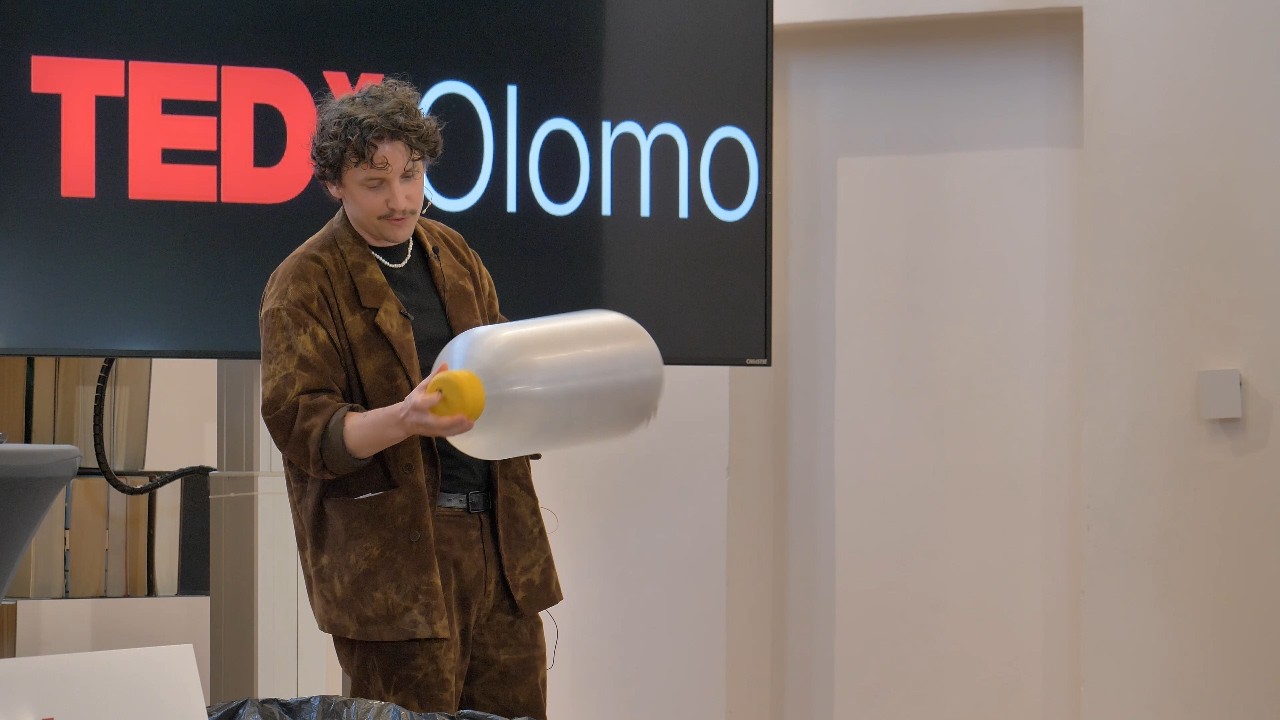
Nahaku | Josef Rozehnal | TEDxOlomouc
Keywords
Summary
143 words
Critical Evaluation
Value of the Information & Strength of the Argument
The talk offers a compelling personal narrative and a clear demonstration of upcycling in practice. The argument is built on anecdotal evidence and a single case study, which limits its generalizability. However, the speaker effectively conveys the importance of rethinking our relationship with materials. The philosophical points about the cost of ignoring litter and the value of small actions are thought-provoking, though they rely on emotional appeal rather than empirical data.
Scientific Rigor, Source Quality, Title Accuracy
No external sources or citations are provided; the talk relies entirely on the speaker’s professional experience and personal stories. The title is non-informative, as it only lists the speaker and event name. The content is an expert opinion, not a peer-reviewed study, and thus has limitations in scientific rigor.
135 words
Title / Content Match
The title is a standard TEDx format using the speaker's name and event, giving no indication of content.
Quality & Reliability
6/10
The talk presents personal experience and a single case study without cited sources; it is a plausible expert opinion but lacks scientific rigor.
Key Moments
Markers derived by PSI from the transcript: the creator did not define chapters.
- Speaker introduces his relationship with waste and his father's hoarding.
- Introduces the disposable beverage container 'Kikek' and its problematic design.
- Details the process of mechanically separating components to transform it into a lamp.
- Anecdote about a littered bottle in a forest and the choice to ignore it.
- Story of an elderly woman collecting earthworms and the moral about overcoming resistance.
- Closing thoughts encouraging small actions and thanks.
Cited Sources
- TEDx official page — Referenced as the event organizer in the video description.
Contribution & Novelties
The talk offers a concrete case of material-driven upcycling and a personal philosophy. It emphasizes starting from the material rather than the brief. For further exploration, the concepts of circular economy, design for disassembly, and upcycling are relevant.
Pour aller plus loin :
- Circular economy — Explores the systemic approach to eliminating waste and keeping materials in use.
- Design for disassembly — A design principle that facilitates repair and recycling, directly relevant to the speaker’s approach.
- Upcycling — The process of transforming waste into higher-value products, central to the talk.
90 words
Radar Profile
The scores indicate a medium amount of information with moderate quality, low technical depth, and moderate reliability. The talk is more about personal experience than factual data, which is reflected in the low technical score.