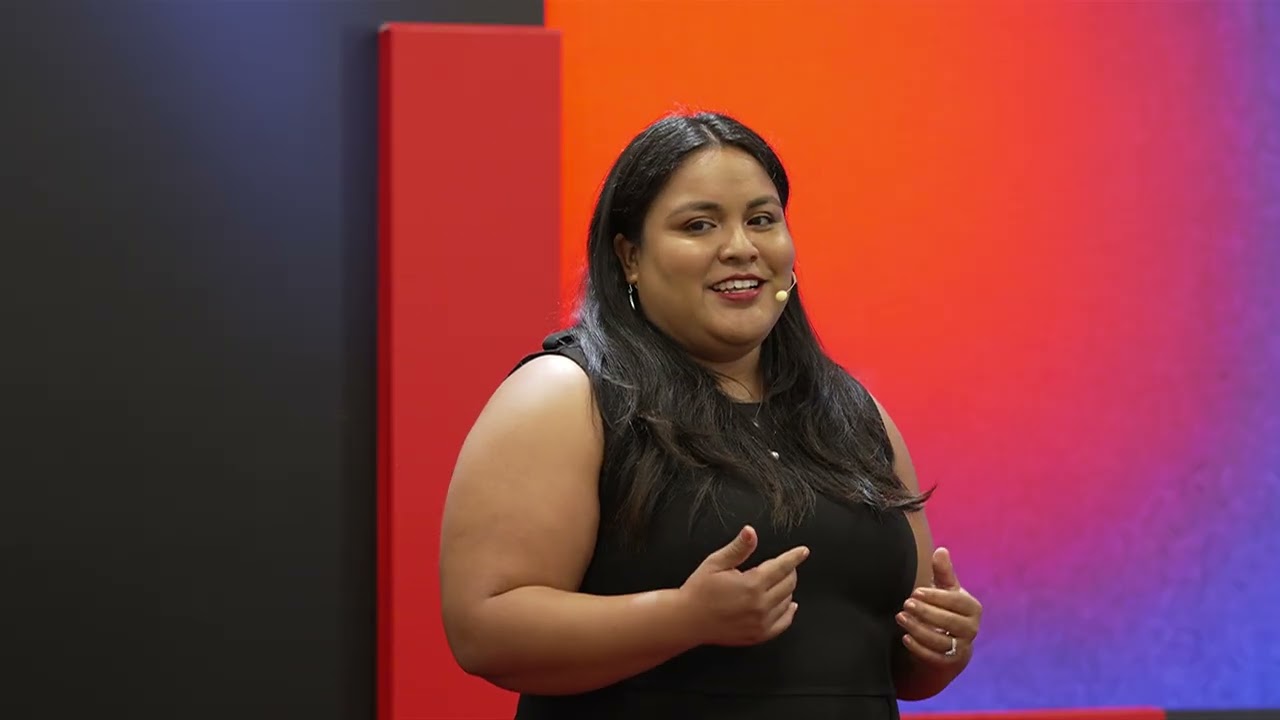
What Our Systems Ask Youth to Carry Alone | Dr. Maria Fernanda Martinez-Donaus | TEDxBrownsville
Keywords
Summary
169 words
Critical Evaluation
Value of the Information & Strength of the Argument
The talk provides valuable first-hand accounts of systemic barriers in U.S. college admissions, illustrating concepts like bureaucratic inertia, information asymmetry, and the hidden burdens on first-generation students. The argument is persuasive through emotional storytelling and concrete examples, though it lacks quantitative breadth. The speaker builds a logical case from individual narratives to systemic critique, leading to actionable suggestions. The advocacy for collective responsibility is well-supported, but the evidence remains anecdotal rather than rigorously empirical. The strength lies in the authenticity and clarity of the examples, making the issue relatable and urgent.
Scientific Rigor, Source Quality, Title Accuracy
Scientifically, the talk does not cite external studies or official data beyond a few percentages (enrollment and graduation rates). The speaker references her doctoral research but provides no methodological details or sources. The quality of evidence is moderate; it relies on testimony rather than verifiable statistical analysis. The title-content alignment is strong: the title reflects the central theme of systems expecting youth to cope alone, which the content directly addresses. No comment analysis is possible as no comments were provided.
186 words
Title / Content Match
The title accurately encapsulates the central thesis: educational and financial aid systems place an excessive burden on youth, who must navigate complex processes alone.
Quality & Reliability
7/10
The speaker is an EdD holder and founder of a nonprofit with direct experience, but the talk relies primarily on personal anecdotes and limited statistics. The case studies are illustrative but not systematically documented, and no external sources are cited beyond the TEDx platform. Credibility is supported by academic and professional background, though the evidence basis is largely qualitative.
Key Moments
Markers derived by PSI from the transcript: the creator did not define chapters.
- Introduction of community values vs. college process isolation.
- Shares stories of Luna, Austin, Jake, and Estelle.
- Reveals personal identity as Estelle and reflects on luck.
- Returning as a teacher and encountering same systemic failures.
- Founding RioProgress and its impact on students.
- Examples of misinformation and financial dangers.
- Recommendations for parents, school boards, and community.
- Final call for collective responsibility and 'padrinos' role.
Cited Sources
- TEDx Events — General TEDx platform page, referenced as the event organizer.
Contribution & Novelties
The talk contributes a human-centered perspective on systemic gaps in college access, particularly in the Rio Grande Valley, by combining personal narrative with advocacy. It underscores the mismatch between institutional process complexity and youth capabilities, and proposes a community-based solution model. The original contribution lies in framing the issue as a systemic accountability problem rather than student deficit, and in offering concrete advocacy strategies.
Pour aller plus loin :
- FAFSA (Free Application for Federal Student Aid) - Wikipedia — Relevant to the form complexity discussed.
- CSS Profile - Wikipedia — Additional financial aid application referenced in the talk.
- QuestBridge - Wikipedia — Scholarship program mentioned by the speaker as a success path.
- First-generation college student concept — No URL provided; contextualizes the challenges described.
124 words
Radar Profile
The profile shows strong qualitative information and clarity, but moderate technical depth and evidence breadth. The author's expertise elevates reliability, yet reliance on anecdote limits robustness. Overall balance favors rhetorical impact over empirical rigor.