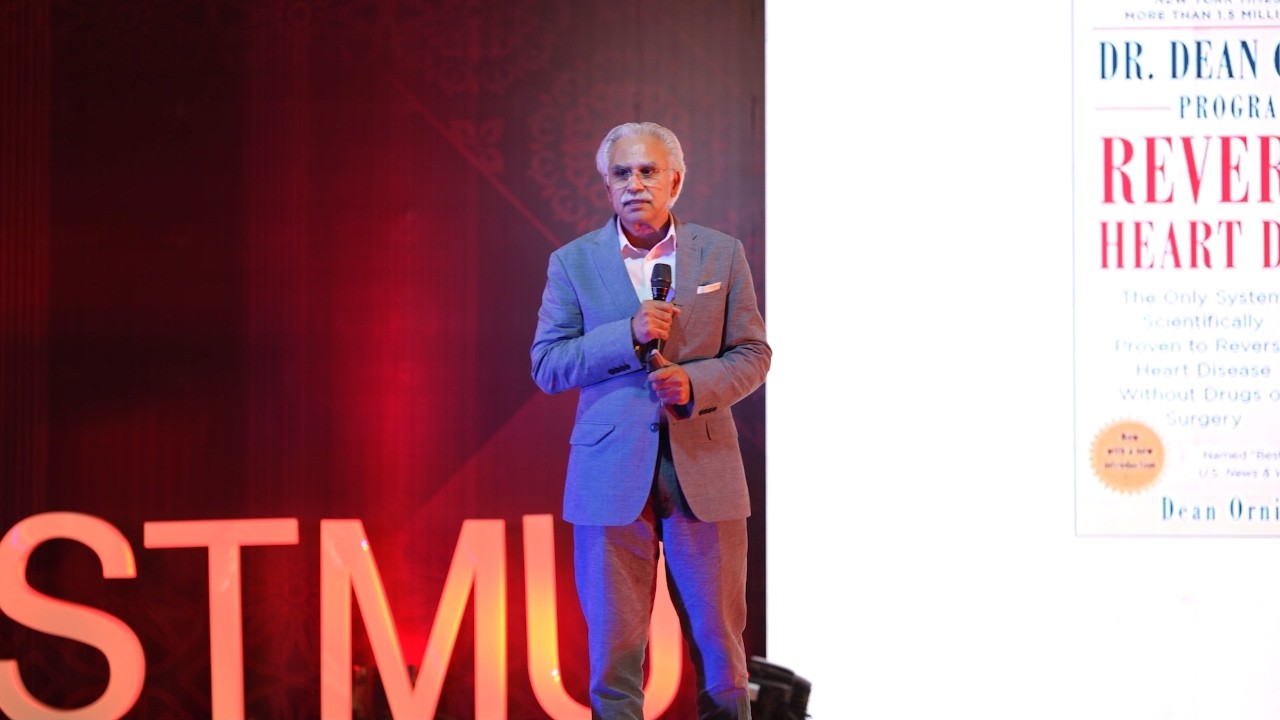
Time For Lifestyle Medicine | Dr. Zafar Mirza | TEDxSTMU
Keywords
Summary
198 words
Critical Evaluation
Value of the Information & Strength of the Argument
The talk carries strong persuasive value, emphasizing a paradigm shift from illness treatment to prevention and reversal. The argument is built on credible references (Ornish, Whitehall II, WHO) and a compelling personal case, making it rhetorically effective. However, the evidence is presented with limited nuance—for instance, the ‘reversal’ claim for heart disease and diabetes is oversimplified, and the speaker does not discuss potential limitations, contraindications, or individual variability. The argument is coherent and accessible, but it would benefit from acknowledging the complexity and the need for tailored, supervised interventions.
Scientific Rigor, Source Quality, Title Accuracy
The speaker is a recognized public health authority with decades of experience, and he cites well‑known studies and institutions. Yet, without specific citations or links to the mentioned research, the verifiability is limited. The only official source is the TEDx page itself. The title is straightforward and aligned with the content. No explicit advertising or sponsorship is present. The talk’s scientific rigor is moderate—appropriate for a general outreach format, but not a deep literature review.
179 words
Title / Content Match
The title accurately reflects the content; the talk centrally advocates for lifestyle medicine as a pillar of healthcare.
Quality & Reliability
6/10
The talk is delivered by a health policy expert with extensive experience, and it cites several well-known studies, but relies heavily on secondary references and anecdotal evidence. The scientific basis for disease reversal is not deeply scrutinized, and the presentation is simplified for a general audience.
Key Moments
Markers derived by PSI from the transcript: the creator did not define chapters.
- Introduction: old ideas revisited, prevention to reversal.
- Definition of lifestyle medicine and the six pillars.
- Details of the six pillars and the added environmental dimension.
- Evidence for cardiovascular disease reversal via diet and lifestyle (Ornish, Esselstyn).
- Diabetes reversal study (intensive lifestyle therapy with metformin).
- Personal anecdote of a patient recovering from heart attack and diabetes through lifestyle changes.
- Hippocrates quote; impact of whole‑food plant‑based diet on diabetes risk (30%).
- Exercise and WHO statistics on inactivity and premature death.
- Sleep deprivation link to obesity, hypertension, diabetes; Whitehall II study.
- Pakistan focus: burden of non‑communicable diseases and the need for lifestyle medicine.
- Holistic approach including gut microbiome and circadian rhythm; call to action.
Cited Sources
- TEDx Official Page — The talk was given at a TEDx event, and this is the official TEDx platform link provided in the description.
Contribution & Novelties
This talk contributes to the mainstreaming of lifestyle medicine, especially in a South Asian context, by framing it as a preventive and even restorative approach. It underscores the role of six (or seven) pillars and presents testimonials, making the case for integrating lifestyle coaching into clinical care. The novelty lies not in the scientific data itself but in the advocacy and emphasis on reversal, and in the call to make it a foundational branch of medicine.
Pour aller plus loin :
- Lifestyle medicine - Wikipedia — Overview of the field, its principles, and evidence base.
- Plant-based diet - Wikipedia — Definition and health impacts, including cardiovascular and metabolic benefits.
- Circadian rhythm - Wikipedia — The biological clock and its relevance to sleep and metabolic health.
- Whitehall II study - Wikipedia — The long‑running cohort study on social determinants of health, including sleep and chronic disease.
145 words
Radar Profile
The profile shows higher scores in information quantity and global reliability, but lower technical depth and moderate information quality. This reflects a broad yet non‑specialized presentation aimed at a general audience, with a focus on persuasion over deep scientific analysis.