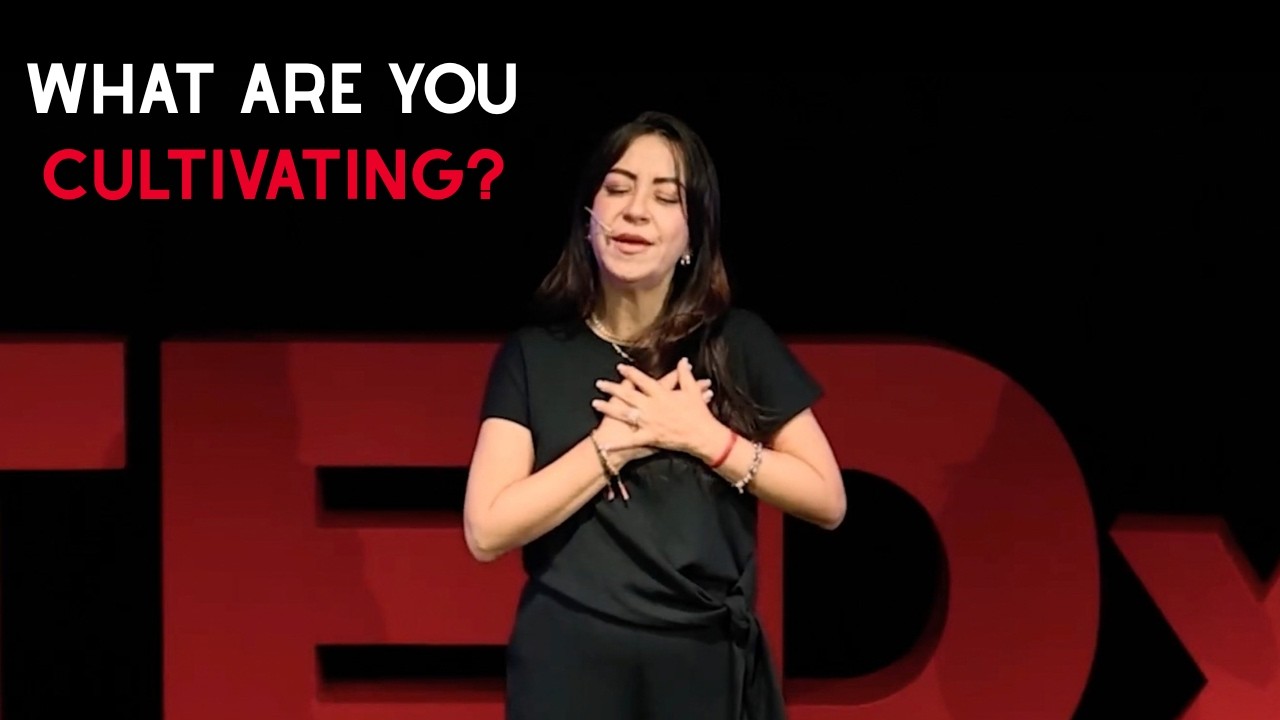
Why wanting change doesn't change us | Andi Long | TEDxStGeorge
Keywords
Summary
118 words
Critical Evaluation
Value of the Information & Strength of the Argument
The value of this talk lies in its clear, memorable metaphor and the actionable four-step framework. The argument is logically structured: it identifies the common pitfall of focusing on outcomes (the harvest) rather than processes (cultivation), and then provides a path forward. The speaker’s personal story adds authenticity and engagement. However, the reasoning is largely anecdotal; while it resonates with psychological research, it does not cite specific studies or data. The argument is persuasive but could benefit from empirical backing. The emphasis on repeated action and environmental design aligns with established behavior change theories, making the message credible despite its informal tone.
Scientific Rigor, Source Quality, Title Accuracy
The talk does not cite explicit academic sources, but the speaker’s professional background in biology and education lends some authority. The only links provided are to her personal website and the generic TEDx page. The title accurately represents the content, and the talk stays on topic throughout. No major discrepancies between title and content are apparent. The talk is a personal essay, not a rigorous scientific review, so the lack of sources is acceptable for the genre. In terms of scientific rigor, it offers plausible insights but should be taken as a motivational framework rather than evidenced-based prescription.
215 words
Title / Content Match
The title accurately reflects the core message: the gap between desire and actual change, and the importance of consistent cultivation over mere intention.
Quality & Reliability
7/10
The talk offers a coherent and insightful personal framework for behavior change, grounded in the speaker's experience as a biologist and educator. However, it relies on anecdotal evidence and lacks direct scientific citations, though the ideas align with established psychological research on habit formation and the intention-behavior gap.
Key Moments
Markers derived by PSI from the transcript: the creator did not define chapters.
Cited Sources
- Andi Long's official website — Speaker's personal website and book reference
- TEDx Talks main page — TEDx event format explanation
Concurring Sources
- Habit (Wikipedia) — Supports the claim that repeated small actions shape behavior
- Implementation intention (Wikipedia) — Research shows that specific planning increases follow-through, supporting the agency practice
- Behavior change (Wikipedia) — Overview of models that emphasize stimuli and reinforcement over intention alone
Contribution & Novelties
The talk offers a fresh metaphor (coffee cultivation) to explain behavior change, and a simple yet effective four-step framework (awareness, honesty, responsibility, agency). While the concepts are rooted in existing behavioral science, the synthesis and presentation are original. The emphasis on ‘becoming what we cultivate’ reframes the typical goal-oriented mindset into a process-oriented one.
Pour aller plus loin :
- Habit formation (Wikipedia) — Foundation of how repeated behaviors become automatic; directly relevant to the ‘cultivation’ idea.
- Implementation intentions (Wikipedia) — Concrete planning strategies that bridge intention and action, supporting the ‘agency’ practice.
- Self-determination theory (Wikipedia) — Psychological theory on intrinsic motivation and behavior change, aligning with the autonomy emphasized in the talk.
112 words
Radar Profile
The radar profile shows high quality of information and a solid qualitative score, but moderate quantities of detailed technical content and reliability. This indicates an accessible, insightful talk with valuable ideas, though not heavily data-driven or rigorously sourced. The balance suggests a motivational piece that could be strengthened by empirical references.