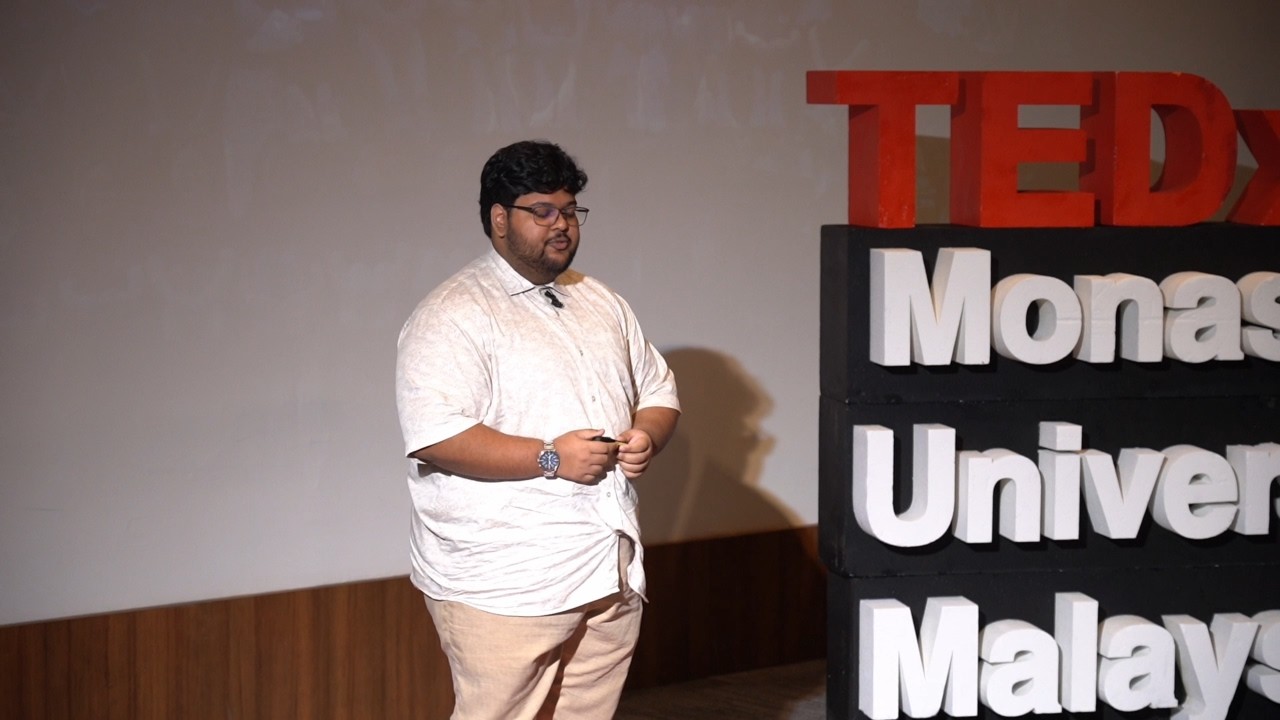
What have we got wrong about leadership? | Shoandeep Radhakrishnan | TEDxMonash University Malaysia
Keywords
Summary
148 words
Critical Evaluation
Value of the Information & Strength of the Argument
The talk provides a clear and engaging argument that trust is the fundamental basis of effective leadership, moving beyond superficial qualities like loudness. It presents a logical progression from historical and animal examples to empirical workplace studies, and then to personal anecdotes, making the case accessible. However, the argumentation relies heavily on anecdotal and loosely referenced studies, without robust evidence or counterarguments. The practical framework (self-trust, trusting others, earning trust) is useful and actionable, but its novelty is limited as similar ideas exist in common leadership literature.
Scientific Rigor, Source Quality, Title Accuracy
The scientific rigor is moderate: the speaker references studies (elephant research, Malaysian workplace study) but does not provide names, years, or publications, making verification difficult. No specific sources are given in the description beyond a generic TEDx link. The title accurately reflects the content, which is a strength. Overall, the talk is more inspirational than evidence-based, but it succeeds in communicating key concepts in an engaging manner.
169 words
Title / Content Match
The title accurately poses the central question of the talk, which challenges conventional leadership assumptions and argues that trust is the core element, matching the content well.
Quality & Reliability
6/10
The talk offers a compelling narrative and practical advice but relies on anecdotal references to studies without providing specific citations or details, limiting its scientific robustness.
Key Moments
Markers derived by PSI from the transcript: the creator did not define chapters.
- Introduction: asking the audience to think of a great leader.
- Julius Caesar example: flattening hierarchy and earning trust through sacrifice.
- Augustus and false compliance: obedience vs. genuine allegiance.
- Introducing 'trust' as the key missing ingredient.
- Elephant study: older, wiser matriarch trusted over stronger younger leader.
- Malaysian workplace study: trust contagion across teams.
- Personal leadership journey: failures from overconfidence and micromanaging.
- Three pillars: self-trust, trusting others, earning trust.
- Passion, care, and sacrifice as means to build trust.
- Conclusion: we want a leader we can stand behind, someone we trust.
Cited Sources
- TEDx official page — General TEDx resource mentioned in the video description, not specific to the talk's content.
Contribution & Novelties
The talk reframes leadership around trust, synthesizing historical, cross-cultural, and personal evidence into a simple actionable framework. Its original contribution lies in making trust the central organizing principle, supported by relatable examples and a clear call to self-leadership.
Pour aller plus loin :
- Trust (social science) — Provides a broader academic grounding on trust as a social phenomenon.
- Servant leadership — A related leadership philosophy emphasizing serving others first, aligning with the talk’s focus on care and sacrifice.
- Psychological safety — Key concept in team dynamics that complements the talk’s emphasis on trust and open collaboration.
96 words
Radar Profile
The radar profile shows moderate scores across information quantity and quality, with lower technical depth and reliability. This reflects a broad, accessible talk that appeals emotionally but lacks rigorous academic depth.