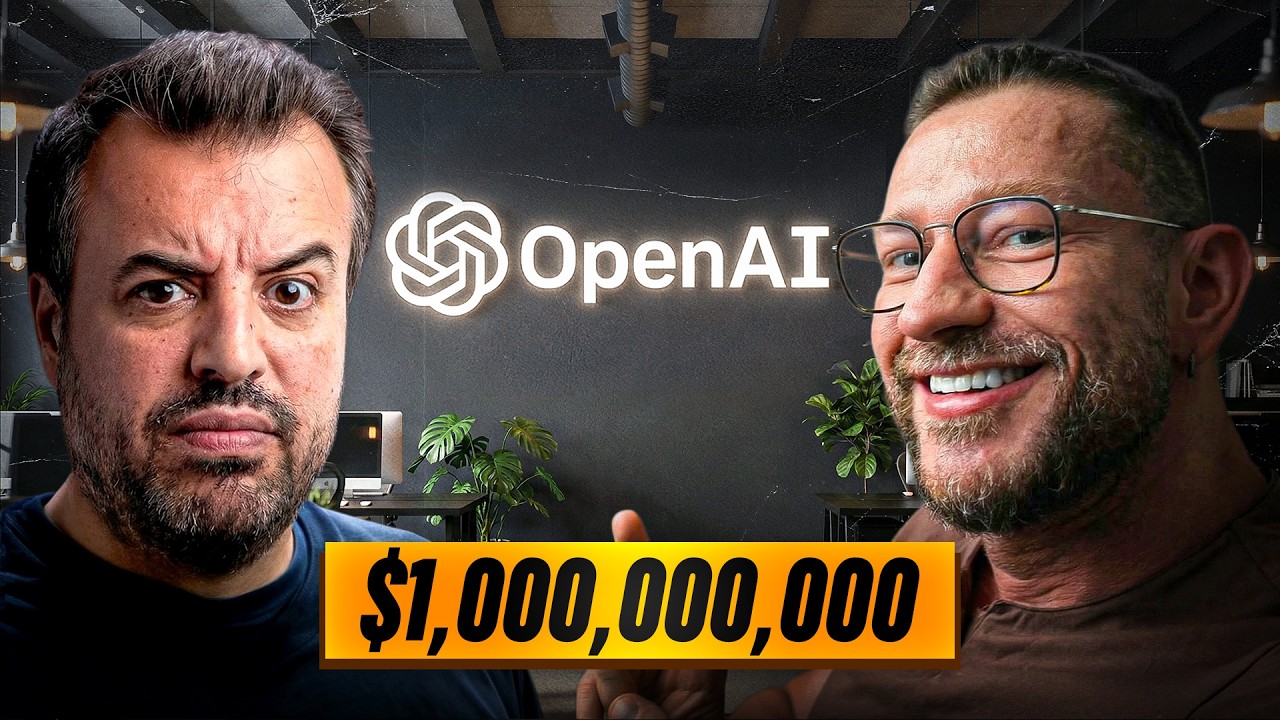
Le premier créateur solo à 1 milliard est né ! Peter Steinberger rejoint OpenAI
The first solo creator to 1 billion is born! Peter Steinberger joins OpenAI
Keywords
Summary
147 words
Critical Evaluation
Value of the Information & Strength of the Argument
The video provides a rich discussion on current technological shifts, offering both insights and skepticism. The panelists argue convincingly that the OpenClow acquisition represents a paradigm shift in how startups are created: Steinberger’s success without programming or funding challenges traditional venture capital models. They also articulate a clear vision of a post-interface world, where AI agents act on human intent. The debate on prediction markets and futarchy is thoughtful, weighing the potential benefits of more accurate information aggregation against concerns about plutocracy. The reasoning is generally logical, though some claims are based on anecdotal evidence or personal opinions rather than hard data. The panel’s diverse backgrounds (entrepreneur, investor, scientist) enrich the argumentation, making it credible and engaging.
Scientific Rigor, Source Quality, Title Accuracy
The title is well-aligned with the content, as the main news story is covered extensively. The video does not cite formal academic sources, but references to GitHub stars, the theft of $16 million in crypto, and specific company actions (Apple’s acquisition, OpenAI’s device) are mentioned. The rigor is moderate: the speakers rely on their own experiences and publicly known facts, but do not provide verifiable citations. There is no evident manipulation of data, but some speculations are presented as likely scenarios. The title slightly overemphasizes the ‘first solo founder’ narrative, though the content does support it. Overall, the sources are not academic but are relevant to the tech community. No external sources were cross-checked for this analysis, and the information quality is considered average for a tech podcast.
260 words
Title / Content Match
The title accurately reflects the main topic of the video, which focuses on Peter Steinberger's acquisition by OpenAI and the rise of solo AI-driven startups. Additional subjects like interfaces and prediction markets are secondary.
Quality & Reliability
6/10
The episode is a discussion among professionals covering recent tech news. While the speakers are knowledgeable, the claims are not rigorously verified and some are speculative. The security incident and GitHub statistics are plausible but not independently confirmed. Overall, reliable but not academic.
Chapters
- Intro
- Les invités
- OpenClaw rejoint OpenAI
- Créez votre entreprise avec QONTO !
- Break Things vs Sécurité
- Un nouveau modèle de startup
- Recruter vos talents avec DIGITAL SELECTION
- Qui est Peter Steinberger ?
- Çà va trop vite !
- C'est trop cher !
- Les interfaces invisibles
- Inférence vs Ingérence
- Sweet Pea, le device de OpenAI
- La vision de Sam Altman
- Le Boom de Polymarket
- Fuck the System!
- La Futarchie
Cited Sources
- Silicon Carne Newsletter — The show's newsletter and community platform, mentioned as a place for full episode notes.
- Silicon Carne Podcast (audio) — Audio version of the podcast, referenced in the description.
- LinkedIn - Carlos Diaz — Host's LinkedIn profile, linked for further connection.
External References
Contribution & Novelties
The episode brings fresh perspectives on the emerging trend of AI-powered solo founders, suggesting that the traditional startup ecosystem (accelerators, VCs) may become less relevant. It also popularizes the concept of ‘invisible interfaces’ and predicts a shift from screen-based interactions to voice and thought-based ones. The discussion on futarchy provides a thought-provoking alternative to traditional democracy, though the panel acknowledges its risks.
Pour aller plus loin :
- Prediction market — A mechanism for aggregating information through speculative betting, directly related to Polymarket and futarchy discussed in the video.
- Futarchy — A proposed form of government where elected officials set goals and prediction markets decide policies, as mentioned in the episode.
- Intelligent agent — Background on AI agents that can act autonomously, relevant to OpenClow’s functionality.
125 words
Radar Profile
The content scores high on information quantity and quality, moderate on technical depth, and slightly lower on reliability, reflecting its nature as an expert opinion debate rather than rigorous scientific reporting.
💬 Globalement très positif, les commentaires saluent la qualité de l'épisode et la diversité des invités. Certains critiques sur la futarchie concernant l'inégalité de vote et la concentration de pouvoir chez les plus riches.