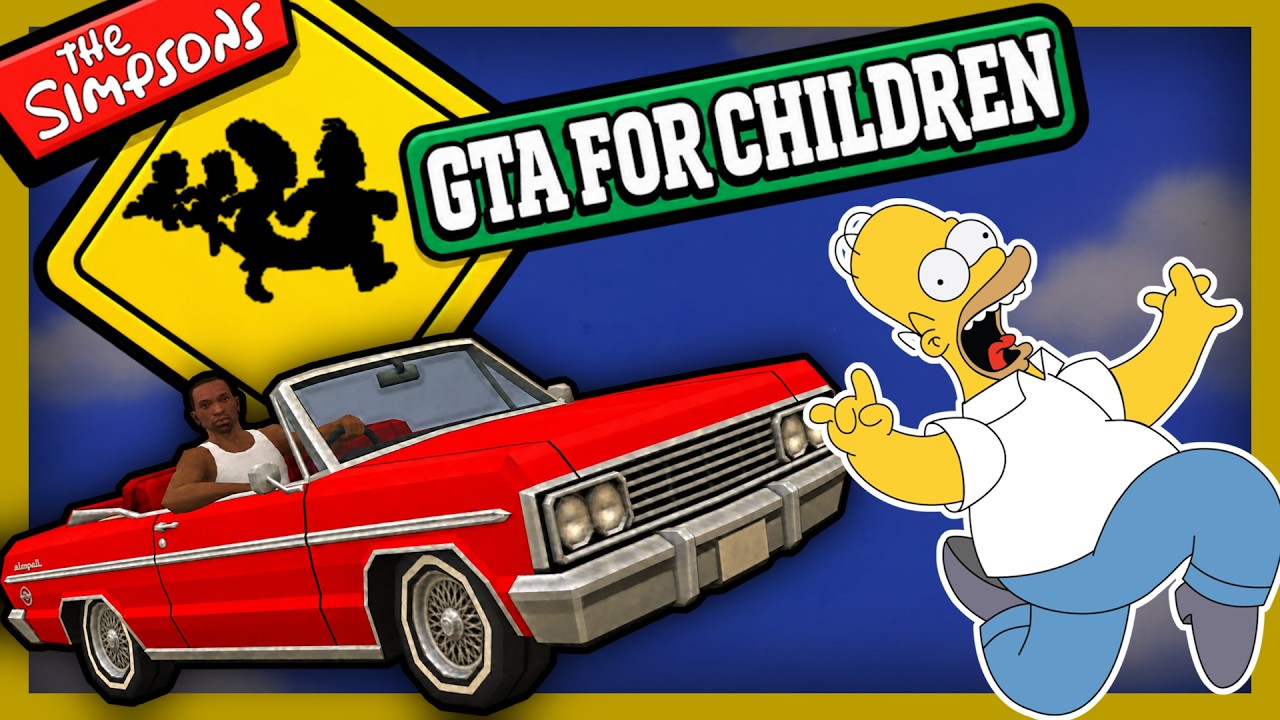
The Simpsons: Hit And Run is just Grand Theft Auto for children
Keywords
Summary
161 words
Critical Evaluation
Value of the Information & Strength of the Argument
The video’s value lies in its clear articulation of how licensed games can succeed by aligning core mechanics with the essence of the IP. The argumentation is compelling: it contrasts failures like Bart’s Nightmare with successes like Road Rage, building to Hit and Run as the culmination. The use of examples, such as the Crazy Taxi clone and the emphasis on Springfield as a living space, is persuasive. The creator supports his claims with specific game mechanics and developer interviews, though the interview is not directly cited. The analysis is structured and builds a coherent case, but remains an opinion piece rather than an evidence-backed study.
Scientific Rigor, Source Quality, Title Accuracy
The video demonstrates moderate scientific rigor: it references specific games and historical anecdotes but lacks formal citations. The description provides links to the creator’s own projects and social media, but no external academic or industry sources are cited. The title aligns perfectly with the content, accurately summarizing the thesis. The video engages with known facts about game development and series history, but the absence of verifiable sources limits its reliability as a factual reference. The title is an appropriate encapsulation of the core argument.
205 words
Title / Content Match
The title accurately reflects the video's core claim that The Simpsons: Hit and Run functions as a child-friendly version of Grand Theft Auto.
Quality & Reliability
6/10
The video presents a well-reasoned but subjective analysis of game design, mixing historical context with personal interpretation. It references specific games and interviews, but relies heavily on opinion and lacks documented sources.
Key Moments
Markers derived by PSI from the transcript: the creator did not define chapters.
- Introduction: thesis that Hit and Run is GTA for children, setting up the analysis.
- History of Simpsons games: most are poor clones, except for the arcade game.
- Road Rage as a Crazy Taxi clone that works due to integrating Springfield's characters.
- Vice City as the model of how context and setting elevate simple mechanics.
- Springfield as the defining character: the town itself enables comedy and gameplay.
- Discussion of driving physics and why they feel right, citing developer interviews.
- Mission structure and episodic chapters mirroring TV format.
- Conclusion: despite being a simple clone, it succeeds through faithful fan service.
Cited Sources
- Linktree of Let's Talk Game Design — Creator's compilation of links to personal projects and social media.
- reIterate on Steam — A game by the creator, likely promoted in the video description.
- Hangry Bear on Steam — Another game by the creator, also promoted in the description.
- Wynterborne (social media manager and wife) — Channel of the creator's wife, mentioned as support.
Contribution & Novelties
The video offers an original perspective by dissecting why a licensed clone can succeed when it respects the IP’s core identity. It frames Springfield as a narrative device and argues that Hit and Run succeeded by letting players inhabit that world, which most previous licensed games failed to do. This analysis bridges game design theory and fan culture.
Pour aller plus loin :
- Grand Theft Auto (series) — Provides background on the GTA franchise and its open-world design principles, contextualizing the comparison.
- Open world — Explains the concept of open-world games and how freedom of exploration affects game design, relevant to the video’s core argument.
- The Simpsons: Hit & Run — Offers detailed information about the game itself, including development and reception, useful for verifying the video’s claims.
128 words
Radar Profile
The radar profile shows moderate scores across all dimensions, with information quantity and quality slightly higher than technical depth and reliability. This reflects a well-structured opinion piece that is engaging but lacks rigorous sourcing.