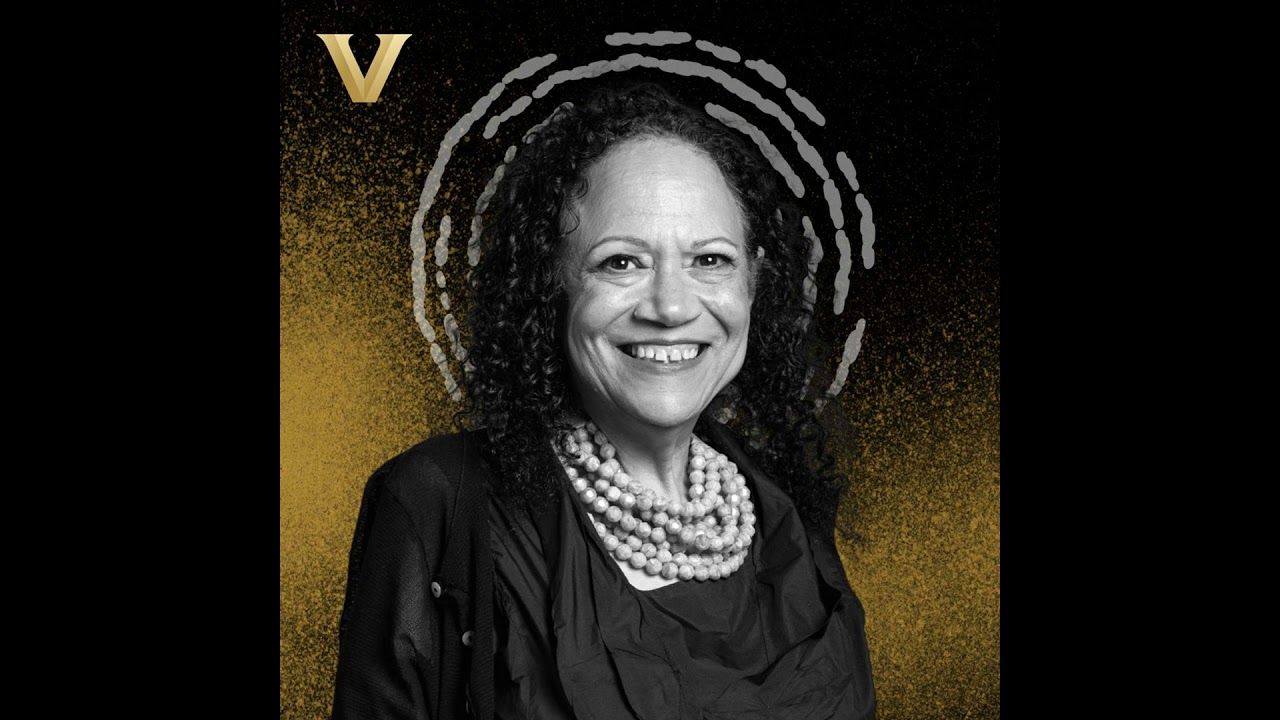
Country Music’s Black Roots with Alice Randall
Keywords
Summary
183 words
Critical Evaluation
Value of the Information & Strength of the Argument
The episode offers substantial value by centering on a well-researched counternarrative to the conventional history of country music. Alice Randall presents a coherent argument that country music is an Afro-Celtic form, supported by specific examples such as Lil Hardin Armstrong’s contributions to ‘Blue Yodel No. 9’ and her influence on Ray Charles’s ‘Modern Sounds in Country and Western Music’. The argument is built on archival evidence, including Jimmie Rodgers’s own annotations and television archives, which Randall synthesizes into a compelling case. She also corrects the record on DeFord Bailey, challenging the myth of his decline into poverty and laziness. The reasoning is clear and well-structured, moving from historical figures to broader cultural implications. However, the conversational format means some claims are asserted rather than fully demonstrated, and the host’s role is largely supportive, which limits critical pushback. The discussion of country music’s themes (life is hard, God is real, etc.) is insightful but remains at the level of expert opinion rather than systematic analysis.
Scientific Rigor, Source Quality, Title Accuracy
Randall’s claims are grounded in documented research, including her own archival work and the scholarship of others, though specific citations are not always provided in the conversation. She mentions using YouTube and television archives to verify Johnny Cash and Louis Armstrong’s accounts of Lil Hardin, and she references Jimmie Rodgers’s handwritten annotations. The book My Black Country serves as the primary source, and the description links to Randall’s academic profile and Vanderbilt resources. The title accurately reflects the content, as the episode focuses on the Black roots of country music, though it also covers the Southern Festival of Books and Randall’s personal history. The discussion remains largely on topic, with only minor digressions. No comments were provided for analysis.
298 words
Title / Content Match
The title accurately reflects the core theme: the Black roots of country music, explored through Alice Randall's book and personal narrative. The conversation stays largely on topic, though it also covers the Southern Festival of Books and Randall's broader career.
Quality & Reliability
7/10
The discussion is grounded in Alice Randall's scholarly work and archival research, with specific historical claims (e.g., Lil Hardin Armstrong's role in 'Blue Yodel No. 9', DeFord Bailey's legacy) that are supported by documented sources. However, the format is a conversational podcast, not a peer-reviewed study, and some assertions rely on the guest's synthesis of existing scholarship rather than direct citation. The absence of adversarial questioning or external fact-checking limits the reliability score.
Key Moments
Markers derived by PSI from the transcript: the creator did not define chapters.
- Alice Randall explains why she wrote My Black Country and introduces the concept of country music as an Afro-Celtic form.
- Discussion of Lil Hardin Armstrong's role in 'Blue Yodel No. 9' and her influence on Ray Charles.
- Randall recounts attending the 1983 CMA anniversary concert and the erasure of Black artists from the narrative.
- The story of DeFord Bailey, the Grand Ole Opry's first star, and Randall's correction of his later life narrative.
- Randall discusses founding Midsummer Music, the first Black woman-owned music publishing house in Nashville.
- The importance of the Bluebird Cafe and Randall's rigorous approach to songwriting.
- Randall's train journey retracing Lil Hardin's steps and the metaphor of trains in American storytelling.
- The four themes of country music and how they relate to hope and transcendence.
- Randall's role in co-founding the Southern Festival of Books and the power of books to build empathy.
- Closing thoughts on the Southern Festival of Books and upcoming guests.
Cited Sources
- Alice Randall - Vanderbilt University Profile — Academic profile of Alice Randall, providing her credentials and areas of expertise.
- Quantum Potential Podcast — Official page for the Quantum Potential podcast, where this episode is hosted.
- Vanderbilt University Research Stories — Collection of stories about Vanderbilt researchers and innovators.
- Sound On // Sound Off — Production team responsible for editing and mixing this episode.
Concurring Sources
- Lil Hardin Armstrong's role in 'Blue Yodel No. 9' — Wikipedia entry confirms Lil Hardin Armstrong played piano on the recording, supporting Randall's claim.
- DeFord Bailey's legacy — Wikipedia article corroborates Bailey's status as the Grand Ole Opry's first star and his later life.
- Ray Charles's 'Modern Sounds in Country and Western Music' — Wikipedia entry discusses the album's impact and its connection to Lil Hardin Armstrong.
External References
Contribution & Novelties
This episode contributes to the public understanding of country music history by amplifying Alice Randall’s research on Black contributions to the genre. It brings together archival evidence and personal narrative to challenge the dominant narrative of country music as a white, rural tradition. The discussion of Lil Hardin Armstrong’s multifaceted role—as a pianist, composer, and fashion designer—and her influence on Ray Charles offers a fresh perspective on the interconnectedness of jazz, blues, and country. The correction of DeFord Bailey’s legacy also adds new nuance to the historical record. The episode’s originality lies in its synthesis of existing scholarship with Randall’s own experiences, making complex historical arguments accessible to a general audience.
Pour aller plus loin :
- Lil Hardin Armstrong — Wikipedia article detailing her life and contributions to jazz and country music.
- DeFord Bailey — Wikipedia article on the first star of the Grand Ole Opry and his harmonica legacy.
- Country music — Wikipedia overview of country music’s origins, including its Afro-Celtic roots.
- My Black Country by Alice Randall — Publisher page for the book discussed in the episode.
179 words
Radar Profile
The radar profile shows high scores in information quality and reliability, reflecting the well-researched nature of the discussion. The technical level is moderate, as the content is accessible to a general audience without deep musicological jargon. The quantity of information is solid, though the conversational format limits density. Overall, the episode balances expert insight with broad appeal.