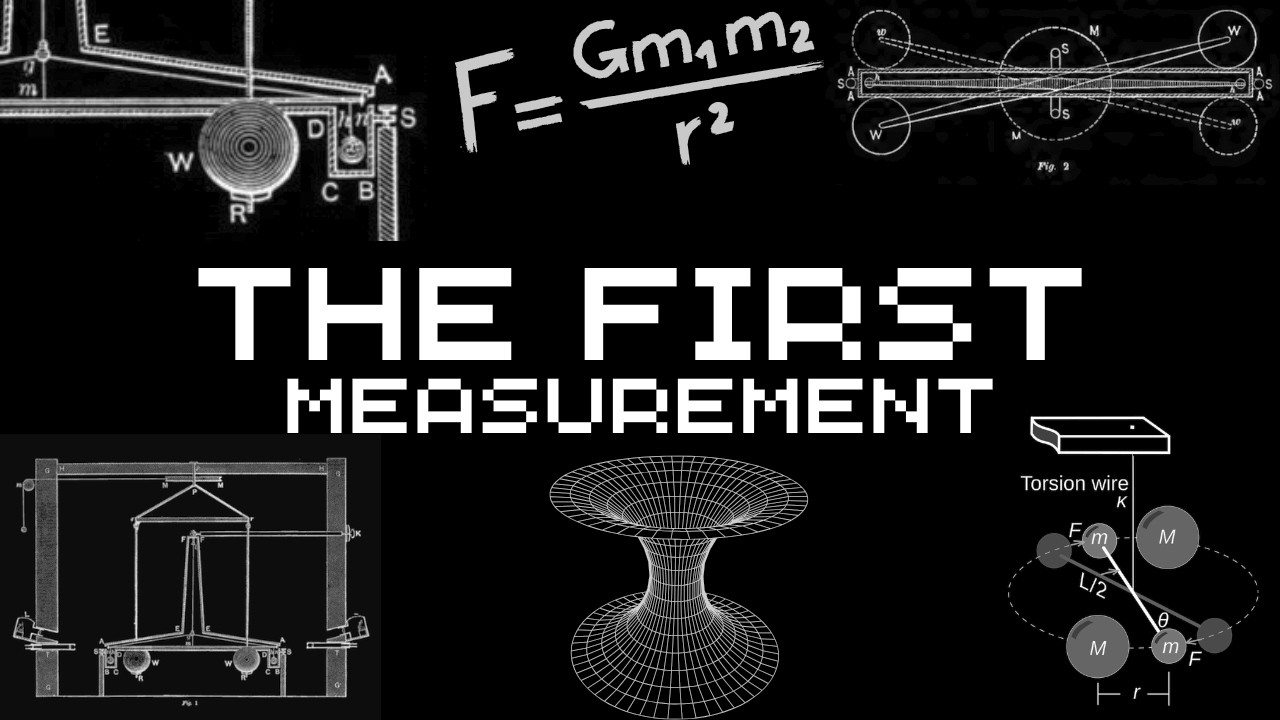
How Gravity Was Measured for the First Time
Keywords
Summary
139 words
Critical Evaluation
Value of the Information & Strength of the Argument
The video’s informational value lies in its comprehensive synthesis of historical experiments leading to the first quantitative measurement of gravitational attraction between masses. It clearly explains the physics behind pendulum motion, the inverse-square law, and the cancellation of gravitational constant in comparative measurements. The argumentation is solid, logically progressing from simple observations to sophisticated experiments, and effectively conveys how each step refined our understanding. The narration builds a coherent narrative, linking theoretical principles with practical difficulties, thereby demonstrating the incremental nature of scientific progress.
Scientific Rigor, Source Quality, Title Accuracy
The scientific rigor is high; the video accurately presents historical facts and physical principles, with appropriate caveats about limitations of early measurements. It cites a single external source (a Google Doc with visual sources), which limits the verifiability of specific claims, though the content aligns with established historical accounts. The title is well-chosen, as the video indeed explains how gravity was first measured, covering both conceptual and experimental milestones. The presentation is balanced, acknowledging uncertainties and approximations in historical data, and does not overstate conclusions.
184 words
Title / Content Match
The title accurately reflects the content, which traces the first measurements of gravity from pendulum experiments to the Schiehallion experiment.
Quality & Reliability
8/10
The video provides a well-structured historical account of gravity measurement, with technical accuracy and clear explanations, though it relies on a single external source.
Key Moments
Markers derived by PSI from the transcript: the creator did not define chapters.
- Introduction to the history of gravity measurement, starting with Galileo's pendulum observations.
- Discussion of Huygens' pendulum clock and its impact on timekeeping and measurement precision.
- Jean Richer's expedition to Cayenne and the discovery that pendulum length changes with latitude.
- Newton's formulation of universal gravitation and the shell theorem's implications.
- Early attempts to detect mountain deflection, including Bouguer's work on Chimborazo.
- The Schiehallion experiment: setup, Measurements, and derivation of Earth's density.
Cited Sources
- Visual Sources — Provided in the video description as visual sources and references.
Contribution & Novelties
The video’s original contribution is a clear, comprehensive narrative that connects multiple historical experiments into a single story about measuring gravity. It explains the technical hurdles and conceptual breakthroughs, offering viewers a deep understanding of how the gravitational constant and Earth’s density were first determined. The presentation emphasizes the importance of careful instrumentation and modeling in experimental physics.
Pour aller plus loin :
- Cavendish experiment — Direct successor to Schiehallion, first precise measurement of G.
- Schiehallion experiment — Central to the video, details the method and results.
- Pendulum — Fundamental physics behind early gravity measurements.
- Newton’s law of universal gravitation — Theoretical foundation for all later experiments.
107 words
Radar Profile
The radar profile shows high scores in information quantity and quality, with a slightly lower technical level and reliability, indicating a well-educational video that balances technical depth with accessibility. The moderate technical score reflects the use of historical context rather than advanced mathematical derivations.