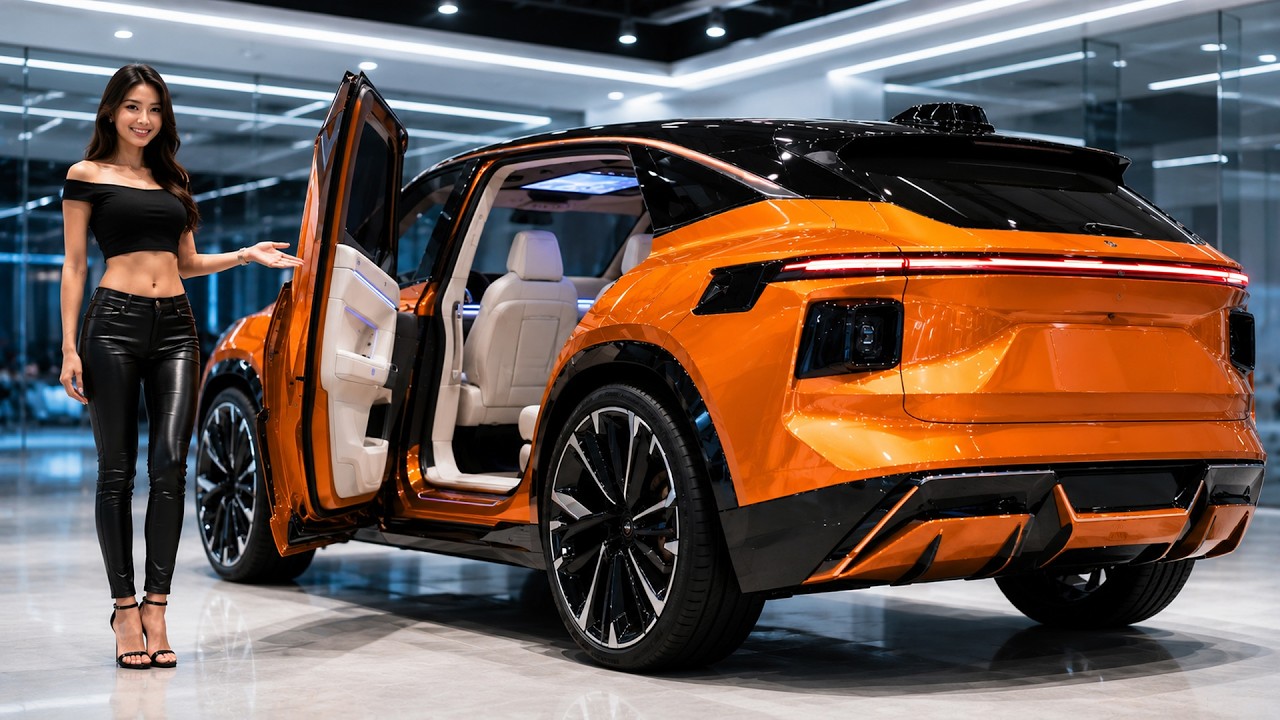
La Chine A Dévoilé 7 Véhicules Que L'Occident Ne Sait Pas Construire
China Has Unveiled 7 Vehicles the West Doesn't Know How to Build
Keywords
Summary
175 words
Critical Evaluation
Value of the Information & Strength of the Argument
The video’s main value lies in its comparative analysis of Chinese automotive newcomers, highlighting their technological features (e.g., lidar counts, charging speeds) and strategic positioning. The argumentation is solid, particularly in explaining the ’latecomer advantage’ with the smartphone analogy (Nokia vs. Apple). The presenter also corrects common misconceptions about CLTC-based range claims and announces that some models are pre-production. However, the argument is sometimes one-sided, as it does not thoroughly address potential weaknesses of these vehicles or the challenges of Chinese brands in Western markets.
Scientific Rigor, Source Quality, Title Accuracy
The video demonstrates reasonable scientific rigor by acknowledging that data come from manufacturers and using the CLTC vs. European cycle caveat. No external sources are explicitly cited; the description lacks links, and claims rely on company announcements. The title adequately reflects the content, though it is somewhat click-bait, and this slight overstatement does not heavily penalize the overall score. Comments were not provided, so no audience sentiment is analyzed.
169 words
Title / Content Match
The title is somewhat sensationalistic but reflects the video's core argument that these vehicles are built by non-traditional companies. It aligns with the content, though it overstates the claim that the West cannot build them.
Quality & Reliability
7/10
The video provides a critical and well-structured overview of seven Chinese vehicles, with explicit caveats about measurement cycles (CLTC vs. European), pre-sale status, and manufacturer-published test data. However, it is a YouTube commentary without peer review or transparent sourcing.
Chapters
Contribution & Novelties
The video contributes a fresh perspective on Chinese electric vehicles by framing them through the lens of non-traditional entrants, particularly Huawei’s role as a technology supplier after its telecom ban. It also provides a clear warning about interpreting CLTC range figures. The ’latecomer advantage’ concept is well-illustrated, and the Freelander revival serves as a case study of brand repositioning.
Pour aller plus loin :
- Leapfrogging — Explains how developing firms can skip technological generations, a concept applicable to Chinese automakers.
- Worldwide harmonised Light vehicles Test Procedure (WLTP) — detailed comparison of testing cycles, relevant to the CLTC vs. WLTP discussion.
- Huawei ‘Wenjie’ series (no stable URL) — the partnership between Huawei and Seres, illustrating Huawei’s automotive strategy without relying on a specific link.
123 words
Radar Profile
The radar profile shows moderately high scores in information quantity and quality, with slightly lower technical depth and reliability. This reflects a video that is informative and engaging but relies on manufacturer data and lacks independent scientific verification, making it better suited for informed public discussion than rigorous research.