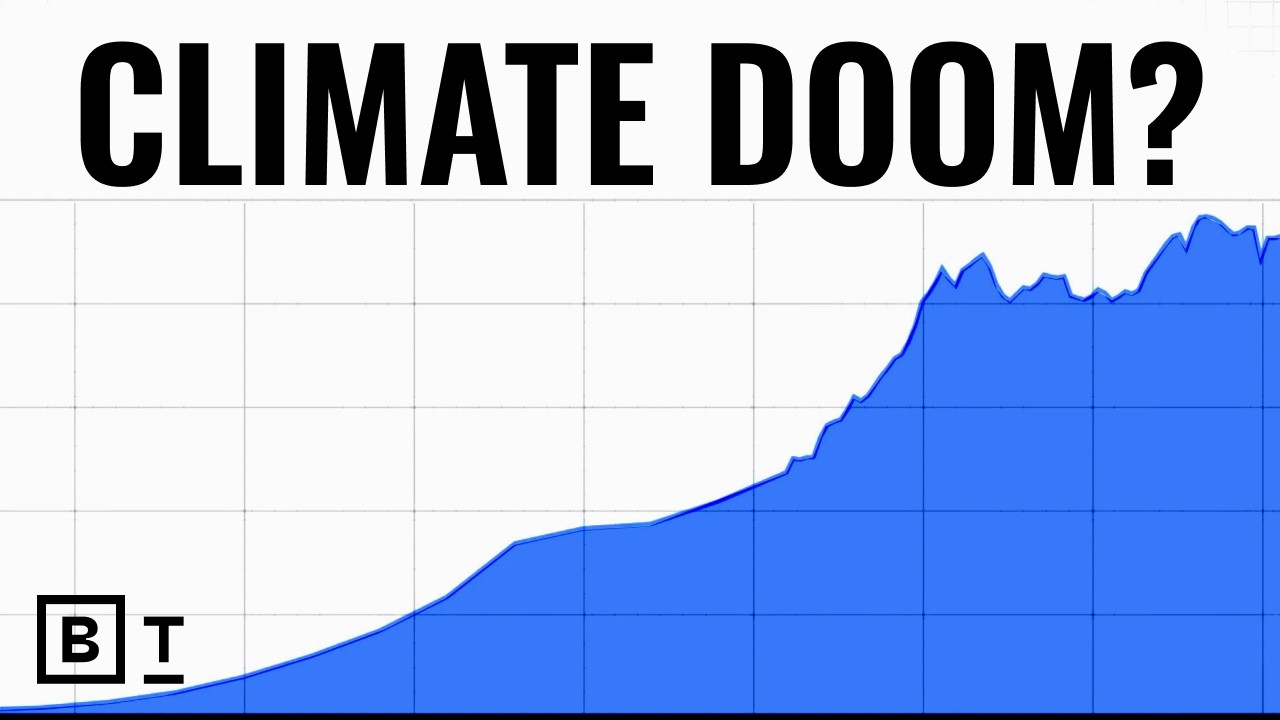
How to fix our planet using data | Hannah Ritchie: Full Interview
Keywords
Summary
160 words
Critical Evaluation
Value of the Information & Strength of the Argument
The interview provides valuable, data-informed perspectives, challenging common misconceptions (e.g., offshoring emissions, mineral extraction scale, organic food’s impact). Her argumentation is structured and built on quantitative examples (e.g., solar land use <1%, battery cost decline >98%). She balances urgency with feasibility, acknowledging uncertainties while maintaining a coherent optimistic stance. The separation of individual vs. collective responsibility is thoughtfully nuanced, but the reliance on aggregated data sometimes oversimplifies heterogeneous regional contexts, and the optimism may underestimate socio-political resistance.
Scientific Rigor, Source Quality, Title Accuracy
The rigor is high: Hannah Ritchie is the deputy editor of Our World in Data, and she frequently references data visualizations and trends. The interview is largely a synthesis of published data, though immediate citations are not always provided. The title is well-matched to the content, as the entire conversation is framed around the power of data to reframe problems as solvable. The public comments (30 analyzed) show a mixed reception: some applaud the refreshing optimism, while others critique perceived contradictions in agriculture, the emphasis on individual action over systemic change, and the handling of plastic waste responsibility in developed countries.
193 words
Title / Content Match
The title accurately reflects the content: the interview centers on using data and evidence to argue that environmental problems are solvable, with a strong emphasis on data-driven optimism.
Quality & Reliability
8/10
The information is presented by a recognized researcher and data scientist, Hannah Ritchie, based on data from Our World in Data. Her arguments are structured, statistically grounded, and nuanced, acknowledging uncertainties (e.g., the 1.5°C target). The interview is well-produced, but the subjective framing ('urgent optimist') and the lack of explicit citations for each claim temper the score.
Chapters
- Tackling our biggest environmental problems, with Hannah Ritchie
- Has your thinking on climate change evolved over time?
- What is driving climate change today?
- Are the goals set by the Paris Agreement still achievable?
- How do we solve climate change?
- What impact does renewable energy have on land use?
- Is mineral extraction required to increase renewable energy?
- How do we transform our transportation systems?
- What can we do to transform construction?
- Who will be hit hardest by climate change?
- How would you define sustainability?
- What can individuals do to progress sustainability?
- What impact does food production have on our planet?
- How do we build a more sustainable food system?
- How do we increase global crop yields?
- Are we reaching a point of no return for harvesting?
- How do we address soil degradation?
- Will land usage increase with population growth?
- Does eating locally reduce your carbon footprint?
- Is organic food better for the environment?
- Is vertical farming a viable solution?
- Should we "demodernize" our farming methods?
- How do dietary changes impact our environment?
- Is meat an efficient source of nutrition?
- Is it possible to maintain a plant-based diet?
- Does everyone need to go vegan?
- What could the future look like if we make these changes?
- Why is plastic so prevalent?
- Why is plastic waste a problem?
- Where does plastic waste come from?
- What is the Great Pacific Garbage Patch?
- Should we stop using plastic?
- Is recycling a solution to our plastic problem?
- How do we fix our plastic waste problem?
- What can we as individuals do to prevent plastic waste?
- Is overpopulation an environmental problem?
- What does the overpopulation argument get wrong?
- Why is the messaging around overpopulation damaging?
Cited Sources
- Full interview transcript on Big Think — Link provided in the video description to the transcript and additional content.
External References
Contribution & Novelties
The interview’s main contribution is to present a cohesive, data-driven narrative that counters environmental doomism. It synthesizes multiple global datasets to argue that solutions are within reach, offering a structured roadmap across energy, food, and waste. It also highlights often-overlooked nuances, such as the small land footprint of solar power and the potential of nuclear energy for minimal land use.
Pour aller plus loin :
- Our World in Data — Extensive global datasets and analyses used by the speaker; complements the interview’s evidence base.
- Paris Agreement — Reference for the climate targets discussed, particularly the 1.5°C and 2°C limits.
- Life-cycle assessment — Methodology behind comparing emissions of electric vs. petrol vehicles and other products, central to many arguments.
118 words
Radar Profile
The profile shows high scores in information quantity and reliability, with a slightly lower technical level (accessible to a general audience). This indicates a well-balanced, authoritative presentation that is informative without being overly technical.
💬 Balanced: The 30 comments analysed show a mix of appreciation for her optimistic, data-driven approach and criticism regarding perceived contradictions in agricultural narratives, the focus on individual responsibility, and the handling of plastic waste in developed countries.