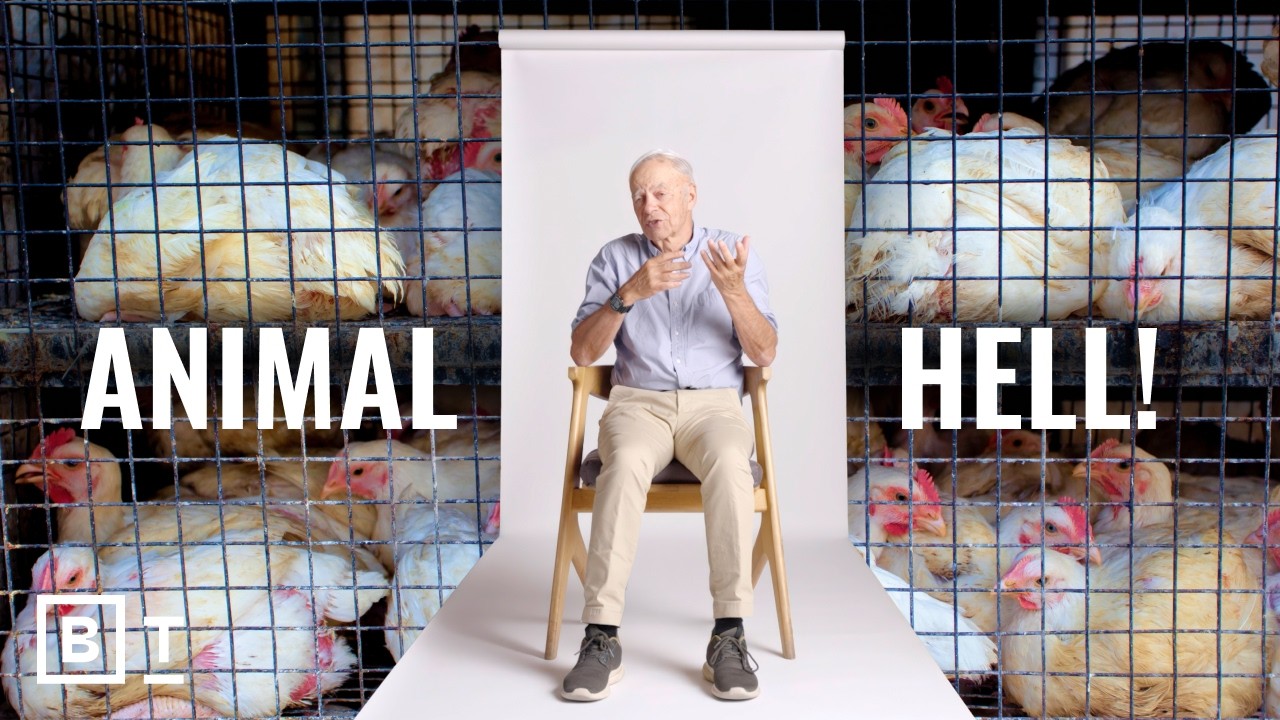
Peter Singer: Animal suffering is human responsibility | Full Interview
Keywords
Summary
169 words
Critical Evaluation
Value of the Information & Strength of the Argument
The interview offers substantial philosophical value by applying reasoned argumentation to practical ethical dilemmas. Singer’s defence of equal consideration of interests is logically rigorous, grounded in the capacity to suffer rather than species membership. He effectively refutes common objections to animal rights, such as appeals to rationality or language, by pointing out that these criteria would also exclude some humans, thereby undermining speciesist boundaries. The argumentation is carefully structured, moving from the harms of factory farming to the broader implications for climate change and global justice. Singer’s emphasis on reason over emotion provides a compelling framework for evaluating moral choices, making the content both intellectually stimulating and practically relevant. The discussion of effective altruism demonstrates how these principles can be operationalized, reinforcing the consistency of his ethical system.
Scientific Rigor, Source Quality, Title Accuracy
The interview demonstrates intellectual rigor through clear definitions (e.g., speciesism), logical syllogisms, and reference to historical philosophers like Jeremy Bentham. Singer cites his own publications and the work of other researchers (e.g., Timothy Pachirat’s slaughterhouse study), situating his claims within a broader scholarly context. The title precisely conveys the central thesis that humans carry responsibility for animal suffering. The interview’s structure, with distinct topical segments, enhances clarity and credibility. While most evidence is anecdotal or from his own books, Singer’s authority in the field and the coherent presentation compensate for the lack of external citations. No contradictions or unsupported claims were apparent, and the content aligns with established ethical literature.
253 words
Title / Content Match
The title precisely reflects the interview's focus on moral responsibility toward animals and the theme of human accountability for suffering.
Quality & Reliability
9/10
High reliability due to Singer's established expertise in bioethics and philosophy, backed by a coherent, well-structured interview. The content is based on his published works and widely recognized arguments.
Chapters
- Part 1: The argument for animal liberation.
- What was the impetus behind writing “Animal Liberation?”
- What reactions has “Animal Liberation” elicited?
- Why did you decide to update the book?
- What reforms have you seen since the 1975 edition?
- Where has there been regression in animal treatment?
- What is speciesism?
- How would one defend a speciesist argument?
- What is the main argument against speciesism in “Animal Liberation Now?”
- How are factory farm practices justified by the agribusiness industry?
- How do factory farm conditions lead to employee churn?
- How much of an oppositional force is big agribusiness?
- Why do people still consume animal products?
- How expensive would meat be if animals were treated humanely?
- What are conscientious omnivores?
- Who else has accompanied you in this work?
- What does progress over the next 48 years look like to you?
- What concerns do you have around AI development?
- How would you define consciousness in non-human animals?
- Will sentient AI force us to alter our attitudes towards technology?
- Who will decide how we treat conscious AI?
- Who is Zell Kravinsky?
- What is the effective altruism movement?
- How does human nature impact good philanthropy?
- What are metacharities?
- What is “earning-to-give?”
- How does effective altruism address inequality?
- How do you present effective altruism to young earners?
- What are the positive psychological effects of giving?
- How has the movement grown over the years?
- Why is freedom of thought crucial for the pursuit of knowledge?
- What inspired the Journal of Controversial Ideas?
- Are some ideas so harmful that they shouldn’t be given a platform?
- Has your writing advanced progressive discussion on controversial ideas?
- Why should we be more comfortable with uncomfortable ideas?
Cited Sources
- Full interview transcript on Big Think — Provides the complete text of the interview, referenced for quotations and deeper study.
- What is effective altruism? Philosopher Peter Singer explains — A related video where Singer elaborates on the effective altruism movement discussed in this interview.
Contribution & Novelties
The interview provides an updated synthesis of Singer’s core arguments, integrating contemporary issues such as aquaculture, AI consciousness, and climate change into the animal rights discussion. It offers a clear, accessible articulation of speciesism and the equal consideration of interests, making philosophical concepts tangible for a wide audience. Singer’s reflections on effective altruism and ’earning-to-give’ furnish concrete guidance for ethical living. The novelty lies not in entirely new ideas but in the fresh application of utilitarian principles to pressing global problems, coupled with a call to action aligned with reason.
Pour aller plus loin :
- Speciesism — Overview of the concept central to Singer’s critique.
- Effective Altruism — Philosophical movement Singer helped inspire, focusing on maximizing impact.
- Animal Liberation (book) — The original 1975 work that sparked the modern animal rights movement.
132 words
Radar Profile
The radar profile shows high scores in information quantity, quality, and reliability, with a slightly lower technical complexity. This indicates a comprehensive, trustworthy, and intellectually accessible ethical discussion, well-suited for both newcomers and those familiar with philosophical debates.
💬 très positif — Les 30 commentaires analysés expriment une forte approbation des idées de Peter Singer, saluant sa profondeur éthique et plaidant pour la justice animale.