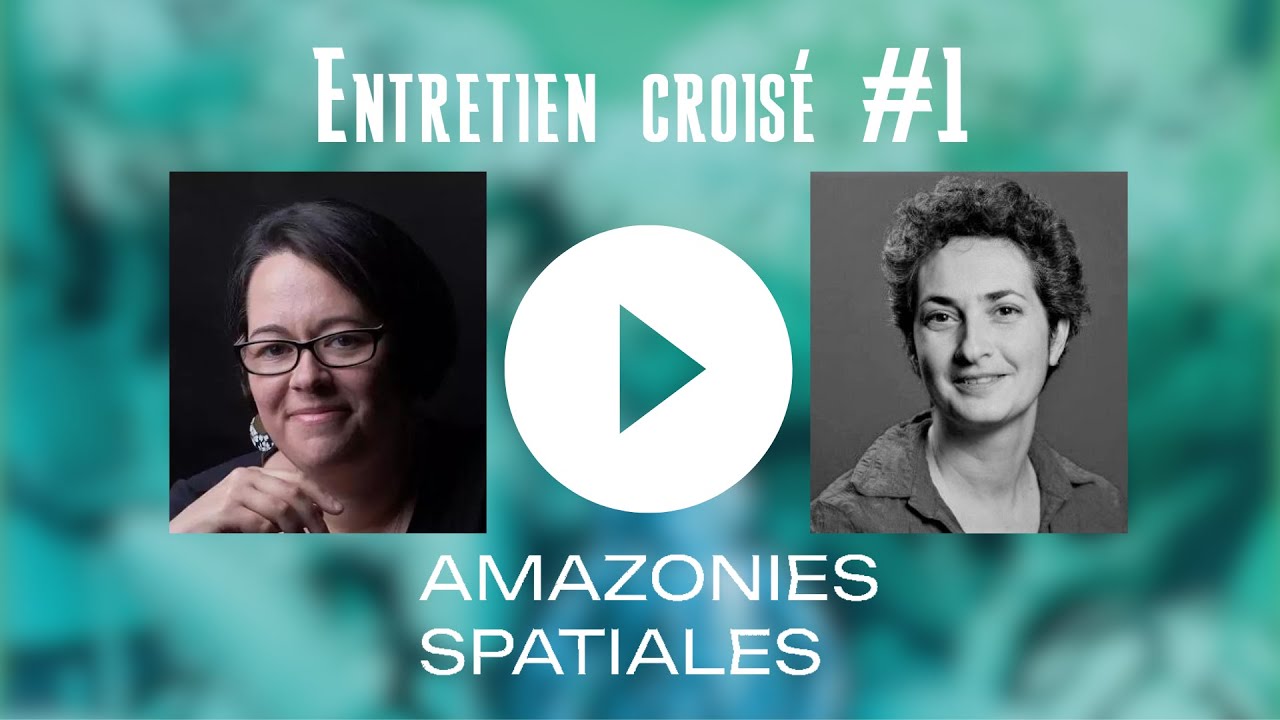
Amazonies Spatiales : Interview croisée entre Sylvie Poulain et Aline Maréchaux
Amazonies Spatiales : Cross-interview between Sylvie Poulain and Aline Maréchaux
Keywords
Summary
243 words
Critical Evaluation
Value of the Information & Strength of the Argument
The informational value here is primarily conceptual and illustrative rather than evidential. The interview offers a clear window into how a prospective fiction project is actually built: how an author and an expert negotiate a shared theme, how abstract prompts (’look for biomimicry in concepts, not objects’, ‘reinscribe the human in a planetary metabolism’) are converted into narrative devices, and how a specific biological fact — the tardigrade’s ability to suspend its metabolism under extreme conditions, including vacuum — is used to construct a plausible near-future astronaut. The argumentation is associative and reflective rather than demonstrative. Poulain reasons from her own biography (helicopter pilot, contact with natural environments, crew life) to her fictional material, and Maréchaux reasons from heritage restoration and dismountable construction to a critique of a technological society that seeks to escape nature while dreaming of finding it elsewhere. The strongest argumentative thread is the contrast between two ethical postures toward the living world: a utilitarian one that extracts a capability from an organism for human use, and a reciprocal one in which the human body is returned to natural cycles. This is a genuine conceptual opposition, clearly stated and tied to concrete narrative choices. The weakness is that no claim is tested, quantified or confronted with counter-arguments; the ecological framing is asserted rather than argued, and the ‘slow collapse’ scenario is presented as an optimistic hypothesis without discussion of its plausibility. The value lies in the transparency of the creative and intellectual process, not in the robustness of any factual claim.
Scientific Rigor, Source Quality, Title Accuracy
Scientific rigour is low by design: this is a literary and prospective discussion, not a scientific presentation. The only factual element advanced with any precision is the description of the tardigrade — a microscopic animal found in moss, on Himalayan summits and at depths of several thousand metres, capable of suspending its metabolism under hostile conditions including the vacuum of space. This is broadly accurate in outline, though no source is cited and the figure given for depth (‘4000 m’) is approximate. The Institut des Futurs Souhaitables is mentioned as the body through which Maréchaux developed her ecological awareness, and humusation is referenced as an existing funerary practice not yet authorised in France; both are named without documentation. No study, report or expert publication is cited anywhere in the interview. The two links in the description point to the channel’s own review of the anthology and to the publisher’s author page for Sylvie Poulain; they are contextual rather than evidentiary. On title/content adequacy, the video is exactly what its title promises: a cross-interview between the two named participants, conducted at the launch event. No comments were provided for analysis.
458 words
Title / Content Match
The title accurately announces a cross-interview between Sylvie Poulain and Aline Maréchaux, and that is exactly what the video delivers, framed by the Amazonies Spatiales launch evening.
Quality & Reliability
6/10
The video is a short interview with two participants in a prospective science-fiction anthology, one an author and one an architect. The content is coherent, first-person and internally consistent, but it is essentially personal testimony and creative reflection rather than verifiable factual reporting. No data, no methodology and no external evidence are presented; the only concrete references are the project itself and the Institut des Futurs Souhaitables. Reliability is therefore moderate: nothing appears misleading, but nothing is independently checkable either.
Key Moments
Markers derived by PSI from the transcript: the creator did not define chapters.
- Sylvie Poulain introduces herself: former helicopter pilot, now split between literary translation and fiction writing, and explains how her first career feeds her writing.
- Aline Maréchaux presents her hybrid path: heritage architect, restoration of historic monuments, then a venture in dismountable and reassemblable buildings.
- Poulain outlines her core theme: the human relationship with the environment, and a Parisian 'slow collapse' scenario giving rise to grassroots institutions.
- She describes her Mars story: the discovery of extraterrestrial life at a moment when no one expects it, and the temptation to hide it for economic reasons.
- Maréchaux explains how the Institut des Futurs Souhaitables shaped her ecological awakening and the idea of 'the human living among the living'.
- Discussion of the 'Guardians of the Earth' network: citizen coordination of environmental regeneration alongside a legal framework for living with the living.
- Exchange on the 'architect' versus 'gardener' writer typology, and Maréchaux's admission that she works through serendipity.
- Maréchaux recounts joining the residency through a WhatsApp group, and asking where the notions of inhabiting, of the living and of 'Amazonia' were.
- Poulain recalls the residency exchanges: biomimicry at the level of concepts, bioinspiration, and reinscribing humans in a planetary metabolism.
- The tardigrade: its resistance, metabolic suspension, and the utilitarian astronaut modified with tardigrade DNA versus the daughter hosting a lichen fed by her remains.
Cited Sources
- Syfantasy review of Amazonies Spatiales — The channel's own critical review of the anthology, linked in the description as complementary reading to the interview.
- Sylvie Poulain author page, Éditions Bragelonne — Publisher page listing Sylvie Poulain's books, referenced in the description to situate the author's prior work.
Concurring Sources
- Tardigrade — Wikipedia — Confirms the description given in the interview: microscopic animals found in mosses, at high altitude and in deep sea, able to enter cryptobiosis and survive extreme conditions including space vacuum.
- Biomimetics — Wikipedia — Supports the residency advice to draw inspiration from biological concepts rather than copying objects, a standard distinction in the biomimicry literature.
- Human composting — Wikipedia — Corroborates the reference to humusation as an existing funerary practice, and to its legal status varying by country.
Contribution & Novelties
The video’s originality lies less in any new fact than in the documented process behind a prospective fiction project. It shows, from the inside, how a residency pairing writers with experts operates: how a prompt about biomimicry or planetary metabolism becomes a narrative device, and how an architect’s professional background is used as a legitimate entry point into a space-themed project. The most striking contribution is the explicit pairing of two opposed ethical stances toward the living world within a single story — the utilitarian extraction of a tardigrade capability for human survival, against the reciprocal gesture of a body returned to natural cycles through a symbiotic lichen. This is a concrete, transferable way of staging an ecological dilemma in fiction rather than merely asserting it. The interview also documents a recurring tension in prospective work: the desire to escape Earth to find life elsewhere, set against the recognition that ’life is here and now'.
Pour aller plus loin :
- Tardigrade — Reference on the organism whose cryptobiotic abilities underpin the story’s astronaut modification.
- Biomimetics — Conceptual background for the residency advice to seek biomimicry in concepts rather than objects.
- Human composting — English-language reference on the practice of humusation mentioned as the real-world echo of the lichen device.
- Institut des Futurs Souhaitables — French foresight organisation cited by Aline Maréchaux as the source of her ecological awakening; cited by name only, as no reliable URL is confirmed here.
- Prospective science fiction as a design method — the broader practice of using narrative scenarios to explore policy and urban futures, of which Amazonies Spatiales is an instance.
267 words
Radar Profile
The profile is that of a qualitative, concept-driven conversation: moderate information density and quality, very low technical level, and moderate reliability. The high score on the human/social axis reflects the interview's focus on values, ethics and creative intent rather than on measurable claims. The low technical score is expected for a literary and prospective discussion and does not indicate weakness in itself.