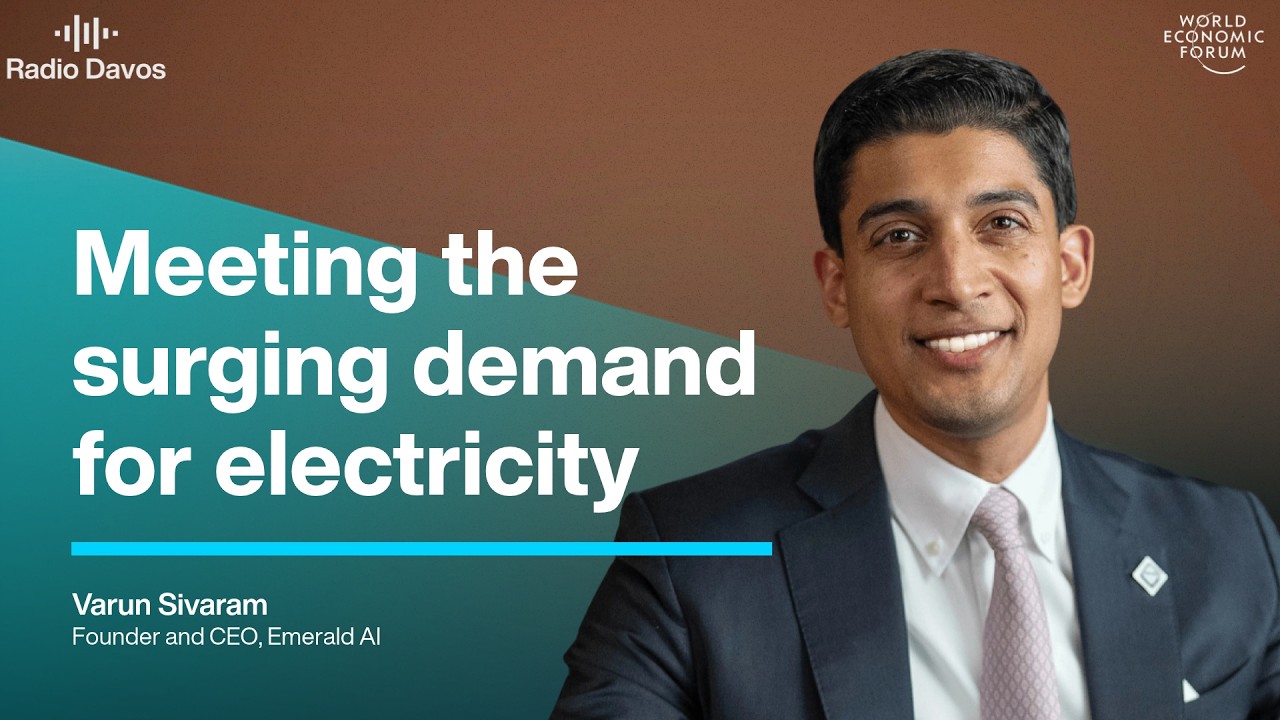
Demand for electricity is soaring: how can our power systems keep up?
Keywords
Summary
213 words
Critical Evaluation
Value of the Information & Strength of the Argument
The information is valuable as it addresses a pressing and timely issue—the energy demands of AI—with concrete data and practical solutions. The argumentation is solid: Divya Reddy provides a structured overview of the drivers and scale of demand, while Varun Sivaram presents a clear, actionable solution backed by real-world demonstrations and partnerships. The use of the highway analogy makes the technical complexity accessible. However, the episode is largely a promotional platform for Emerald AI, and while the claims are plausible, they are not independently verified within the video. The discussion could benefit from more critical scrutiny of potential drawbacks or limitations of the flexible data centre approach.
Scientific Rigor, Source Quality, Title Accuracy
The scientific rigor is strong: the video cites IEA statistics and references the WEF’s Innovation Playbook and an upcoming white paper. The description includes links to relevant reports and podcasts, enhancing credibility. The title matches the content well—the episode directly addresses the surge in electricity demand and how power systems can adapt. The presence of two experts adds depth, and the discussion stays on-topic. No advertising sequence was noted; the episode is a straightforward podcast conversation.
198 words
Title / Content Match
The title accurately reflects the content: the surge in electricity demand and the challenges for power systems, with proposed solutions.
Quality & Reliability
8/10
The video relies on reputable data from the IEA and includes expert commentary from WEF and Emerald AI. The claims are well-structured and supported by official reports and real-world demonstrations.
Chapters
- Intro: AI data centres and the global surge in electricity demand
- Welcome to Radio Davos with Divya Reddy, World Economic Forum
- Why electricity demand is rising: energy crises and electrification
- How much power do AI data centres use?
- Peak demand, wind and solar, and the grid balancing challenge
- Quick wins: making better use of existing grid infrastructure
- WEF Innovation Playbook for Future Power Systems and upcoming white paper
- How flexible data centres can ease pressure on the power grid
- Introducing Varun Sivaram, CEO of Emerald AI
- What is Emerald AI? Data centres as good grid citizens
- The scale of AI energy consumption in the US and China
- The solution: power-flexible AI data centres (the super highway analogy)
- How it works: slowing, delaying and moving AI workloads
- What's needed: proof, a coalition and a grand bargain with regulators
- Why utilities love flexible data centres: reliability, cost and keeping customers
- Can data centres promise communities lower power bills?
- The AI Energy Management Alliance: Google, NVIDIA, Anthropic and more
- Is it too late to win public support for data centres?
- Wrap-up: future power systems, COP and Davos 2027
Cited Sources
- World Economic Forum Centre for Energy and Materials — Official WEF centre relevant to energy topics.
- Future Power Systems initiative — WEF initiative addressing power system challenges.
- Innovation Playbook for Future Power Systems — Database of over 100 solutions for power systems.
- Emerald AI — Company led by Varun Sivaram, producing flexible data centre technology.
- Radio Davos podcast - The Hormuz shock, AI and China — Related podcast on global energy.
Concurring Sources
- IEA – Data Centres and Electricity Demand — IEA data cited in the video aligns with the presented statistics.
External References
Contribution & Novelties
The episode highlights a novel, practical approach to integrating high-demand AI data centres into existing power grids without massive infrastructure investments. The concept of ‘good grid citizen’ data centres that dynamically adjust their electricity consumption is presented as a win-win for utilities, communities, and AI developers. The video goes beyond general awareness by offering concrete examples of demonstrations and the formation of an industry alliance.
Pour aller plus loin :
- Demand response in electricity grids — Explains the broader concept of adjusting consumption to balance supply and demand.
- Data center energy efficiency — Provides background on energy consumption patterns of data centres.
- International Energy Agency on data centres — Offers authoritative statistics and projections on data centre energy use.
119 words
Radar Profile
The radar profile shows a well-balanced assessment: high reliability and quality scores, moderate quantity and technical depth. This indicates a reliable, informative episode that is accessible to a broad audience, with room for more in-depth technical analysis.