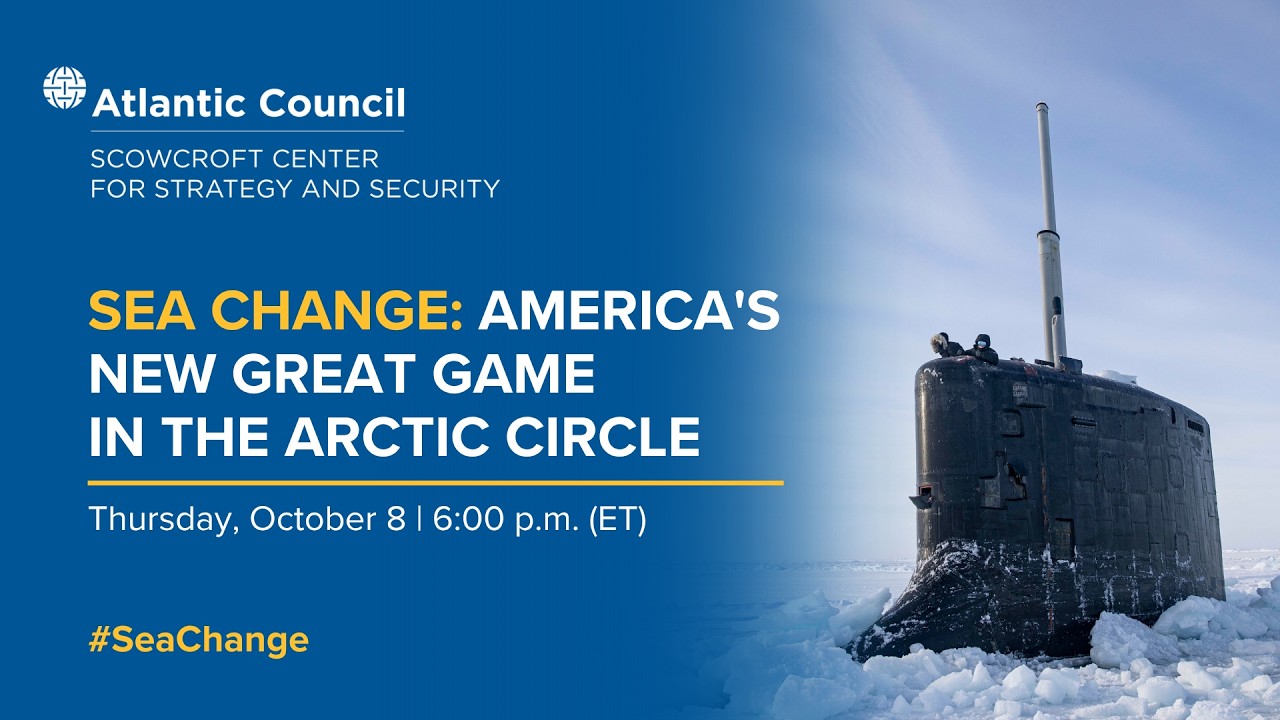
Sea change: America's new great game in the Arctic Circle
Keywords
Summary
181 words
Critical Evaluation
Value of the Information & Strength of the Argument
The value of the information is high, offering specific data and original insights from the author’s direct experience on an icebreaker. The argumentation is coherent and persuasive, connecting economic history, industrial policy, and geopolitical strategy. The ‘great game’ analogy is developed with nuance, highlighting both similarities and differences. The author effectively argues that the Arctic is a critical new front in US-China rivalry, but the discussion remains largely opinionated, grounded in journalistic observation rather than systematic academic analysis.
Scientific Rigor, Source Quality, Title Accuracy
The scientific rigor is moderate; while the author cites specific facts and examples (e.g., shipping tonnage percentages, the 301 trade case, Chinese port investments), these are not systematically sourced with footnotes in the discussion. The quality of sources is generally high, drawing on the author’s professional network and institutional connections. The title accurately reflects the content, which focuses on a new ‘great game’ in the Arctic. The event is well-structured and the participants are credible, but the conversation remains an expert panel rather than a peer-reviewed presentation.
180 words
Title / Content Match
The title accurately reflects the content; the book launch focuses squarely on the new geopolitical contest for the Arctic framed as a 'great game'.
Quality & Reliability
8/10
The discussion features a renowned Financial Times journalist and author with deep expertise in economics and geopolitics, moderated by a New Yorker staff writer. The content is well-argued and draws on specific examples, data, and historical analysis, though it remains primarily an expert opinion rather than original research. The Atlantic Council's platform adds credibility, and the event is on the record.
Chapters
Contribution & Novelties
The book provides an original journalistic investigation into the Arctic’s geopolitical transformation, drawing on firsthand experience and extensive interviews. It reframes the US-China competition through the lens of maritime capacity and industrial decline, offering a fresh perspective that connects economic policy with national security. The discussion highlights the lack of attention paid to the Arctic in mainstream political discourse.
Pour aller plus loin :
- Arctic geopolitics - Wikipedia — Provides a broad overview of geopolitical dynamics in the Arctic, useful for contextualizing the book’s arguments.
- Polar Silk Road - Wikipedia — Explains China’s Arctic strategy and the concept of the Polar Silk Road, directly relevant to the book’s discussion of Chinese long-term planning.
- Great Game - Wikipedia — Offers historical background on the 19th-century rivalry that serves as the book’s central analogy.
132 words
Radar Profile
The profile shows high scores in information quantity and technical depth, with slightly lower but still strong marks for quality and reliability, reflecting a well-informed expert discussion that is more journalistic than academic in nature.