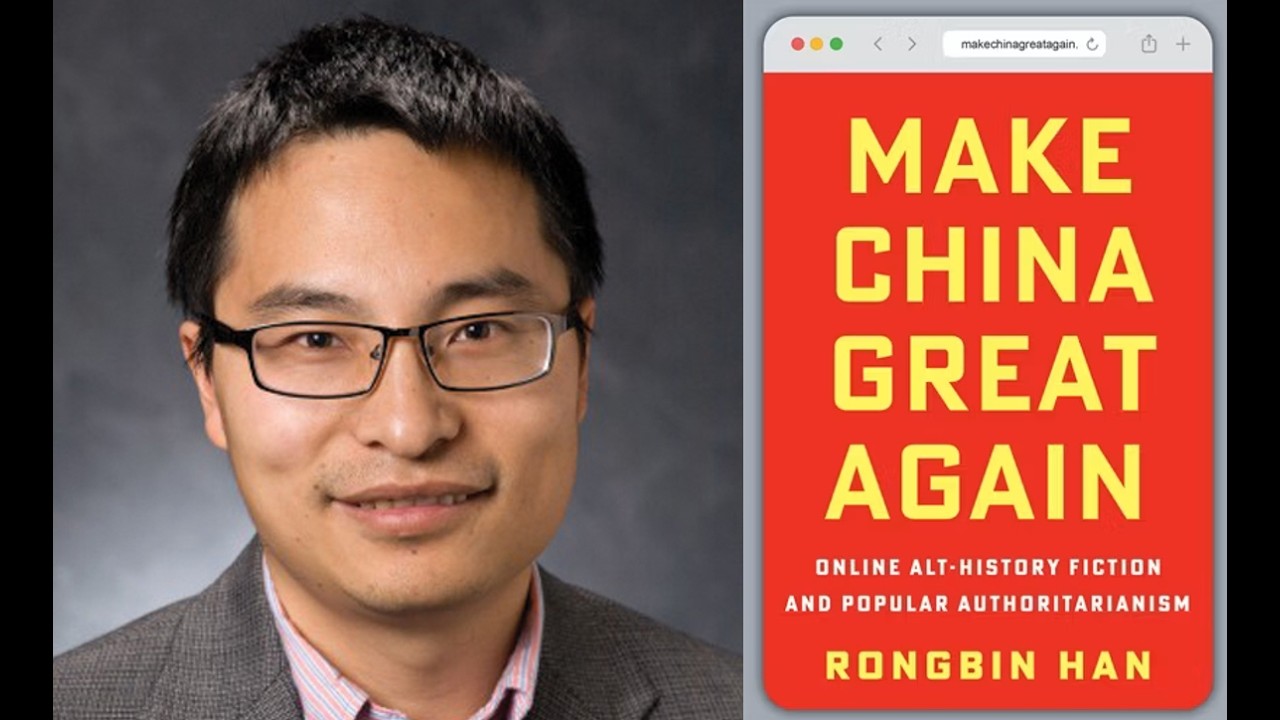
Dr. Rongbin Han, "Make China Great Again: Online Alt-History Fiction & Popular Authoritarianism"
Keywords
Summary
153 words
Critical Evaluation
Value of the Information & Strength of the Argument
The lecture provides a rich, data-driven analysis of a little-studied phenomenon. The value lies in combining systematic content analysis with digital ethnography, offering both quantitative patterns and qualitative insights. The argument is well-supported: Han convincingly shows how alt-history fiction both legitimizes and contests state ideology, ultimately reinforcing authoritarian rule. He carefully distinguishes between deviations and overall effects, acknowledging complexities such as censorship and gendered consumption. The reasoning is coherent and nuanced, avoiding simplistic explanations.
Scientific Rigor, Source Quality, Title Accuracy
The research is grounded in a rigorous academic foundation, with clear methodology (sampling from Yuzu.com, coding schemes). The speaker cites his own prior publications and the book itself. The description includes links to the publisher, his faculty page, and the lecture series, which are relevant and trustworthy. The title of the lecture matches the content perfectly, providing an accurate preview. No public comments were provided for analysis.
156 words
Title / Content Match
The title accurately reflects the content, which focuses on online alternate history fiction in China and its relationship to popular authoritarianism.
Quality & Reliability
9/10
The lecture is based on a peer-reviewed academic book published by Columbia University Press, presenting original empirical research combining digital ethnography, systematic content analysis of over 260,000 titles, and reader comment analysis. The author is a recognized political scientist, and the argument is well-structured and supported by data.
Key Moments
Markers derived by PSI from the transcript: the creator did not define chapters.
- Introduction of the topic and why alt-history fiction is political
- Definition and statistics of Chinese internet literature market
- Methodology: collecting 260,000 titles and coding samples
- Findings: historical periods and types of reforms in novels
- Discussion of nationalism and 'but-correctness' in reader comments
- Historical context: comparison with late Qing sci-fi and current rise
- Conclusion: popular authoritarianism and regime legitimation
Cited Sources
- Make China Great Again (Columbia University Press) — The book being presented, published in 2026.
- Rongbin Han's faculty page at University of Georgia — Author's academic profile.
- CSUSB Modern China Lecture Series — Host of the lecture.
Concurring Sources
- Contesting Cyberspace in China: Online Expression and Authoritarian Resilience — Han's previous book, which explored online expression and authoritarian resilience, providing conceptual continuity.
- Directed Digital Dissidence in Autocracies: How China Wins Online — Another work by Han, analyzing online dissent and state control.
Contribution & Novelties
This lecture offers a novel contribution by examining online alt-history fiction as a lens into contemporary Chinese political culture, demonstrating how digital entertainment can reinforce authoritarian legitimacy. It introduces the concept of ‘popmonarchy’ where ordinary citizens negotiate and support authoritarian rule through everyday cultural consumption.
Pour aller plus loin :
- Alternate history — A genre that reimagines historical events, relevant to understanding the literary form.
- Chinese Dream — Xi Jinping’s official ideology of national revival, central to the narratives discussed.
- Authoritarianism — Political system context; the lecture explores how it gains popular consent.
- Cultural hegemony — Discussion of how ideology is disseminated through popular culture, echoing Han’s argument.
108 words
Radar Profile
The profile shows high scores across all dimensions, with a slight dip in technical complexity due to its accessible academic style. The strong balance between information quantity and quality indicates a well-rounded scholarly presentation.