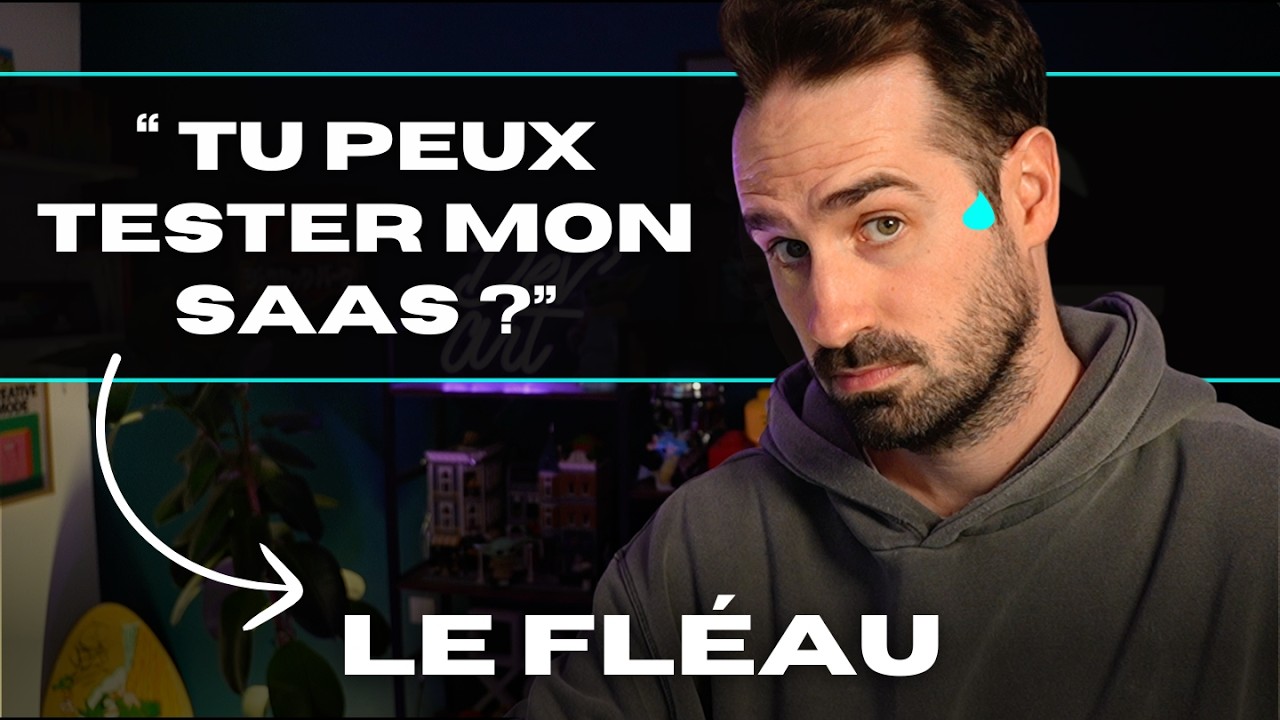
Les vibe coders ont inondé internet de SaaS
Vibe coders have flooded the internet with SaaS.
Title history
- Les vibe coders ont inondé internet de SaaS — observed on 20261101-0121 UTC (YouTube)
Keywords
Summary
171 words
Critical Evaluation
Value of the Information & Strength of the Argument
The value of the information lies in its contemporary relevance and the presenter’s insider perspective as a former developer and current tech content creator. It identifies real pain points for indie hackers and micro-SaaS founders, such as the difficulty of gaining initial trust and the need to combine coding with aggressive marketing. However, the argumentation is largely anecdotal, relying on personal encounters and impressions rather than quantitative data or case studies. While the reasoning is coherent and intuitively plausible, it lacks rigorous evidence. The presenter’s own consulting experience with poor-quality vibe-coded products adds authenticity but also introduces potential bias.
Scientific Rigor, Source Quality, Title Accuracy
The video’s scientific rigor is limited. The only specific source mentioned is GitHub’s Octoverse, but no URL or publication details are provided. The rest is based on subjective observation and general statements about market trends. The title accurately reflects the content, which focuses on the flood of vibe-coded SaaS and the resulting challenges. No discussion of methodology or further references is included, and the epistemic status is that of a personal opinion piece rather than a researched analysis. There are no community comments provided for analysis.
200 words
Title / Content Match
The title accurately reflects the core theme: the influx of SaaS products created by vibe coders and the resulting market saturation.
Quality & Reliability
5/10
The video presents a plausible but largely anecdotal analysis of the SaaS market saturation driven by AI coding tools. It cites one statistic from GitHub's Octoverse but provides no direct references or links to external studies. The reasoning is sound and based on personal experience, but lacks empirical depth and verifiable sources.
Key Moments
Markers derived by PSI from the transcript: the creator did not define chapters.
- Introduction: everyone knows someone pitching a vibe-coded SaaS that promises to revolutionize a sector.
- Cites GitHub Octoverse: a new developer joins every second, 180 million developers total, with 36 million added in 2025.
- Explains why users are now suspicious: anyone can create a SaaS in 24 hours, leading to oversupply and a 'sea of indecision'.
- Discusses the problem of free trials and pricing: AI API costs make it hard to offer free tiers, and this kills many products.
- Emphasises that even after acquiring a client, constant iteration and new features are needed to prevent churn.
- Summary: standing out is extremely hard; founders must be multi-skilled and actively market their product.
Cited Sources
- Qwen plus fort que DeepSeek et ChatGPT ? LE TEST (étonnant) — Related video on the same channel discussing AI model comparisons.
- DeepSeek VS ChatGPT vs Claude ? — Related video comparing AI chatbots, likely relevant to the AI tooling context.
- ChatGPT: TOP 5 des astuces pour devs — Tutorial on using ChatGPT for developers, cited as part of the channel's resources.
External References
Contribution & Novelties
The video offers a practitioner’s perspective on the consequences of AI-driven low-barrier software creation, highlighting the erosion of trust and the shifted discovery paradigm from SEO to AI-based recommendations (GEO). It also underscores the economic tension between offering free trials and incurring API costs, a real trade-off for many indie SaaS builders.
Pour aller plus loin :
- GitHub Octoverse — Official reports on developer trends; the video references its 2025 edition.
- Generative Engine Optimization (GEO) — Wikipedia article on the practice of optimizing content to be cited by AI models, a concept implicitly discussed in the video.
- Customer churn — Definition and importance of churn rate, central to the sustainability of SaaS businesses.
113 words
Radar Profile
The radar profile is imbalanced: quantity of information is moderate, but quality and reliability are low due to anecdotal reasoning. Technical level is deliberately accessible, appealing to a broad audience. Reliability score is the weakest point, reflecting the lack of verifiable citations.