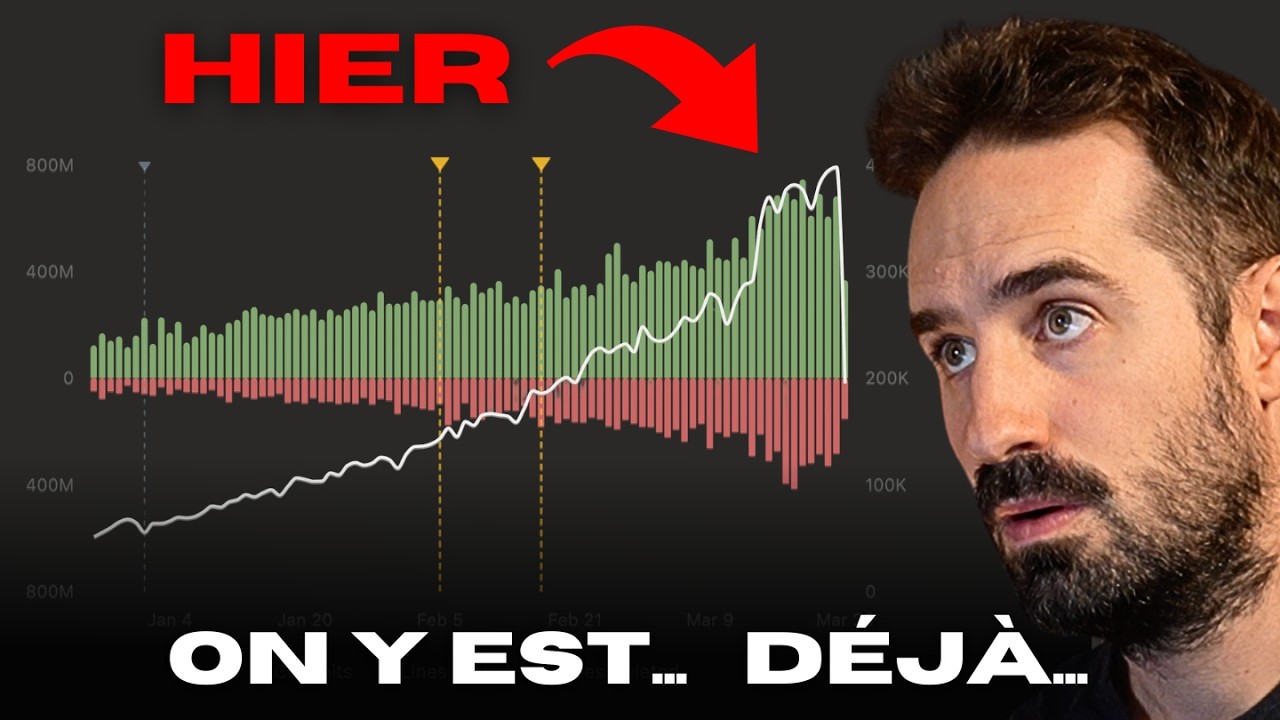
Merci les vibe coders ? Je vous avais prévenu.
Thanks to the vibe coders? I warned you.
Title history
- Merci les vibe coders ? Je vous avais prévenu. — observed on 20261101-0133 UTC (YouTube)
Keywords
Summary
175 words
Critical Evaluation
Value of the Information & Strength of the Argument
The video provides valuable, albeit anecdotal, insights into the current state of AI-assisted development. Its strength lies in the presenter’s firsthand experience and the concrete examples he shows, which illustrate the gap between commit volume and functional quality. The argumentation is persuasive: he contrasts the noise on social media with the quiet productivity of professionals using simple tools. However, the evidence is not systematic, and the reliance on a single dashboard without verifying the underlying data limits the solidity. The reasoning is clear and pragmatic, avoiding extreme positions while acknowledging both the potential and the pitfalls of AI coding.
Scientific Rigor, Source Quality, Title Accuracy
The scientific rigor is moderate: the presenter uses data from a public dashboard but acknowledges its limitations, urging viewers to interpret it with caution. He does not provide specific external references or studies, relying instead on personal observations and examples. The description links are all to his own videos, which are not primary sources. The title is well-chosen, as it captures the confrontational yet pedagogical tone of the video, and the content closely follows the promise of criticizing vibe coding. Overall, the sourcing is weak but the honesty about the data’s uncertainty adds some credibility.
209 words
Title / Content Match
The title accurately reflects the video's critical stance on vibe coding, matching the content's warnings and examples.
Quality & Reliability
4/10
The video is an opinion-based commentary on the surge of AI-generated commits, using anecdotal evidence and a dashboard with unverified data. It offers practical insights but lacks rigorous sourcing or controlled analysis.
Key Moments
Markers derived by PSI from the transcript: the creator did not define chapters.
- Presentation of the commit growth graph showing exponential increase.
- Discussion of the data sources and the interpretation of co-authorship.
- Demonstration of Agora project with 8000 commits but broken API.
- Criticism of social media hype around AI setups and the lack of real results.
- Advice on using AI tools pragmatically with basic subscriptions.
Cited Sources
- Test complet de Mistral Ai — Related video on the channel about another AI model.
- Qwen plus fort que DeepSeek et ChatGPT ? LE TEST — Related video comparing AI coding tools.
- Utiliser DeepSeek R1 avec Cursor Ai — Tutorial on using a specific AI tool for coding.
- DeepSeek VS ChatGPT vs Claude ? — Comparison video of AI assistants.
External References
Contribution & Novelties
The video contributes a critical, practitioner-oriented perspective on the current flood of AI-generated code. It highlights the discrepancy between commit volume and actual software quality, using real-world examples to substantiate its claims. The originality lies in the direct demonstration of broken screenshots and the personal anecdotes that resonate with many developers. It offers a balanced view, acknowledging the utility of AI tools while cautioning against blind adoption.
Pour aller plus loin :
- Vibe coding — Wikipedia article about the phenomenon and its implications.
- Technical debt — Concept highly relevant to the video’s emphasis on the cost of rapid, AI-generated code.
- GitHub Copilot — A major AI coding assistant, providing context for the broader trend.
114 words
Radar Profile
The radar shows moderate scores across the board, with a slight peak in technical level and lower scores in reliability and information quality. This reflects an accessible yet opinion-driven video that provides practical insights without rigorous empirical backing.
💬 Based on the 30 comments analyzed, the sentiment is positive: viewers thank the creator for his honesty and share similar experiences on the limitations of vibe coding. Some comments highlight the irony of technical debt and the perceived value of professional developers in contrast to hobbyists.