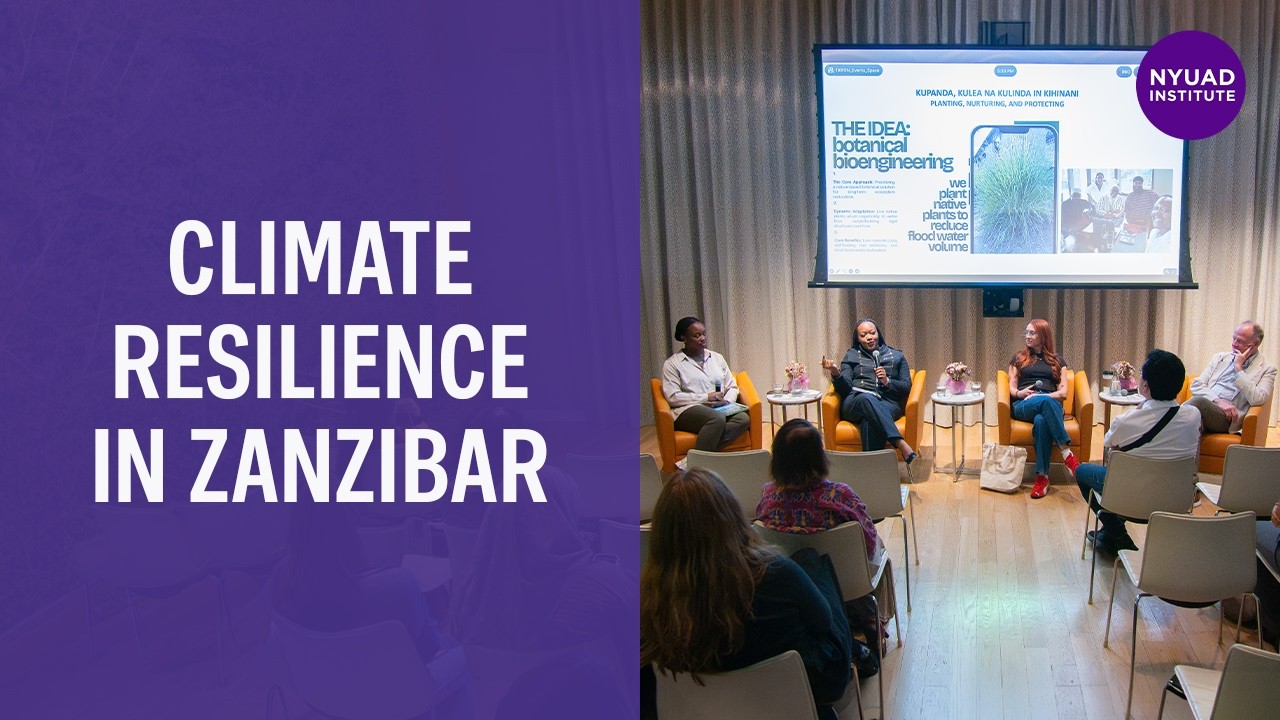
Climate Resilience in Zanzibar
Keywords
Summary
173 words
Critical Evaluation
Value of the Information & Strength of the Argument
The value of the information lies in its stark illustration of how top-down climate strategies often fail in hyper-local contexts, and how involving communities as full partners yields more relevant and sustainable solutions. The argumentation is grounded in practical experience across 27 iterations and multiple countries, but it remains largely descriptive and lacks comparative data or measurable outcomes. The panelists’ personal accounts add authenticity, yet the talk does not present quantitative evidence of the strategies’ effectiveness. The appeal to community empowerment is persuasive, but the scientific case would be stronger with more rigorous evaluation metrics.
Scientific Rigor, Source Quality, Title Accuracy
The talk is not heavily reliant on external sources; it primarily draws on the speakers’ experience and the project’s narrative. Although the description includes institutional links (NYUAD Institute, 19 WSN, and a mailing list), these are administrative rather than content-specific references. The title ‘Climate Resilience in Zanzibar’ is accurate and directly matches the subject. The scientific rigor is moderate: the methodology is described qualitatively, and no peer-reviewed publications or datasets are cited. While the systems mapping approach is a recognized tool, the talk does not provide a formal analysis. The panelists’ reflections are anecdotal. Overall, the content is informative for practitioners but would benefit from more rigorous data presentation.
219 words
Title / Content Match
The title accurately reflects the core topic of the talk, which focuses on climate resilience initiatives in Zanzibar through a community-driven approach.
Quality & Reliability
7/10
The talk is given by an academic professor with substantial field experience, and involves panelists from NYU graduate programs. The content is based on a real project (27 iterations, multiple countries) and includes direct community engagement. However, it relies on anecdotal evidence and lacks quantitative data or peer-reviewed citations, which limits its scientific rigor.
Key Moments
Markers derived by PSI from the transcript: the creator did not define chapters.
- Introduction by Prof. David Holland and welcome to the seminar.
- Chris Dickey begins his talk, describing the project history and the UNICEF collaboration since 2014.
- Explanation of the systems mapping approach and examples from Zanzibar projects (e.g., Kiboden farming community).
- Student testimonials: Sumayyah Muhammad on community listening, Maëva-Edith on 'unlearning', and Jackie Roth on the experience.
- Discussion on the portfolio of strategies and the value of the competition format for government prioritization.
Cited Sources
- NYUAD Institute Research — Provided in the video description as information about the research institute hosting the talk.
- 19 Washington Square North — Provided in the video description as a venue associated with the institute.
- NYUAD Institute Mailing List — Provided in the video description for event updates.
Contribution & Novelties
The talk presents a novel, participatory methodology that blends students, professionals, and community members in co-creating climate adaptation strategies. Its innovation lies in the ‘systems mapping’ exercise that forces interdisciplinary dialogue and the explicit inclusion of residents as equal partners, not just beneficiaries. This case study contributes to the discourse on community-based adaptation, particularly in island contexts.
Pour aller plus loin :
- Community-based adaptation to climate change — A Wikipedia overview of the concept discussed in the talk.
- Systems thinking — The analytical approach used by the teams to map interconnections.
- Participatory action research — A method aligning with the project’s emphasis on community involvement.
105 words
Radar Profile
The profile shows balanced scores across information quantity and quality, with a moderate technical level and reliability. This reflects a talk that offers substantial qualitative insights but lacks deep technical depth or rigorous scientific backing. The approach is practice-oriented and accessible, appealing to a broad audience interested in climate adaptation strategies.