Keywords
Summary
133 words
Critical Evaluation
Value of the Information & Strength of the Argument
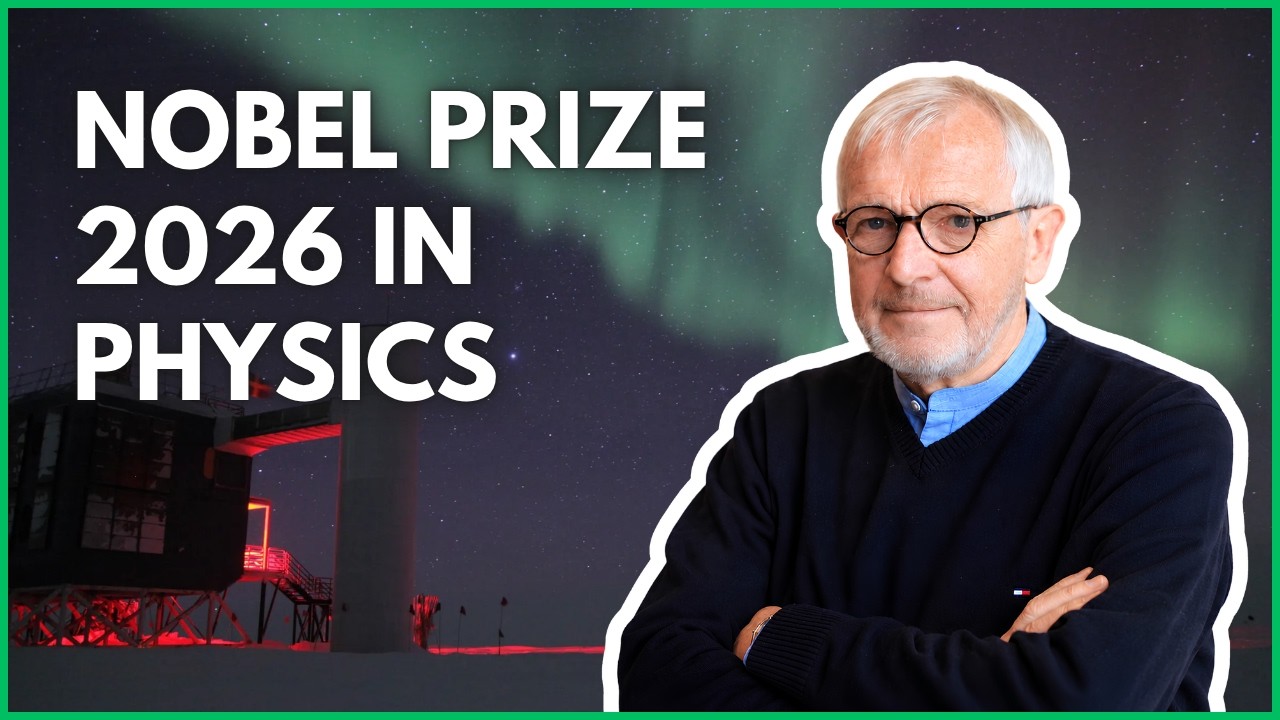
The video’s value lies in its comprehensive yet accessible explanation of neutrino physics and the engineering marvel of IceCube. It presents a compelling argument for the groundbreaking nature of Halzen’s work, supported by historical context and expert interviews. The storyline effectively conveys the scientific significance and the perseverance required, making a complex subject engaging and understandable.
Scientific Rigor, Source Quality, Title Accuracy
The scientific content is rigorously presented, referencing credible sources such as the Nature and Science publications, Nobel Prize announcements, and interviews. The title aptly matches the content, emphasizing the massive discovery and the rare solo Nobel. However, some promotional links in the description are not scientific sources, but they do not detract from the video’s accuracy.
127 words
Title / Content Match
The title accurately highlights the double significance of the discovery and the rare solo Nobel, which is the core focus of the documentary.
Quality & Reliability
8/10
The video provides a detailed and accurate account of Francis Halzen's work and the IceCube Neutrino Observatory, referencing credible sources such as interviews with Space.com and the book 'Neutrino Hunters'. The scientific explanations are consistent with established physics and the narrative is well-structured.
Chapters
Cited Sources
- The Turing App - iOS — Promotional link for the channel's app, mentioned in description.
- The Turing App - Android — Promotional link for the channel's app, mentioned in description.
- The Turing App - Website — Official website for the channel's app.
- Mavericks of Science Podcast — Podcast series from Turing, linked in description.
- Million Dollar Problems of Mathematics Podcast — Podcast series from Turing, linked in description.
External References
Contribution & Novelties
The video highlights the original contribution of using a cubic kilometer of Antarctic ice as a neutrino detector, an idea initially dismissed as science fiction. It also underscores the shift in astronomy from light-based observations to neutrino-based ones, offering a new window into the universe’s most violent events.
Pour aller plus loin :
- IceCube Neutrino Observatory — Official Wikipedia page for the observatory, providing technical details and scientific achievements.
- Neutrino — Overview of neutrino properties and history, essential for understanding the video’s subject.
- Cherenkov radiation — The mechanism by which IceCube detects particles, explained in the video.
97 words
Radar Profile
The scores indicate a well-balanced presentation with high information quantity and quality, supported by solid reliability. The technical level is moderately accessible, striking a balance for a general audience while retaining scientific depth.
💬 Sur les 30 commentaires analysés, le ton est globalement positif, avec des réactions enthousiastes et quelques touches d'humour. Les commentateurs expriment leur admiration pour la recherche et le prix Nobel.