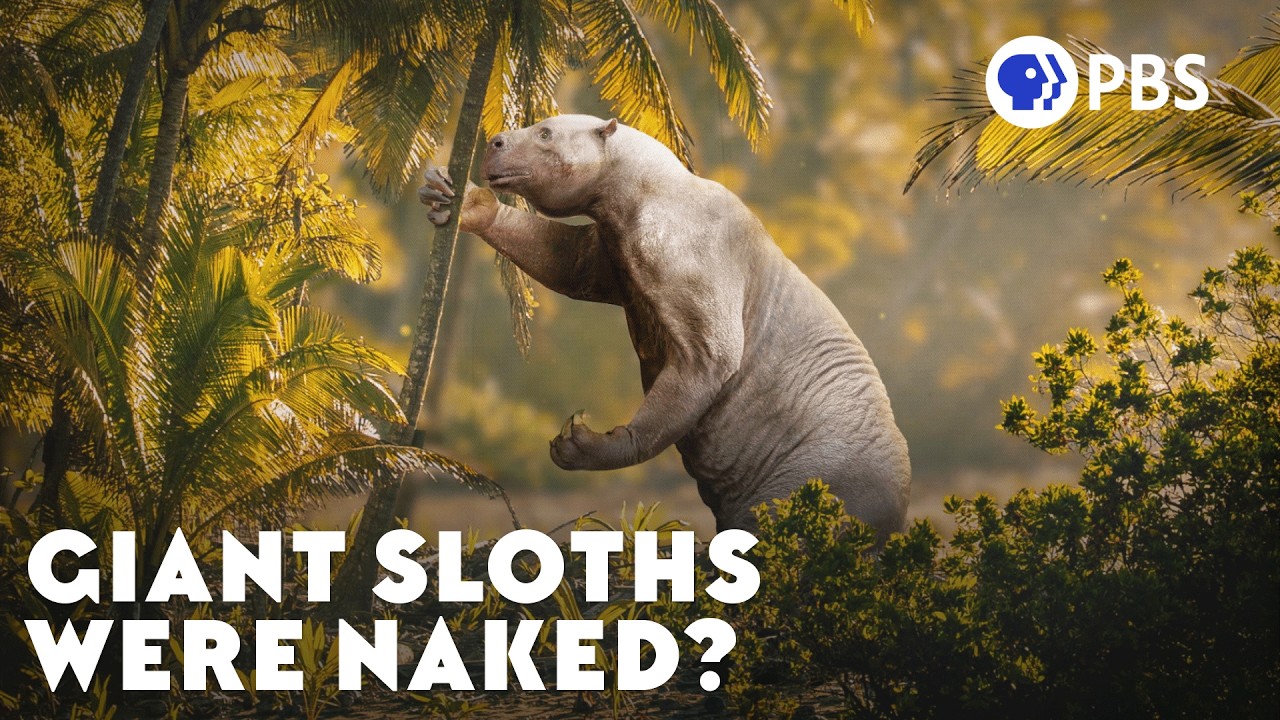
Humanity Has Amnesia About Giant Sloths
Keywords
Summary
168 words
Critical Evaluation
Value of the Information & Strength of the Argument
The video provides substantial value by synthesizing recent cutting-edge research (isotope geochemistry, osteoderm modification, evolutionary biomechanics) and placing it within the broader context of human-megafauna interactions. The argumentation is well-structured: it presents a mystery, outlines the evidence, explains the methods, and acknowledges competing interpretations. For instance, the debate over furlessness is presented with both historical and modern modeling perspectives, and the omnivore finding is contextualized within South America’s ecological imbalance. The narrator effectively balances storytelling with scientific rigor, making complex methods accessible without oversimplifying. The use of concrete examples (White Sands footprints, Brazilian osteoderms) strengthens the credibility of the narrative.
Scientific Rigor, Source Quality, Title Accuracy
The scientific rigor is high: the episode cites specific studies (2021 isotope analysis, 2002 and 2025 modelling studies, 2023 osteoderm research) and links to a public reference document in the description, allowing viewers to verify claims. The sources are peer-reviewed and recent. The title ‘Humanity Has Amnesia About Giant Sloths’ is both catchy and accurate, directly reflecting the thesis that valuable ecological knowledge has been lost. The content adheres to the topic throughout, with no tangential digressions. While the video is tailored for a general audience, it does not dumb down the science; instead, it clearly explains methodologies such as nitrogen isotope analysis, which is commendable. Comments show viewers appreciate the depth and the emotional resonance of the topic, indicating strong audience engagement.
238 words
Title / Content Match
Title accurately reflects the core theme of ecological amnesia about giant sloths and their lost interactions with early humans.
Quality & Reliability
8/10
The video relies on recent peer-reviewed studies (isotope analysis, osteoderm modification, modelling of fur loss) and explicitly discusses uncertainties and competing hypotheses, all within a reputable PBS Eons production.
Key Moments
Markers derived by PSI from the transcript: the creator did not define chapters.
- Scene at White Sands with human stalking a giant sloth; discussion of footprint evidence.
- Diet mystery: Mylodon as omnivore based on 2021 isotope study.
- Debate on whether giant sloths were hairless; 2002 and 2025 modeling.
- Human arrival in the Americas and evidence from White Sands footprints dated to 21,000-23,000 years.
- Discovery of polished and drilled osteoderms from Brazil, 25,000-27,000 years old, suggesting human modification.
Cited Sources
- References document for this episode — Description provides full list of academic sources cited in the episode.
External References
Contribution & Novelties
This episode contributes a fresh synthesis of recent discoveries that challenge long-held assumptions about giant sloths, emphasizing the theme of ’ecological amnesia’. It highlights how isotope analysis reveals omnivory in Mylodon, how hydrodynamic modeling suggests hairlessness debate, and how sloth osteoderms provide evidence for early human presence in South America. The framing of lost human knowledge adds a philosophical layer to paleontology.
Pour aller plus loin :
- Mylodon — Background on the extinct ground sloth genus.
- Nothrotheriops — Details on the Shasta ground sloth.
- Pleistocene megafauna — Overview of the large animals of the Ice Age and their extinction.
99 words
Radar Profile
The radar profile shows high scores across information quantity, quality, and technical level, with slightly lower but still solid reliability. This indicates a well-rounded scientific communication piece that is both informative and technically robust.
💬 Très positif. Sur les 30 commentaires analysés, les spectateurs expriment une forte appréciation pour la qualité scientifique et le ton engageant de la vidéo, certains partageant des anecdotes personnelles ou des réflexions sur la perte de connaissances, sans aucun retour négatif.