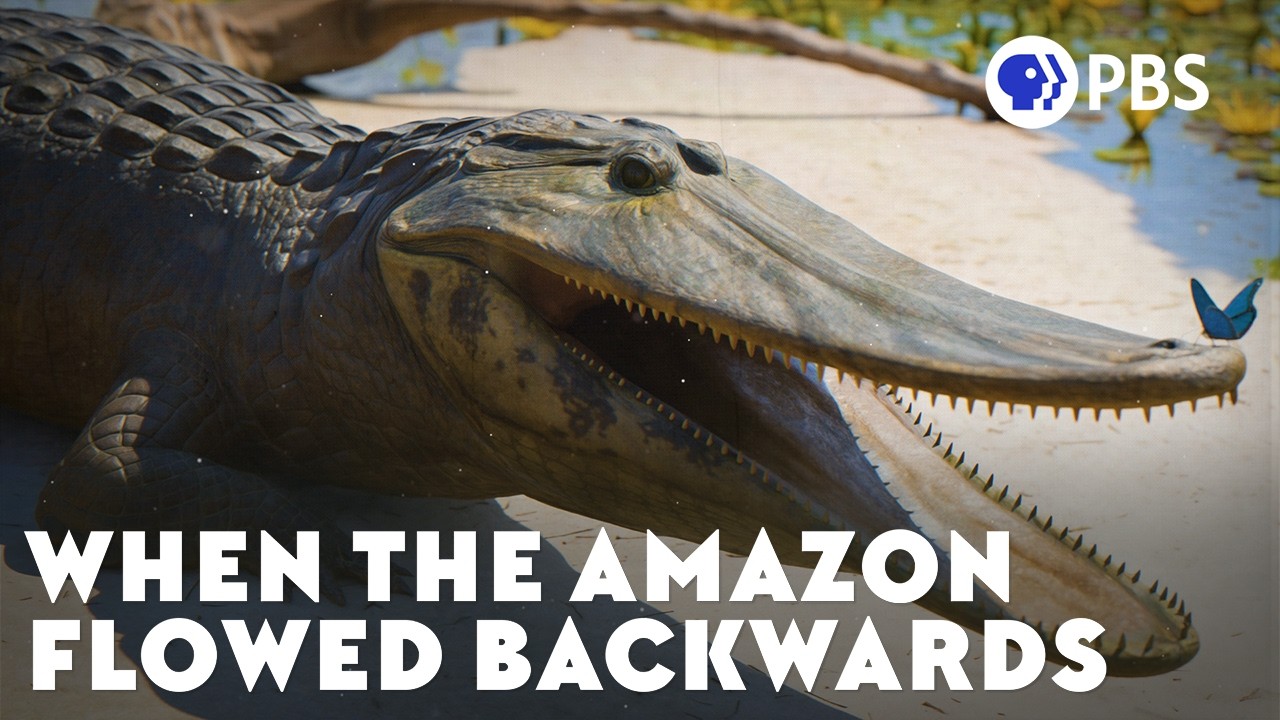
When the Amazon Flowed Backwards
Keywords
Summary
139 words
Critical Evaluation
Value of the Information & Strength of the Argument
The video provides a compelling synthesis of paleontological and geological research, effectively integrating fossil evidence, molecular phylogenetics, and plate tectonics to explain the reversal of the Amazon. The argumentation is logical and well-structured, progressing from the initial mystery to the formation of the Pebas System, its ecological significance, and the eventual river piracy. The use of specific extinct taxa and modern analogues strengthens the narrative, and the inclusion of hypotheses (e.g., Mourasuchus feeding) shows scientific balance. The presentation of evolutionary radiations and extinctions as outcomes of dynamic landscape changes is persuasive and grounded in cited literature.
Scientific Rigor, Source Quality, Title Accuracy
The scientific rigor is high, as the video aligns with established research on the Pebas Formation and Andean orogeny. The description includes a direct link to a Google Document listing references, which supports credibility. The title is accurate and evocative, capturing the central phenomenon without exaggeration. The content is consistent with current understanding, though some speculative elements (such as the exact feeding behavior of Mourasuchus) are appropriately flagged. Overall, the video maintains a high standard of scientific communication, with clear explanations and respect for complexity.
196 words
Title / Content Match
The title accurately reflects the video's focus on the reversal of the Amazon River's flow and its evolutionary consequences.
Quality & Reliability
8/10
The video is produced by PBS Eons, a reputable science communication channel, and relies on a cited list of academic references provided in the description. The information is presented with appropriate nuance, and the paleontological and geological claims are consistent with current scientific consensus.
Key Moments
Markers derived by PSI from the transcript: the creator did not define chapters.
- Introduction to the mysterious mollusk fossils at Pebas
- Explanation that early South American rivers flowed westwards during the Eocene
- Andes uplift traps water, creating the Pebas System
- Description of the diverse fauna of the Pebas, including giant crocodilians
- River piracy and the reversal of the Amazon towards the Atlantic
- Consequences for biodiversity and the modern Amazon ecosystem
Cited Sources
- References for 'When the Amazon Flowed Backwards' — The list of academic sources cited in the video, provided in the description
External References
Contribution & Novelties
The video offers a comprehensive and accessible overview of the Amazon River’s reversed flow and the Pebas System, synthesizing decades of research into a compelling narrative. It emphasizes the role of river piracy and landscape dynamics in shaping biodiversity, providing a clear example of how geological processes drive evolution. The presentation balances scientific detail with storytelling, making it valuable for both general audiences and students.
Pour aller plus loin :
- Pebas Formation — The geological formation associated with the ancient wetland, offering further stratigraphic context.
- River capture — The process of river piracy, central to the Amazon’s reversal.
- Purussaurus — The giant caiman that exemplifies the extreme crocodilian diversity in the Pebas System.
113 words
Radar Profile
The radar profile indicates high scores in information quantity and global reliability, with slightly lower but still strong scores in information quality and technical depth. This suggests a well-researched, dense presentation that remains accessible to a broad audience while maintaining scientific accuracy.
💬 Based on the 30 comments analyzed, the reaction is overwhelmingly positive, with viewers expressing admiration, sharing additional insights, and thanking the channel for its informative and engaging narrative.