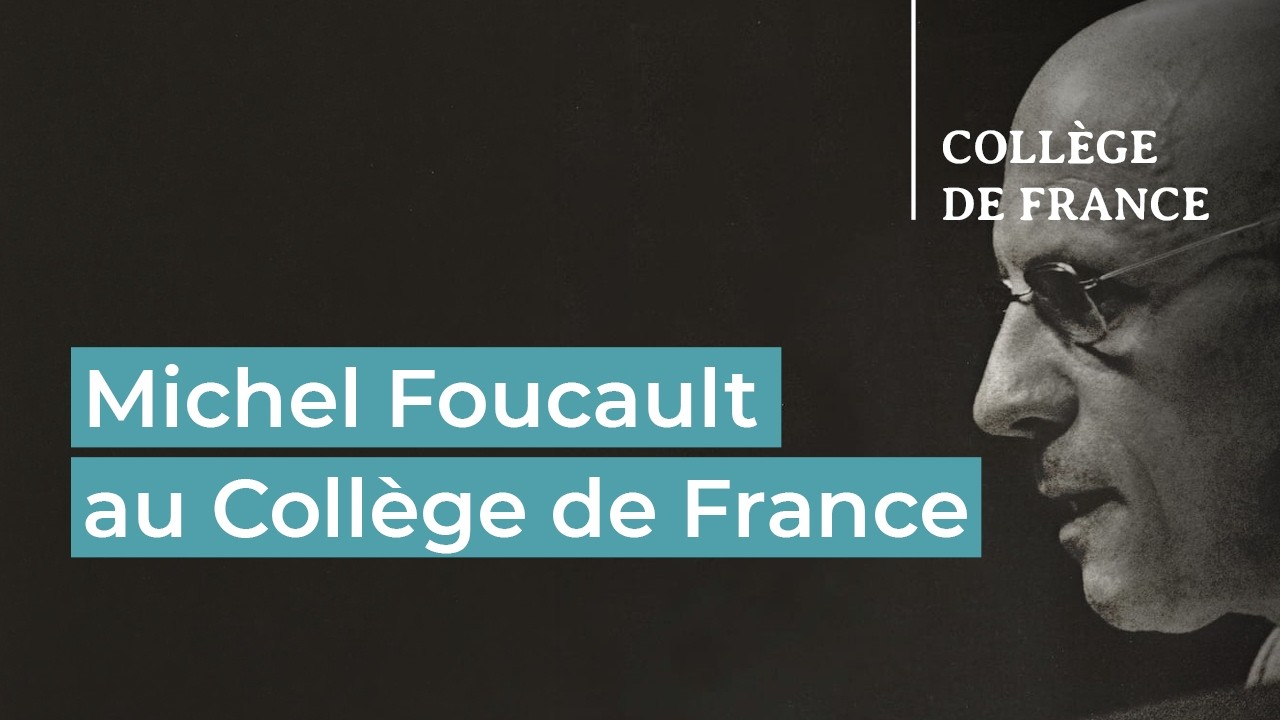
Élire Foucault au Collège de France : enjeux institutionnels et scientifiques - 2026-27 (1)
Electing Foucault to the Collège de France: institutional and scientific stakes - 2026-27 (1)
Keywords
Summary
185 words
Critical Evaluation
Value of the Information & Strength of the Argument
The value of this presentation lies in its meticulous archival research, offering rare insights into the bureaucratic and collegial processes behind a major intellectual appointment. Céline Surprenant’s detailed account of the election procedure, based on regulations and correspondence, provides a nuanced understanding of how the Collège de France operated during a transformative period. The argumentation is solid: she consistently connects institutional documents to broader historical trends, such as the effects of May 1968 and the modernization of research. Orazio Irrera’s segment, though less audio-transcribed here, presumably addresses the philosophical dimensions with scholarly depth. The overall reasoning is clear, well-structured, and grounded in primary sources, making a strong case for the significance of institutional context in understanding Foucault’s career.
Scientific Rigor, Source Quality, Title Accuracy
The talk demonstrates high scientific rigor: Surprenant cites specific documents (letters, assembly minutes, official decrees) and uses established historical methods. The sources include the Collège de France archives, the Bibliothèque nationale de France, and the Archives nationales, ensuring reliability. The title accurately reflects the content, as the lecture indeed focuses on the electoral process and its wider implications. The speakers are credible: Surprenant is an ingénieur-chercheur at the Collège de France, and Irrera is a specialist on Foucault’s philosophy. No commercial or promotional content is present. The presence of the Collège de France as an institution guarantees a high level of academic expertise.
236 words
Title / Content Match
The title precisely reflects the content: a focused analysis of Foucault's election and its institutional and scientific implications.
Quality & Reliability
9/10
The lecture is based on primary archival research, presented by specialists from the Collège de France, with rigorous historical methodology and clear sourcing from institutional documents.
Key Moments
Markers derived by PSI from the transcript: the creator did not define chapters.
- Introduction by Didier Fassin setting the context of the exhibition and the conference cycle.
- Céline Surprenant begins her talk on the institutional situation of the Collège de France in 1970.
- Surprenant details the election procedure, including the creation of the chair and the voting process.
- Surprenant emphasizes the archival evidence, including letters from Foucault and Dumézil.
- Surprenant concludes with the broader context of institutional reforms and the Collège's challenges.
- Orazio Irrera begins his presentation on the transformation of philosophy in Foucault's work.
- Irrera discusses the chair's title and Foucault's approach to history of systems of thought.
Cited Sources
- Exposition 'Foucault, une aventure intellectuelle au Collège de France' — Official page for the exhibition, referenced as the context for the conference cycle.
- Programme des conférences — Program of the conference series, confirming the schedule and topics.
- Collège de France main website — General institutional website, used for accessing resources and information.
- Fondation Collège de France (donation page) — Page for supporting the Collège, mentioned in the description.
- Collège de France on Bluesky — Official social media account, listed in the description.
- Collège de France on LinkedIn — Official LinkedIn account, listed in the description.
External References
Contribution & Novelties
This lecture provides a rare, detailed look at the administrative and procedural aspects of Foucault’s election, drawing on archival materials that are often overlooked. It enriches the understanding of Foucault’s career by situating his entry into the Collège within the institutional tensions of the post-68 era. The original contribution is the systematic reconstruction of the election process, shedding light on the role of figures like Georges Blin and the rituals of candidacy.
Pour aller plus loin :
- Michel Foucault (Wikipedia) — Overview of Foucault’s life and work, contextualizing his philosophy and career.
- Collège de France (Wikipedia) — Historical and institutional background of the Collège, useful for understanding its unique status.
- The Order of Discourse (Wikipedia) — Foucault’s inaugural lecture, which is directly relevant to his taking up the chair.
129 words
Radar Profile
The profile shows high scores on information quantity and quality, with a strong technical level reflecting the academic nature of the talk. The overall reliability is excellent, based on archival research by recognized specialists. The balance between content depth and accessibility is well maintained.